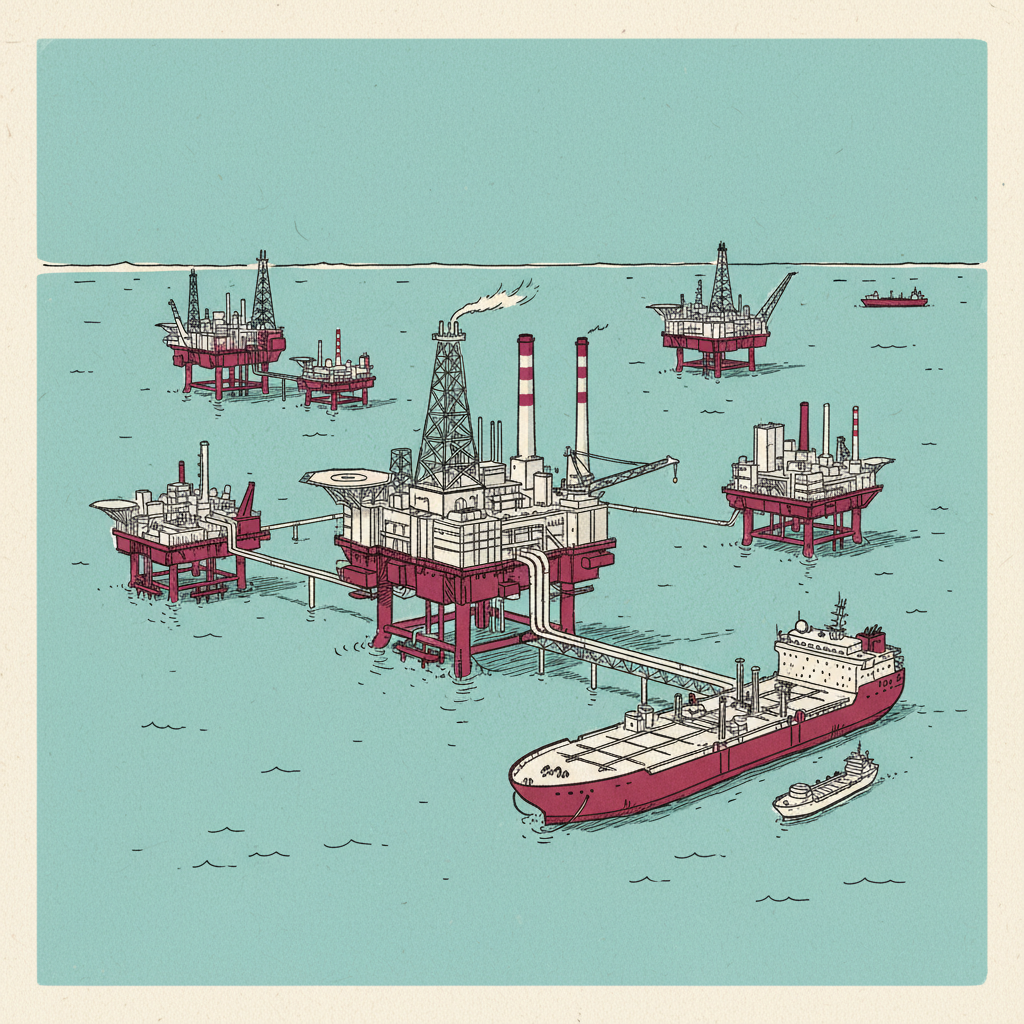
Troll
Norway's largest gas field, operated by Equinor in the North Sea, supplying roughly 30% of Norwegian gas production.
A compressor fault on Troll A cut Norwegian gas send-out by 34.6 mcm/day from 26 May 2026, with the loss peaking at 50.8 mcm/day on 30-31 May; by 2 June Equinor had filed no restart notice.
Last refreshed: 28 September 2026 · Appears in 1 active topic
How much Norwegian gas went offline after the Troll A compressor failure in May 2026?
Timeline for Troll
Equinor takes FID on Troll TWIN
European Energy MarketsMentioned in: Hammerfest LNG starts three-day planned maintenance
European Energy MarketsTTF breaks 38-session range to €48.9
European Energy MarketsMentioned in: EU storage margin narrows to 45 GWh/day
European Energy MarketsTroll A extended to 31 May; 51 mcm/day worst case
European Energy MarketsBackground
Troll is Norway's largest gas field and supplies roughly 30% of Norwegian gas output, which makes it one of the biggest single supply points in the European gas system. An unplanned outage there registers directly in European prices, as the compressor fault on Troll A in late May 2026 showed.
The field lies in the Norwegian North Sea, about 80 km west of Bergen, and is operated by Equinor. Troll A handles gas, while Troll B and Troll C produce mainly oil. Gas from Troll A is piped to the Kollsnes processing plant near Bergen before export through Norway's Gassled network. Troll A is a concrete gravity-based platform and the tallest structure ever moved. Gas production began in 1996.
Equinor took a final investment decision on the Troll TWIN project on 19 June 2026: $370m to recover a further 11 bcm of gas, with first production planned for 2028.
A compressor fault cut Troll's send-out
A compressor fault on the Troll A platform cut the field's gas send-out by 34.6 mcm/day from 26 May 2026. Equinor extended the outage to 31 May, and the loss peaked at 50.8 mcm/day across 30-31 May.
Troll's outage barely moved prices at first. TTF, Europe's benchmark gas price, had touched €51.82/MWh on 25 May, then fell 8.1% the next day on reports of a US-Iran deal, so diplomatic headlines outweighed the lost Troll volumes. That changed once the 31 May deadline passed without a restart notice: on 2 June TTF broke out of its 38-session range, rising 6% to €48.9/MWh. For Troll, the restart date itself became a price signal.
Why does a Troll outage affect European gas prices?
How does the Troll field gas reach European consumers?
What is the Troll gas field and where is it located?
Written with AI from Lowdown's published reporting. Not individually reviewed by an editor. Updated 28 September 2026. Editorial standards.