Skip to content
Welcome, thoughtbot's Giant Robots listeners!Start here
Iran Conflict 2026
21JUN

Oil priced a reopening that never happened

3 min read
17:51UTC

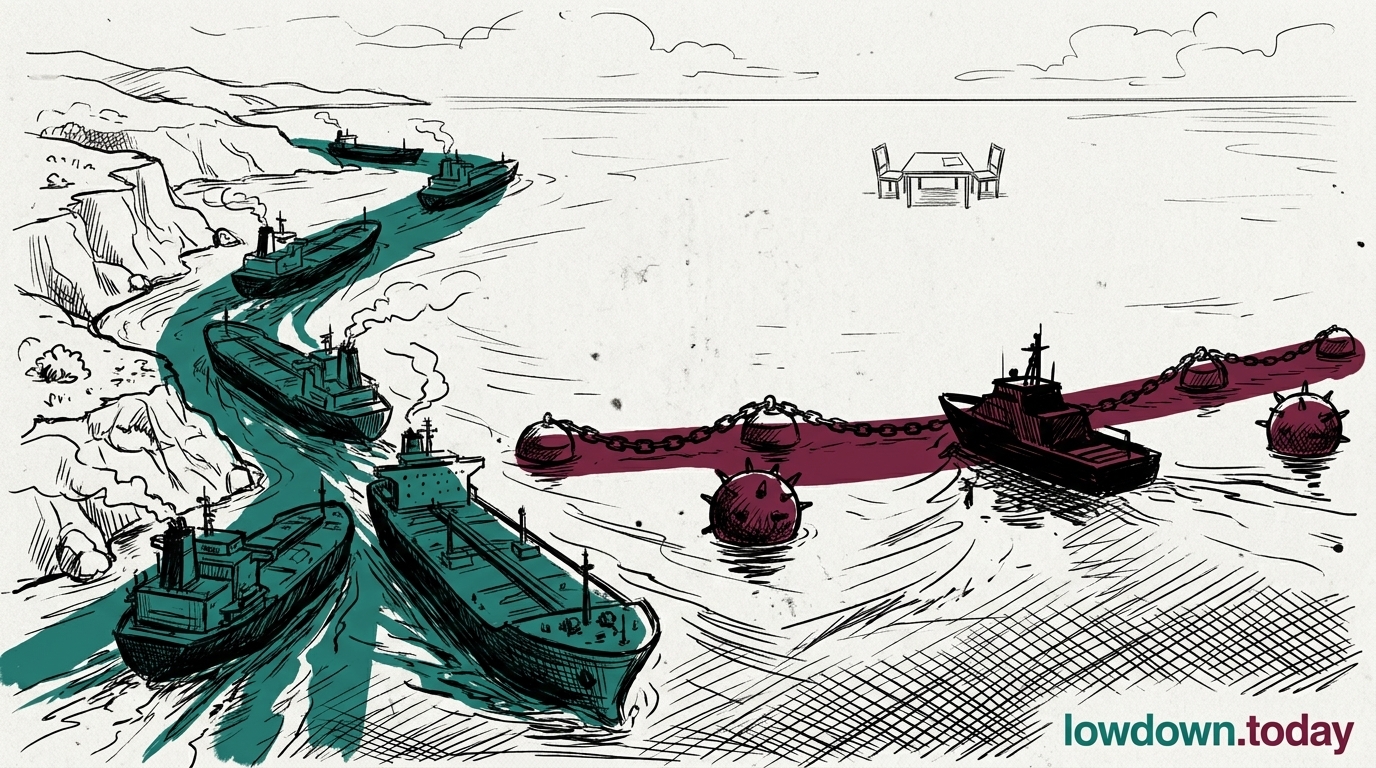
Brent crude held near $79.95 on 19 June, down about a tenth on the week, as traders priced a Hormuz reopening that no physical cargo has yet made real.

ConflictDeveloping
Key takeaway

Brent near $80 is the market hoping a strait reopens, not supply actually returning.

Brent Crude, the global oil benchmark, settled near $78.66 on 18 June and edged to roughly $79.95 on 19 June, down about 10 per cent on the week from above $100 at the height of the strait crisis⁠1. The fall tracked CENTCOM's lifting of the naval blockade: futures markets priced the diplomatic reopening the moment the order landed, then partially reversed as the insurer and mine reality set in.

At about $80 the market was not pricing a full supply return. The pre-conflict baseline was nearer $70, and Brent held its premium above that precisely because no additional Iranian or Gulf cargo had physically sailed. A barrel that cannot leave The Gulf, because no underwriter will cover the tanker carrying it, is a barrel the market can hope for but not buy. Price and supply parted ways: the futures curve repriced a strait that minesweepers had not cleared.

The United Arab Emirates' state oil producer had already assessed that stranded Hormuz barrels might not clear until 2027, a judgement that still stood against the week's optimism. For consumers, petrol prices now reflect a reopening that has not happened. A single mine strike or an insurer hold could reverse the week's fall and send the benchmark back up, because the supply it is betting on remains, for now, theoretical.

Deep Analysis

In plain English

Oil prices on international markets fell about 10% in the week ending 19 June, as traders priced in the US-Iran peace deal and the end of the naval blockade. Brent Crude settled near $78.66 on 18 June and edged to $79.95 on 19 June. Before the war started, the same benchmark sat around $70 a barrel. Financial traders moved faster than tanker ships can. The deal is signed, but the strait of Hormuz still has mines in the water and London insurers still refuse to cover ships trying to cross. The UAE's state oil company assessed that the strait might not carry full cargo flows until 2027. Prices are cheaper than at peak war, but stranded supply means the pre-war $70 level is still months away.

What could happen next?
  • Consequence

    Brent at approximately $80 reflects a partial diplomatic risk-premium reduction but not a physical supply recovery. The remaining $10 premium above pre-conflict levels will compress as mine clearance progresses and insurers re-enter, but not until physical flows confirm the reopening.

  • Risk

    If Phase 2 nuclear talks fail or Iran invokes the MOU annulment clause over Lebanon, the diplomatic risk premium reverses and Brent recovers toward the $90-100 range seen during peak conflict.

First Reported In

Update #132 · Trump lifted the blockade, not the strait

CNBC· 19 Jun 2026
Read original →
Different Perspectives
Office for Budget Responsibility
The OBR's 28 October forecast assumed $82 oil for 2026 and 2027, from market prices for the ten working days to 19 August, and blamed dearer wholesale energy on the war without naming Iran. It expects CPI inflation close to 4% in early 2027 even at that price.
Hengaw, Kurdish rights group
Hengaw reported the 3 November hangings of Amirhossein Maleki and Amirhossein Ebrahimi in Isfahan, saying Ebrahimi was tortured into confessing and that nine of 12 people sentenced to death in the case have now been hanged. Iran's judiciary holds that the defendants killed members of the security forces.
FINTRAC, Canada's financial intelligence unit
FINTRAC worked with the US Treasury on the 6 November designation of eight money services businesses in British Columbia, Ontario and Quebec. Treasury says the businesses still operate, some under new names, so closing them falls to Ottawa.
Abdul Qadir al-Dakhil, Governor of Nineveh
Al-Dakhil cancelled three Mosul International Airport contracts on 7 November over alleged links to armed groups, after meeting Prime Minister Ali al-Zaidi in Baghdad. He named no group or company, and said the contracts will go to international companies.
Kuwait
Kuwait
Kuwait condemned the Houthi missile fired towards the Madinah region on 5 November and restated its support for Saudi Arabia, the Qatar News Agency reported. Its state tanker company, Kuwait Oil Tankers Company, is among the Gulf state fleets on Iran's expanded Hormuz list.
Scott Bessent, US Treasury Secretary
Treasury designated an alleged Chandigarh false-flag network on 4 November and eight Canadian exchangers on 6 November, while State sanctioned alleged MANPADS intermediaries. None of the actions touches an oil buyer; they target the paper, cash and procurement around Iran's trade.

Written with AI from Lowdown's published reporting. Not individually reviewed by an editor. Editorial standards.
