Skip to content
You can now search across every topic, entity and event.What's new
Iran Conflict 2026
21JUN

Brent loses $14 in four sessions

3 min read
17:51UTC

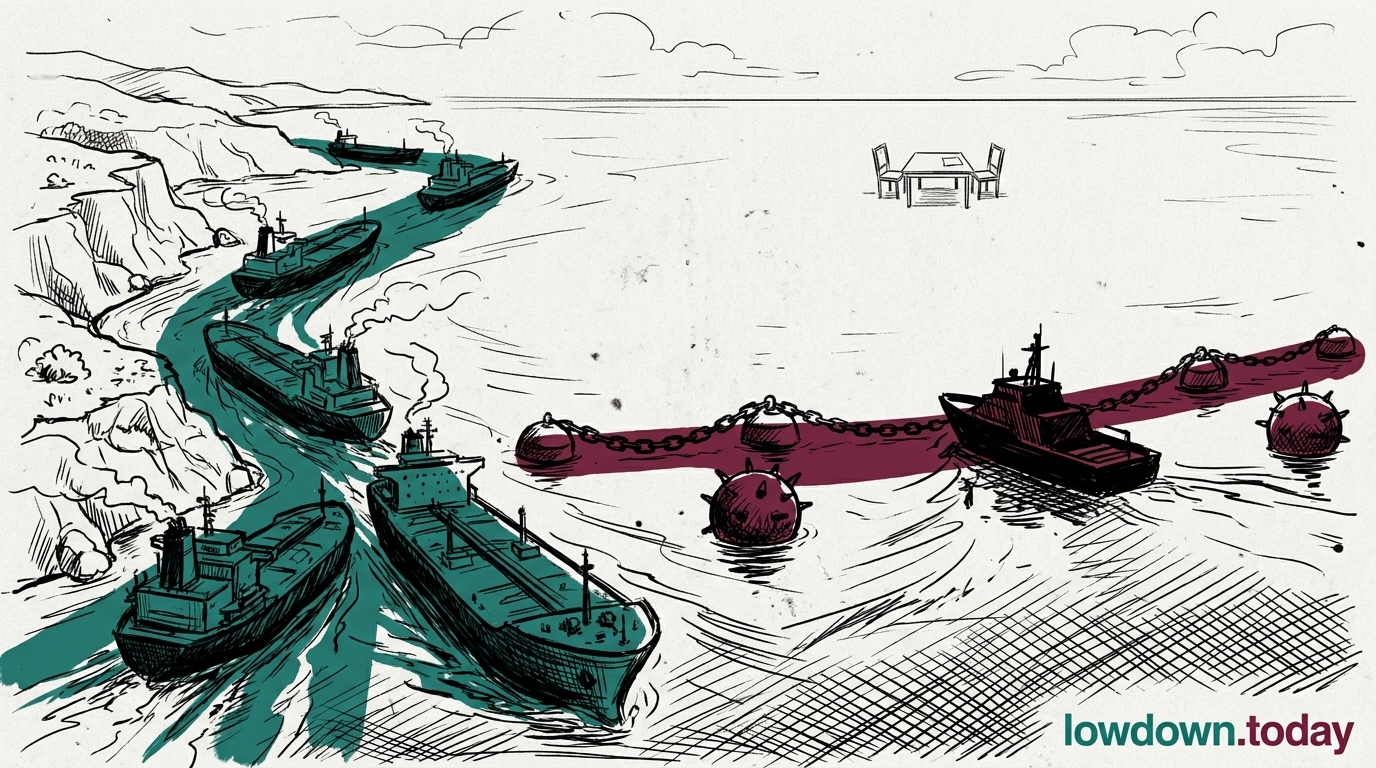
Brent fell from $110.34 on Wednesday 20 May to $96.14 on Sunday 24 May after Trump called the Iran deal 'largely negotiated', deflating the Hormuz war premium that the light-sweet complex had carried.

ConflictDeveloping
Key takeaway

Brent shed $14 on the Iran MOU; the war premium is discounted, not gone, with uranium still outside the deal.

Brent fell from $110.34 on Wednesday 20 May to $96.14 on Sunday 24 May, a $14 week, with WTI shedding over 6% to $90.30 1. The driver sat next door in the diplomacy: Donald Trump called the Iran deal "largely negotiated" on Saturday 23 May, framing a Memorandum of Understanding as phase one with the Hormuz-reopening narrative doing the rest 2. The diplomacy sits in the Iran file; the spreads it knocked sit with us.

The Brent-Dubai EFS is narrowing from the $6-plus peak it held in early May , because the light-sweet Hormuz bid deflates faster than sour Dubai, which never carried the same war premium. Brent-WTI is compressing toward $1-2 from the old $4-5 band as WTI catches up. That spread is the one that pays for the trade: above roughly $4 the round-trip economics justify hauling Atlantic barrels east on VLCCs, and below it they stop working. We will not put a precise current EFS print on the page because the assessment is paywalled, but the direction is not in doubt.

the MOU is phase one of a 30-60 day process and leaves the highly-enriched-uranium stockpile untouched 3, so the war premium is discounted, not dead, and a single failed-flow headline re-arms the EFS. The market that ran the long-Brent, short-WTI trade against has watched the Atlantic-basin premium that funded it evaporate inside a week, and the freight complex still reads a war it no longer fully believes in.


Deep Analysis

In plain English

Oil prices fell sharply in the last week of May after US President Trump announced an early-stage deal with Iran that could reopen the Strait of Hormuz ; the narrow sea passage through which roughly a fifth of the world's oil flows. Brent crude, the main international price benchmark, dropped from about $110 to $96 in four days. The move reflects markets pricing in the possibility of cheaper Iranian oil returning. However, the deal is not final: Iran's nuclear stockpile was left out, and broader talks are expected to take 30-60 days. Diesel prices across Europe may ease slightly on the news, but the underlying shortage of middle distillates means any relief could be temporary.

Deep Analysis
Root Causes

The EFS blowout above $6 reflected two compounding effects: (1) Asian refiners bidding aggressively for Atlantic light-sweet crudes as Hormuz-sourced barrels (mostly medium-sour Gulf grades) were unavailable; (2) European refiners simultaneously short of Middle East sourcing (695kbd import gap, BP outage), driving NWE gasoil and Atlantic crude basis higher.

Trump's 23 May MOU announcement deflated only the geopolitical risk premium in flat Brent. The structural distillate deficit in Europe (9% below US 5yr average, 38% import collapse) is supply-side, not geopolitical ; it persists regardless of diplomatic signal. This is why the ICE Gasoil crack held near $54/bbl even as Brent fell $14: the crack spread widens mechanically when flat price falls faster than physical distillate premiums.

What could happen next?
  • Risk

    If Hormuz mine clearance stalls within the 30-60 day MOU window, Brent will spike back above $100 and the EFS will re-widen toward the $6+ peak, punishing any long position built on the Iran deal narrative.

    Short term · Assessed
  • Consequence

    The EFS narrowing removes the primary economic incentive for Atlantic-basin crude to route east on VLCCs; TD3C spot freight will soften from the WS458.75 peak as the light-sweet bid deflates.

    Short term · Reported
  • Opportunity

    The ICE Gasoil crack is structurally wider relative to flat price as Brent falls; refiners with Mediterranean and NWE crude intake locked at pre-MOU prices and gasoil sold at current forward prices capture asymmetric margin.

    Short term · Assessed
First Reported In

Update #2 · GL 134C reverses the cliff, Brent -$14

CNBC· 26 May 2026
Read original
Different Perspectives
Turkiye
Turkiye
Erdogan followed the Pakistani delegation to Jeddah for an instrument that has not been signed. Ankara's entry widens Saudi Arabia's defence architecture beyond the existing Pakistan pact, adding a second non-Gulf military partner mid-conflict.
Oman
Oman
Muscat is the corridor's broker but has published nothing about the arrangement Fars describes on its behalf. The account leaves Oman administering outbound traffic only, a narrower role than the shared route its mediation has rested on since 1979.
Pakistan
Pakistan
Islamabad sent Sharif, Munir and Dar to Jeddah to widen a defence commitment it has honoured in cheaper registers since March, when Dar invoked the Saudi mutual defence pact. Jeddah tests whether that hedge becomes a binding trilateral instrument with Turkiye.
United States
United States
Washington rejected the Majlis Hormuz bill outright while CENTCOM's own tally kept climbing to 49 vessels redirected since 14 July. Both instruments tightened in the same week Trump promised the strait would reopen soon.
Iran
Iran
Iran's foreign ministry is selling a phased Hormuz corridor through Oman and denying any percentage cargo tariff, while its own Majlis is legislating fines to 20% and a bar on Israeli-linked cargo. The two accounts, from the same government, do not agree with each other.
Saudi Arabia
Saudi Arabia
Riyadh published a target forecast, not an attribution, for the campaign it says the Najran strike previewed. That keeps an Article 51 case available while it formalises a trilateral defence architecture with Pakistan and Turkiye.



