Skip to content
You can now search across every topic, entity and event.What's new
Iran Conflict 2026
21JUN

CENTCOM strikes 12,300 targets, Hormuz closed

2 min read
17:51UTC

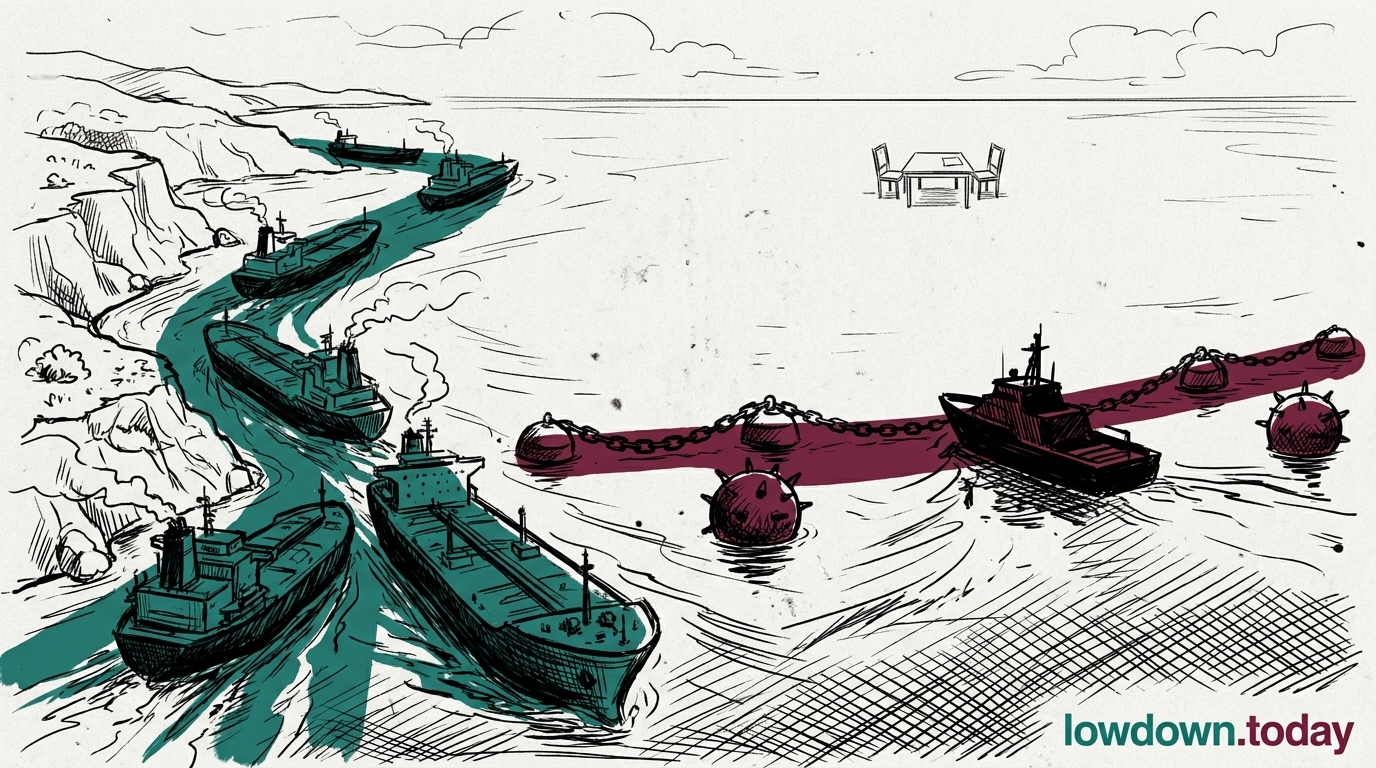
The US has fired more Tomahawk missiles than in any campaign in history and destroyed 155 Iranian vessels. The Strait of Hormuz remains shut.

ConflictDeveloping
Key takeaway

Record-breaking bombing has not shifted Iran's posture or reopened Hormuz.

CENTCOM reported on 1 April that US forces have struck over 12,300 targets and fired 850 Tomahawk cruise missiles in Operation EPIC FURY, the most in any single US campaign in history 1. 155 Iranian vessels have been destroyed. B-52 bombers now fly overland inside Iran , a transition from the standoff-only strikes of the war's first 30 days.

The numbers are imposing. The outcome is not. Hormuz remains closed. The toll system operates . Eleven vessels transited on 31 March, 93% below the pre-war baseline 2. ACLED concludes that 'full capitulation remains unlikely' and 'the only clear path to decisive victory would be a change of government' 3. Heavy bombing has reinforced Iran's siege mentality rather than breaking it.

CSIS counts 850 Tomahawks expended 4. The US Navy's total Tomahawk inventory before the war was approximately 4,000. At current consumption, the stockpile question joins Israel's Arrow-3 depletion as a constraint on sustained operations.


Deep Analysis

In plain English

The US has now struck more targets and fired more cruise missiles than in any war in American history. It has also destroyed 155 Iranian naval vessels. Despite all of this, the Strait of Hormuz is still closed. The question this raises is whether more bombing will change the outcome. The evidence so far says no: Iran is firing fewer missiles per day than at the war's start, but it has not changed its fundamental position.

Deep Analysis
Root Causes

The bombing has not changed Iran's strategic calculus because the campaign was designed around target categories, not political outcomes. CENTCOM is striking what it can locate and destroy; Iran's decision to keep Hormuz closed resides in a small number of IRGC commanders whose locations are either unknown or protected by anticipated US domestic opposition to decapitation strikes.

Russia's provision of satellite imagery showing US warship and aircraft locations increases Iran's ability to absorb the campaign by reducing tactical surprise. An adversary that knows where your aircraft are cannot be coerced by those aircraft in the same way as one operating without that intelligence.

The 850 Tomahawk expenditure rate also matters structurally. At pre-war inventory of roughly 4,000, the campaign has consumed 21% of the total supply in 34 days. The US cannot sustain current strike rates indefinitely without accepting munitions constraints that will become visible to Iran and its partners.

First Reported In

Update #55 · The Last Door Closes

Irish Times / Majorca Daily Bulletin· 2 Apr 2026
Read original
Different Perspectives
Shipping and insurance industry
UKMTO counted about 20 US-facilitated Hormuz transits a day to 11 September against only 6 visible on AIS, with traffic still around 90% below the 138-a-day pre-war baseline. War-risk underwriters cannot price hulls they cannot see, or resolve whether the tanker El Gaia hit a mine, as Iran claims, or a missile and drone, as CENTCOM says.
European refiners
European refiners
European refiners, including Poland's Orlen, absorbed a roughly $26 gap between Dated Brent at $130.80 on 15 September and ICE Brent futures settling at $103.87 on 18 September, a spread that widened from $13.45 on 9 September rather than newly opening. Their futures hedges no longer cover what they now pay for physical barrels.
Saudi Arabia
Saudi Arabia
Saudi Aramco zeroed European term customers' October allocations and rerouted roughly 60 million barrels to Asia through Ras Tanura and Sohar, using Red Sea and Gulf terminal capacity built years ago to cut Hormuz exposure. Riyadh reallocated existing supply rather than negotiating a shortfall with Europe.
Qatar
Qatar
Qatar's energy minister Saad al-Kaabi told Bloomberg at the Qatar Economic Forum on 20 September that Bessent's two-year Hormuz-obsolescence forecast is wrong, and that Doha has deliberately built no bypass pipeline. Qatar's gas exports run through one waterway by choice, not oversight.
Iran (foreign ministry and Majlis)
Iran's foreign ministry and 130 Majlis deputies moved toward NPT withdrawal this week, with lawmaker Hossein-Ali Haji Deligani filing a triple-urgency bill on 20 September that Speaker Qalibaf has not yet scheduled. Tehran treats treaty membership as leverage still on the table, not yet spent.
Russia and China
Russia and China
Moscow and Beijing vetoed the Panel of Experts' renewal, maintaining Resolution 2231 lapsed in October 2025 and the 2025 snapback was never validly triggered, so the sanctions architecture the Panel enforces has no current legal standing. Both governments frame the veto as upholding law, not shielding Tehran.



