Skip to content
You can now search across every topic, entity and event.What's new
Iran Conflict 2026
17JUN

Iran and Israel halt, minus Lebanon

3 min read
09:37UTC

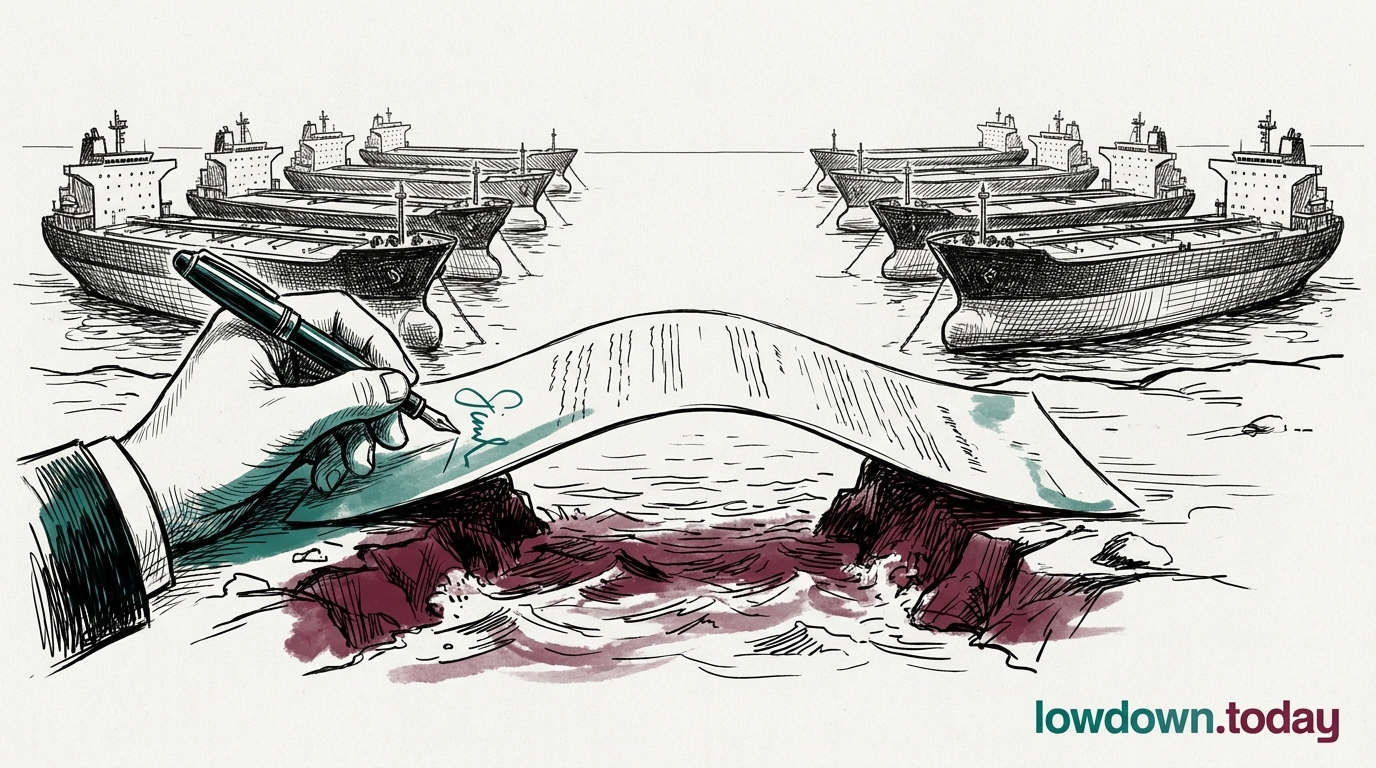
Iran and Israel agreed a fragile mutual halt on 9 June, hours after the exchange over the Mahshahr strike. Israel confirmed the pause covers Iran only and leaves Lebanon out.

ConflictDeveloping
Key takeaway

Iran and Israel paused their direct fighting, but Israel kept its war in Lebanon running.

Iran and Israel agreed a mutual halt on Tuesday 9 June, and the Israel Defense Forces (IDF, the Israeli armed forces) confirmed within hours that it covers Iran alone and not Lebanon, with a warning of resumed force if Iran strikes again 1. The pause arrived after a sharp two-day exchange: an IRGC salvo of ten ballistic missiles on Ramat David airbase on 7 June , then the Israeli strike inside Iran the following day.

The Lebanon carve-out drives the whole arrangement. Benjamin Netanyahu, Israel's prime minister, authorised the pause on Iran targeting while preserving Israel's freedom to keep fighting in Lebanon, where the IDF has pushed north of the Litani River in its deepest incursion in 25 years. The halt freezes the front that produces missile salvoes on Israeli airbases and leaves untouched the front producing daily casualties on the ground.

That split is not new to this war. Every truce since April has foundered on the same coupling. Iran's foreign ministry has tied any Lebanon ceasefire to the wider Iran-US track, and Israel has consistently reserved the right to strike in Lebanon regardless of pauses elsewhere. A halt built on that fault line carries the same fragility as the ones before it.

The agreement holds only so long as neither the IRGC fires on Israel nor Israel's Lebanon operations draw an Iranian response that Tehran chooses to route back through its own missiles. Israel's explicit warning of renewed force makes the pause conditional from the first hour.


Deep Analysis

In plain English

Iran and Israel agreed on 9 June to stop shooting at each other directly , but only on the Iran front. Israel made clear it would continue military operations in Lebanon, where Iranian-backed Hezbollah is fighting. Israel confirmed this scope explicitly on 9 June, making the agreement partial before the ink had dried. The agreement also carries a warning: if Iran fires at Israel again, the pause ends immediately. With Iran's military running 31 semi-independent units across the country, and no written treaty behind this agreement, any commander who decides an Israeli Lebanon strike crosses a line could restart the Iran fight without asking Tehran first.

Deep Analysis
Root Causes

The halt's fragility traces directly to Iran's internal governance structure. Supreme Leader Mojtaba Khamenei communicates only through written couriers with a 3-5 day lag. The IRGC's Decentralised Mosaic Defence devolves launch authority to 31 autonomous provincial units.

Any Iranian field commander interpreting an Israeli Lebanon strike as a threshold breach can reopen the Iran front without waiting for Mojtaba's authorisation. Israel knows this, which is why the halt carries an explicit warning of resumed force.

Netanyahu confirmed the pause in public statements on 9 June but no written text was published by either party, which means each side retains its own interpretation of what constitutes a violation. The absence of text means each party retains its own interpretation of what constitutes a violation , precisely the condition that caused the 2006 Resolution 1701 to become unenforceable.

Escalation

De-escalation on the bilateral Iran-Israel axis; no change or continued escalation on Lebanon. The dual-track structure means overall regional volatility is not reduced: Lebanon operations continue, and the Iran halt is conditional. The halt's durability is measured in days, not weeks, given the trigger conditions.

What could happen next?
  • Risk

    The Lebanon carve-out means Hezbollah remains under Israeli military pressure, which Iran has previously treated as a red line triggering resumed Iran strikes; the halt could collapse within 24-72 hours on a single Hezbollah-connected incident.

    Immediate · Assessed
  • Consequence

    The halt, even if brief, gives Trump a concrete deliverable to point to when claiming deal progress , which may accelerate his public deal-timeline pressure on both parties.

    Short term · Assessed
  • Precedent

    A bilateral Iran-Israel halt with a Lebanon carve-out, if it holds, establishes a template for partial de-escalation that future ceasefire negotiations will reference , with or without a broader US-Iran deal.

    Medium term · Suggested
First Reported In

Update #122 · Trump warns Bibi as Israel strikes anyway

Tribune India· 9 Jun 2026
Read original
Different Perspectives
Lloyd's Market Association
War-risk underwriters price the Houthis' Red Sea attacks because the group announces its targets in advance, but the unclaimed Damietta drone gives insurers a hit with no author to price against. An attack nobody claims costs shipping more than one that is claimed, since premiums are set against a known pattern, not raw damage.
US Central Command
US Central Command
CENTCOM has announced no strike on Iran since resuming bombing on 30 July within hours of an IRGC salvo on Jordan, and centcom.mil did not respond to requests to confirm any pause. The command has gone quiet before while a larger operation was being weighed, so silence alone proves nothing about what it has or has not done.
Hengaw
Hengaw
Hengaw recorded at least 67 executions in Iran during July, of which the state acknowledged only eight, and reported the 1 August execution of protest detainee Arvin Kheirkhahan at Shahrud with no advance notice to his family. A family's first notice of a death sentence is now usually the instruction to collect a body.
Egypt
Egypt
Egypt's government asked media on 2 August to report the Damietta attack accurately, named no author, and said no findings will be published before its own investigation concludes. Cairo holds the debris and jurisdiction over an attack on its own soil, and naming a culprit now would pull it into a dispute it has avoided for five months.
Iran's Foreign Ministry
Araghchi called the Hormuz talks with Oman final-stage on 2 August, four days after his own deputy rejected Oman's lane proposal, and denied the Damietta drone strike as an Israeli false flag while two Iranian officials privately claimed it for Tehran. Iran's public position now contradicts itself on both files at once.
Bahrain and Kuwait
Bahrain and Kuwait
Bahraini and Kuwaiti aircraft flew their own strikes on Iranian depots in July with Emirati air cover behind them, and Ynetnews reports some Gulf capitals wanted the 2 August strike to proceed rather than stop. States that have already taken fire see a closing window on Iranian weakness, not a reason to pause.



