Skip to content
You can now search across every topic, entity and event.What's new
Iran Conflict 2026
17JUN

Goldman and OIES split the winter

4 min read
09:37UTC

Goldman Sachs held EUR 41/MWh for H2 2026 and pushed LNG normalisation to end-July, while OIES read the same data into a 70% November floor needing TTF above EUR 60 to pull cargoes west.

ConflictDeveloping
Key takeaway

The Goldman-OIES split turns the winter strip into a clean relative-value trade.

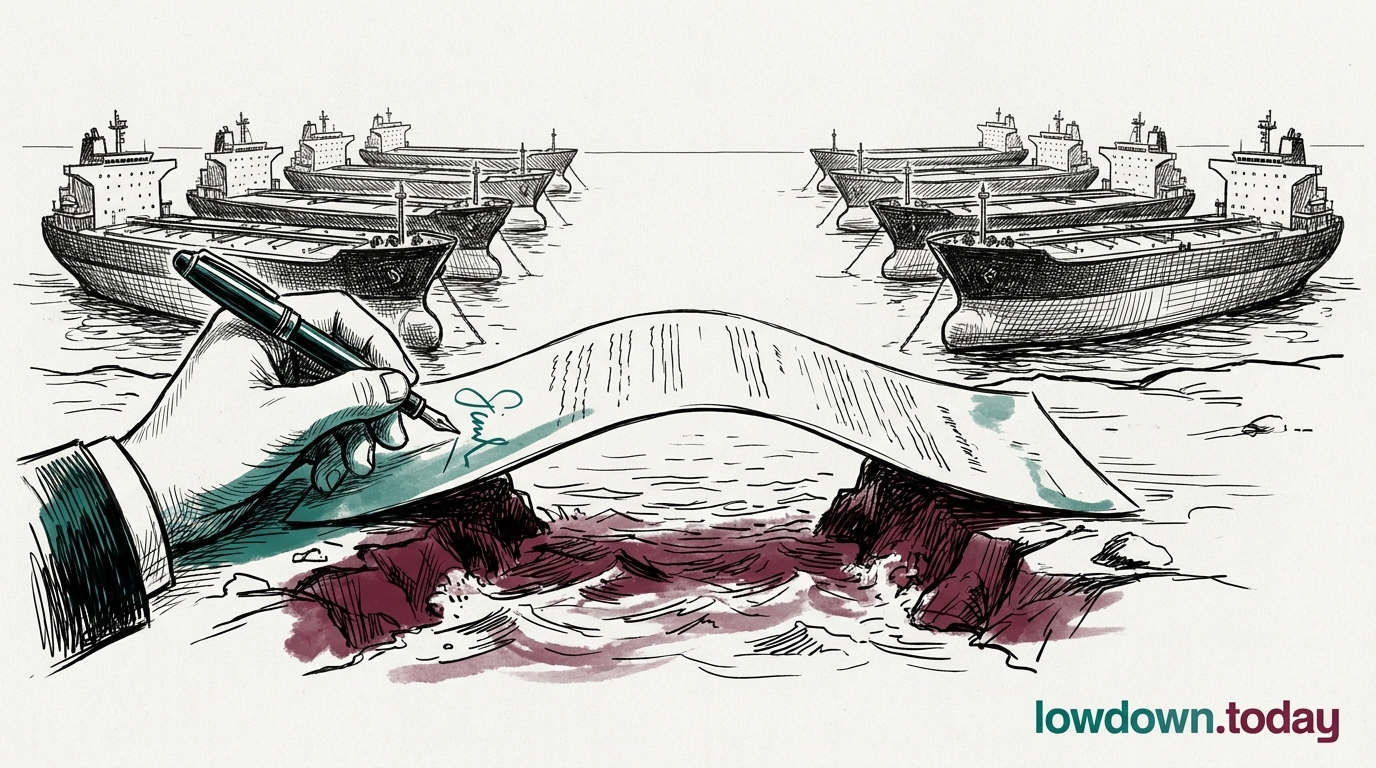
Goldman Sachs held its EUR 41/MWh forecast for H2 2026 and pushed its LNG normalisation call to end-July from end-June, while flagging a EUR 100+ winter if a Hormuz blockade holds, with around 500 vessels still anchored outside the strait at the time of the note 1. The same week, the Oxford Institute for Energy Studies (OIES), an independent research body whose gas reviews trading desks size balances against, read the identical data and landed somewhere else entirely.

OIES puts EU storage on track for 70% by November, ten points under the mandated floor . Closing that gap, on its read, needs TTF above roughly EUR 60 (about USD 20/MMBtu) to redirect Asian cargoes west against a net LNG shortfall of 2.1 bcm a month. The divergence sits on the same Atlantic cargo wave: Goldman prices a clean Qatari recovery that brings molecules back, while OIES prices a shortfall that only a price spike resolves by outbidding Asia for the new supply .

The investable point is the Q4 curve, not the prompt that event 2 covers. Desks long the winter strip against Goldman's base case are trading exactly that gap: the front-month can sit calm while the forward prices a fat tail on either side. One scenario pays if LNG normalises on schedule; the other pays if it does not.

What makes this a clean relative-value trade rather than a directional bet is that both forecasters agree on the inputs. They differ only on the LNG normalisation date, so the spread between them isolates a single, datable variable.


Deep Analysis

In plain English

Two major research institutions are looking at the same gas market and reaching very different conclusions about what winter energy prices will look like. Goldman Sachs, the investment bank, thinks prices will stay roughly where they are now; around EUR 41 per unit. The Oxford Institute for Energy Studies (OIES) thinks prices could need to reach EUR 60 before enough gas ships change course from Asia to Europe. The difference comes down to timing. Goldman expects Qatar's gas exports to start recovering by the end of July, once the disputed Strait of Hormuz shipping lane sorts itself out. OIES expects the same recovery, but reckons it will take two months longer because of insurance hurdles and the need to sweep mines from the shipping channel. That two-month difference sounds small, but it covers the peak of the summer filling season. If Qatar's gas arrives in September instead of July, the tanks will be two months' worth of fill behind, and winter gas prices would need to spike high enough to force factories and power stations to cut back; which is how prices reach EUR 60.

What could happen next?
  • Risk

    If JKM holds above USD 18/MMBtu through Q3; which Asian industrial restocking data suggests is plausible; Goldman's LNG normalisation call fails even if Hormuz reopens cleanly, making the OIES 70% floor scenario the base case rather than the downside.

    Short term · Assessed
  • Opportunity

    Desks long the Q4 2026 TTF strip against Goldman's EUR 41 base case gain roughly EUR 5,000 per lot for every EUR 1/MWh the winter strip settles above the Goldman forecast.

    Medium term · Assessed
  • Risk

    Goldman's EUR 100+ winter tail activates if Hormuz stays legally and physically closed through August, removing the end-July LNG normalisation assumption entirely and compressing the injection window to three months.

    Medium term · Suggested
First Reported In

Update #20 · Spark spread now feeds the winter deficit

InvestingLive· 22 Jun 2026
Read original
Different Perspectives
Lloyd's Market Association
War-risk underwriters price the Houthis' Red Sea attacks because the group announces its targets in advance, but the unclaimed Damietta drone gives insurers a hit with no author to price against. An attack nobody claims costs shipping more than one that is claimed, since premiums are set against a known pattern, not raw damage.
US Central Command
US Central Command
CENTCOM has announced no strike on Iran since resuming bombing on 30 July within hours of an IRGC salvo on Jordan, and centcom.mil did not respond to requests to confirm any pause. The command has gone quiet before while a larger operation was being weighed, so silence alone proves nothing about what it has or has not done.
Hengaw
Hengaw
Hengaw recorded at least 67 executions in Iran during July, of which the state acknowledged only eight, and reported the 1 August execution of protest detainee Arvin Kheirkhahan at Shahrud with no advance notice to his family. A family's first notice of a death sentence is now usually the instruction to collect a body.
Egypt
Egypt
Egypt's government asked media on 2 August to report the Damietta attack accurately, named no author, and said no findings will be published before its own investigation concludes. Cairo holds the debris and jurisdiction over an attack on its own soil, and naming a culprit now would pull it into a dispute it has avoided for five months.
Iran's Foreign Ministry
Araghchi called the Hormuz talks with Oman final-stage on 2 August, four days after his own deputy rejected Oman's lane proposal, and denied the Damietta drone strike as an Israeli false flag while two Iranian officials privately claimed it for Tehran. Iran's public position now contradicts itself on both files at once.
Bahrain and Kuwait
Bahrain and Kuwait
Bahraini and Kuwaiti aircraft flew their own strikes on Iranian depots in July with Emirati air cover behind them, and Ynetnews reports some Gulf capitals wanted the 2 August strike to proceed rather than stop. States that have already taken fire see a closing window on Iranian weakness, not a reason to pause.



