Skip to content
You can now search across every topic, entity and event.What's new
Iran Conflict 2026
17JUN

Day 60 ends with zero Iran instruments

3 min read
09:37UTC

The White House signed only nominations on 28 April as Trump posted on Truth Social that 'Iran has just informed us they are in a State of Collapse', with no Iranian confirmation.

ConflictDeveloping
Key takeaway

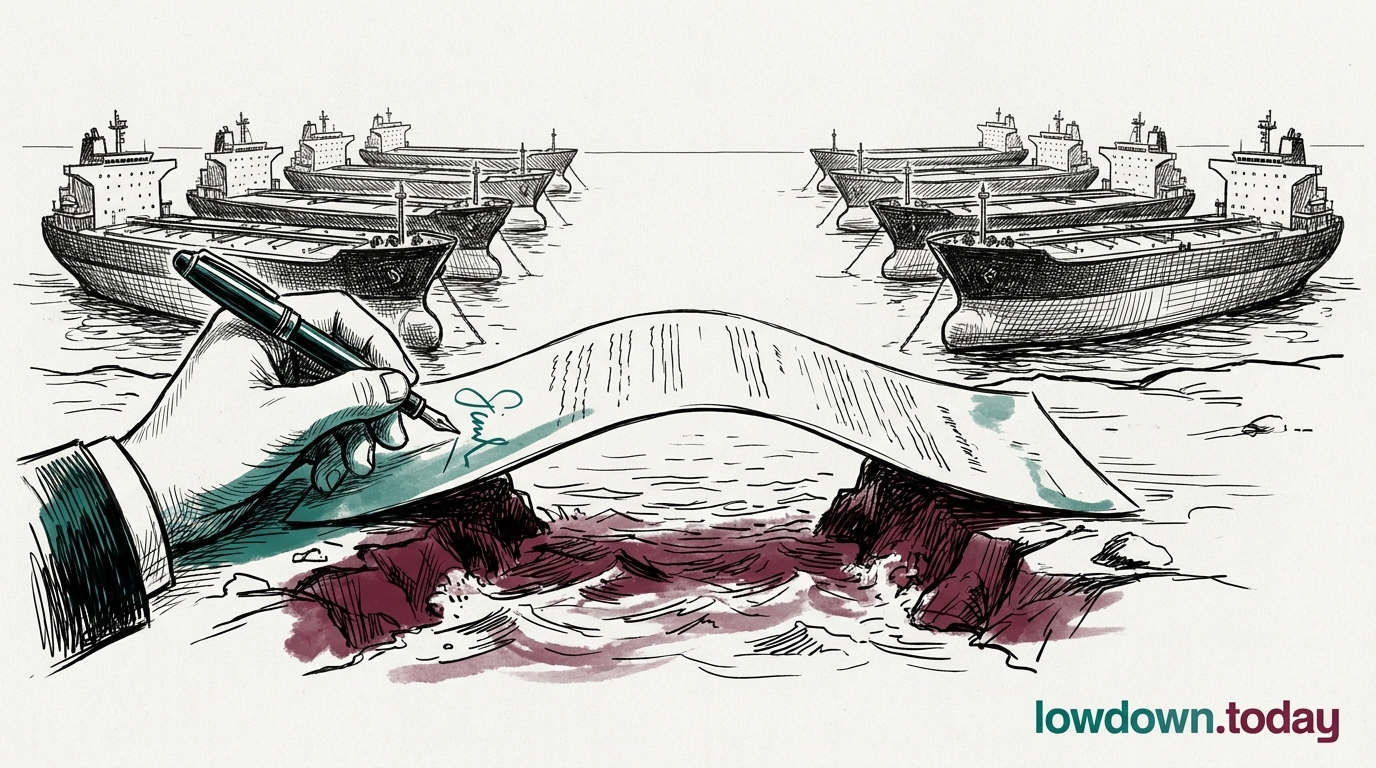
The White House signed only nominations on Day 60, leaving 60 consecutive days with zero Iran executive paper.

Donald Trump posted to Truth Social on 28 April 2026 that 'Iran has just informed us they are in a State of Collapse'. Axios reported the post and confirmed no Iranian official corroboration and no US government readout accompanying the claim. The presidential-actions index at whitehouse.gov recorded one signed paper on the same Tuesday: a slate of nominations, with no Iran-related executive order, proclamation, or presidential determination among them.

The presidential-actions index is the public register of signed executive orders, proclamations and presidential determinations maintained at whitehouse.gov/presidential-actions. Day 60 continues the unbroken streak the index recorded on Day 59 and across every prior day of the war. The most recent signed domestic order remains the 18 April mental-illness Executive Order, demonstrating signing capacity has been demonstrably available for non-Iran subjects through the entire war. The signing pen produced five energy presidential determinations on 20 April and the mental-illness EO two days earlier; the Iran column is empty by design, not by congestion.

The War Powers Resolution (WPR) deadline expires this Friday . Trump's 'state of collapse' post arrived alongside Brent Crude's post-war high in London and Iran's revised ceasefire text moving through Pakistan towards Marco Rubio. The communication channel for the alleged Iranian message is unspecified; Foreign Minister Abbas Araghchi spent 26-27 April with Vladimir Putin in St Petersburg , not in any channel that would produce a 28 April Iranian readout to Washington. The verbal claim and the empty signing column move on different clocks: the 'state of collapse' post is rhetoric without textual instrument; the index records what carries legal force, and on Day 60 it carried nominations only.

The Friday deadline runs against an index that has produced Hengli Petrochemical OFAC General License V on 24 April as the only signed Iran instrument of the entire war, a 30-day wind-down notice rather than an authorisation of force. Senator Lisa Murkowski's draft AUMF remains unintroduced on Congress.gov 24 hours before the clock runs out, leaving the war on Friday with no signed executive paper and no introduced legislative paper.


Deep Analysis

In plain English

In the United States, the president cannot keep the military at war indefinitely without permission from Congress. A 1973 law called the War Powers Resolution says the president must get that permission, called an Authorisation for Use of Military Force, within 60 days of starting a military operation, or else bring the troops home. Day 60 of this war passed on 28 April. No authorisation has been filed. No formal written order has been produced. The only public statements from the White House about the Iran conflict have been social media posts on Truth Social. This is historically unusual and legally contested.

Deep Analysis
Root Causes

The zero-instrument pattern reflects a deliberate White House strategy to preserve maximum flexibility by avoiding any written instrument that creates a legal record defining the war's scope, duration, or authorised force.

A signed executive order defining the Iran operation would constrain CENTCOM's operational discretion by creating a textual floor that lawyers on all sides could interpret. The verbal approach denies Iran's legal team, European allied planners, and congressional oversight committees any fixed text against which to measure compliance or escalation.

Senator Murkowski's failure to introduce the AUMF by her own 28 April target reflects a parallel institutional problem: Republican senators who want the war legalised face pressure from the White House not to create a voted constraint on executive authority. An AUMF filed before the WPR deadline would force a Senate floor vote that could attach conditions, geographic limits, or expiry clauses the executive branch is unwilling to accept.

What could happen next?
  • Risk

    The WPR clock expiring at 12:01 EDT on 1 May without a filed AUMF creates a legally ambiguous window in which any member of Congress can argue US military operations in the Strait of Hormuz are legally unauthorised, potentially exposing CENTCOM personnel to challenges from allied legal frameworks under the Law of Armed Conflict.

  • Precedent

    A sustained 60-day military operation with zero signed executive instruments establishes that presidential social media posts can substitute for written executive authority in national security law, setting a precedent that any future administration can invoke.

First Reported In

Update #83 · UAE quits OPEC, war signs nothing

Axios· 29 Apr 2026
Read original
Causes and effects
This Event
Day 60 ends with zero Iran instruments
The White House presidential-actions index has now logged 60 consecutive days with zero signed Iran executive paper across the entire war, demonstrating signing capacity is intact for non-Iran subjects. The War Powers Resolution clock expires at 12:01 EDT on Friday 1 May against an unbroken streak; the most recent signed domestic order is the 18 April mental-illness EO.
Different Perspectives
Lloyd's Market Association
War-risk underwriters price the Houthis' Red Sea attacks because the group announces its targets in advance, but the unclaimed Damietta drone gives insurers a hit with no author to price against. An attack nobody claims costs shipping more than one that is claimed, since premiums are set against a known pattern, not raw damage.
US Central Command
US Central Command
CENTCOM has announced no strike on Iran since resuming bombing on 30 July within hours of an IRGC salvo on Jordan, and centcom.mil did not respond to requests to confirm any pause. The command has gone quiet before while a larger operation was being weighed, so silence alone proves nothing about what it has or has not done.
Hengaw
Hengaw
Hengaw recorded at least 67 executions in Iran during July, of which the state acknowledged only eight, and reported the 1 August execution of protest detainee Arvin Kheirkhahan at Shahrud with no advance notice to his family. A family's first notice of a death sentence is now usually the instruction to collect a body.
Egypt
Egypt
Egypt's government asked media on 2 August to report the Damietta attack accurately, named no author, and said no findings will be published before its own investigation concludes. Cairo holds the debris and jurisdiction over an attack on its own soil, and naming a culprit now would pull it into a dispute it has avoided for five months.
Iran's Foreign Ministry
Araghchi called the Hormuz talks with Oman final-stage on 2 August, four days after his own deputy rejected Oman's lane proposal, and denied the Damietta drone strike as an Israeli false flag while two Iranian officials privately claimed it for Tehran. Iran's public position now contradicts itself on both files at once.
Bahrain and Kuwait
Bahrain and Kuwait
Bahraini and Kuwaiti aircraft flew their own strikes on Iranian depots in July with Emirati air cover behind them, and Ynetnews reports some Gulf capitals wanted the 2 August strike to proceed rather than stop. States that have already taken fire see a closing window on Iranian weakness, not a reason to pause.



