Skip to content
Foundations rebuilt, and the first new thing is here: search across every topic, entity, and event.Try search
Iran Conflict 2026
11JUN

GL-U Sanctions Cliff in Nine Days

2 min read
09:17UTC

OFAC / US Treasury

ConflictDeveloping
Key takeaway

GL-U expiry is the first economic cliff the ceasefire must clear.

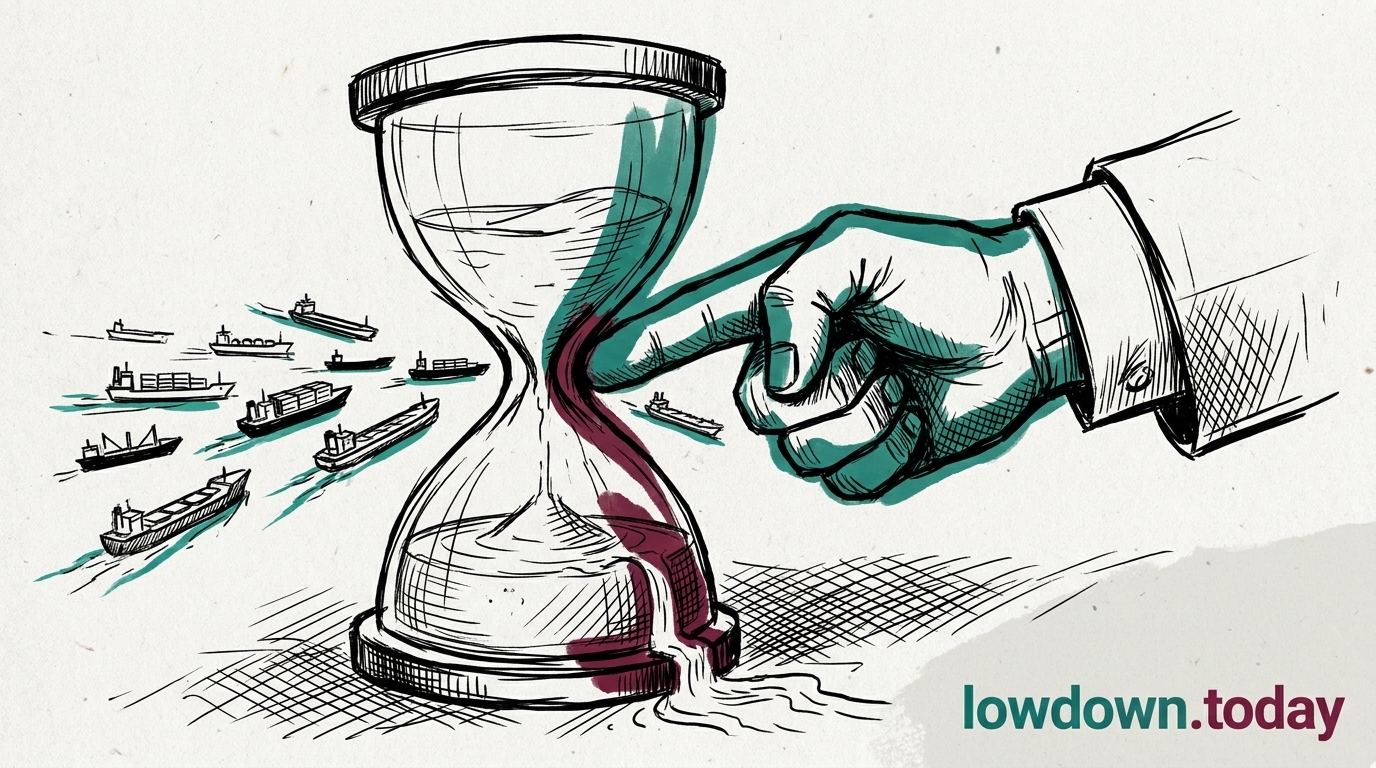
OFAC (Office of Foreign Assets Control) General License U expires on 19 April with no Treasury renewal signal issued. GL-U was the first broad US authorisation of Iranian-origin crude since sanctions began . Its expiry was built into the instrument; the question is whether the ceasefire creates political pressure for renewal. Treasury's silence so far is ambiguous: it may reflect deliberate leverage (renewable on demand) or indifference (the ceasefire will collapse before it matters).

GL-U lapses on 19 April; ceasefire ends 22 April. Tanker operators face a three-day window of legal exposure where the cargo is recriminalised but the political situation remains in flux. The 325 tankers stranded inside the Gulf would face simultaneous maritime and sanctions legal jeopardy. Insurers will not cover that exposure without formal renewal.

Renewal would signal US flexibility on sanctions and support the ceasefire's economic architecture. Non-renewal would force tanker operators to choose between legal exposure and abandoning cargo, three days before the political deadline that was supposed to resolve everything.

Deep Analysis

In plain English

There is a legal permit called General License U that lets ships carry Iranian oil without breaking US sanctions law. It expires in nine days. 325 oil tankers are stuck waiting to know if they can deliver their cargo legally. No one in the US government has said whether they will renew it. If they do not, those ships' oil becomes illegal to sell — three days before the ceasefire itself is even supposed to end.

Deep Analysis
Root Causes

GL-U exists because the ceasefire announcement created an immediate legal problem: 325 tankers loaded with Iranian crude before the ceasefire were suddenly in transit without legal authorisation. Treasury issued GL-U as a temporary fix, not a permanent policy shift.

Its 30-day life span was built in; renewal requires a positive decision that the ceasefire has been extended or formalised. The silence signals no such decision has been made.

What could happen next?
  • Risk

    GL-U non-renewal recriminalises 325 stranded tankers' cargoes three days before the ceasefire ends, creating simultaneous maritime and sanctions legal jeopardy that insurers will not cover.

  • Consequence

    Treasury's decision on GL-U is the first concrete economic signal of the ceasefire's viability — renewal signals flexibility, lapse signals maximum pressure is unchanged.

First Reported In

Update #64 · Islamabad talks open already cracked

Washington Post· 10 Apr 2026
Read original
Different Perspectives
Oil markets / Lloyd's underwriters
Futures markets priced CENTCOM's strikes-complete statement as a de-escalation signal and pushed Brent down 1.7 per cent to $94.71, even as the IRGC declared Hormuz closed. Lloyd's war-risk premiums held elevated because institutional de-listing requires a UN Security Council resolution that Russia and China have just shown they will block.
Pakistan (mediator)
Pakistan (mediator)
Interior minister Mohsin Naqvi carried dual civilian and military letters to Mojtaba Khamenei in Tehran on 6-7 June with no public response. The IRGC's Hormuz closure on 11 June shows the corps is acting independently of the channel Pakistan is using, making the mediation structurally unable to produce a binding commitment without direct IRGC access.
Russia and China
Russia and China
Russia and China voted against GOV/2026/40 at the IAEA Board, following through on the blocking position coordinated with Grossi in Geneva on 5 June; both states continue to oppose Western institutional pressure on Iran at every multilateral venue.
E3 and IAEA (UK, France, Germany)
The E3 co-sponsored IAEA resolution GOV/2026/40, adopted 21-3-10 on 10 June, demanding Iran disclose 440.9 kg of unaccounted HEU and admit inspectors to four denied facilities. The 10 abstentions and Russia-China noes leave any Security Council referral without a viable enforcement path.
IRGC / Iran military command
The corps declared Hormuz closed to all traffic on 11 June and claimed two vessels struck, overriding the MoU its own civilian negotiators were pursuing through Pakistan. The closure order used the Persian Gulf Strait Authority apparatus to convert a toll mechanism into a military prohibition.
Trump administration / CENTCOM
CENTCOM completed a second day of strikes on Tehran, Sirik and Minab, rejected the IRGC Hormuz closure as inconsistent with observed transit, and said strikes were complete. Hegseth framed the bombing explicitly as the negotiation: the method is coercive deal-making with no stated pause threshold.