Skip to content
Foundations rebuilt, and the first new thing is here: search across every topic, entity, and event.Try search
Iran Conflict 2026
11JUN

GL-U lapses Saturday, Treasury silent 25 days

4 min read
09:17UTC

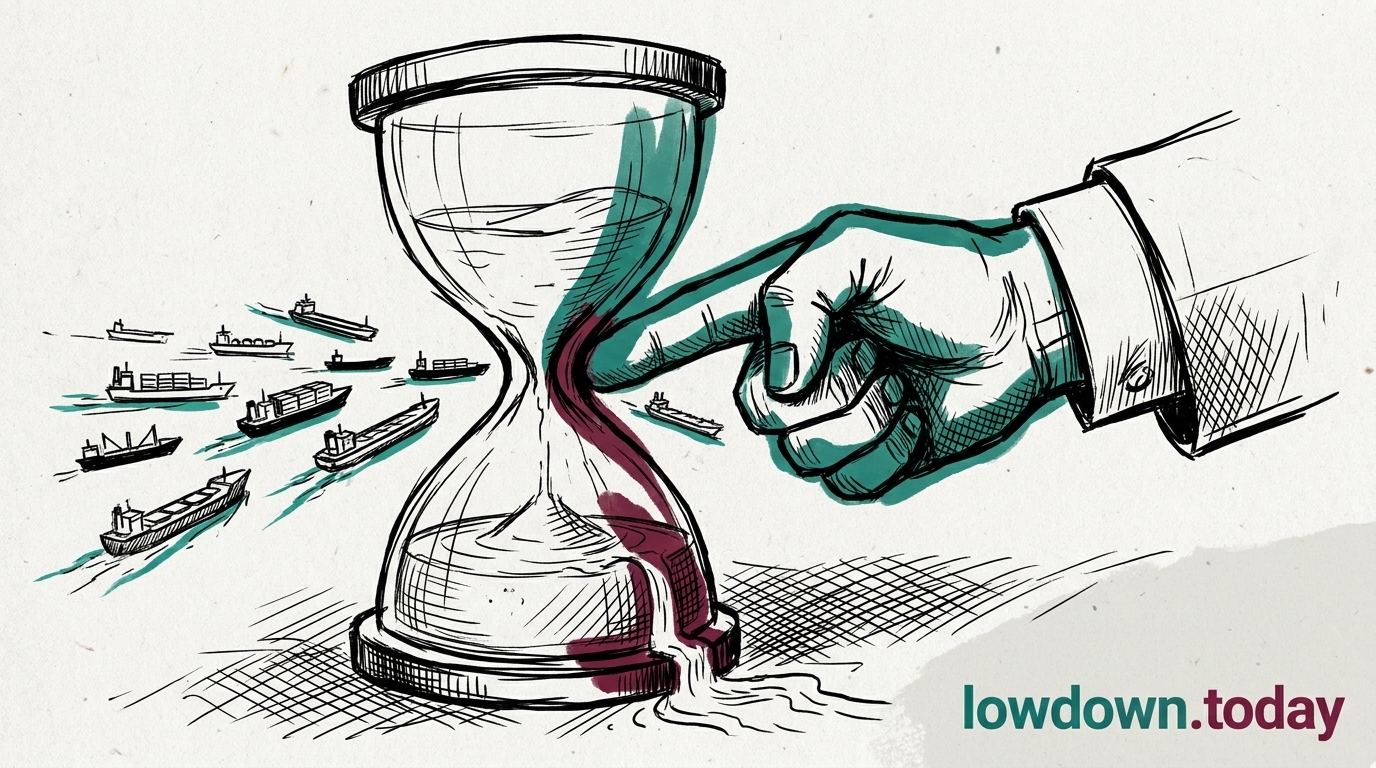
OFAC's General License U expires at 00:01 EDT on 19 April with approximately 325 tankers of Iranian oil inside its scope. Treasury has issued no Iran-related sanctions communication of any kind in 25 days.

ConflictAssessed
Key takeaway

Renewing GL-U contradicts the blockade; letting it lapse hands dark-fleet operators 325 cargoes worth of legal cover.

OFAC (Office of Foreign Assets Control) General License U expires at 00:01 EDT on 19 April, five days from filing 1. The licence authorises delivery, sale, offloading, bunkering, insurance and crewing for Iranian-origin crude and petroleum products loaded onto vessels on or before 20 March 2026. Approximately 325 tankers fall within its terms. A 14 April audit confirmed no renewal, replacement or extension has been published. Treasury has issued no Iran-related sanctions communication of any kind in 25 days, the same window that now covers every escalation since the 18 March signed actions tracks the silence.

Treasury's 25 days of silence reflect a structural bind, not administrative inertia. Renewing GL-U on Saturday would legally authorise the delivery of the same Iranian oil the blockade is trying to keep off the market. Allowing it to lapse would push every cargo currently moving under its protection into the same legal grey zone that makes dark-fleet identity fraud profitable. Windward has already tracked 14 sanctioned vessels using the registry identities of scrapped ships to evade detection in the strait ; the economics of that trade improve every additional day non-sanctioned transits are blocked. CENTCOM patrols cannot cross-reference physical hulls against registry records in real time.

The practical edge for crews is sharper than the legal abstraction. A lapse at 00:01 EDT on Saturday means stranded cargoes that banks will not finance the unloading of, unpaid wage exposure while vessels sit at anchor waiting for owners to re-paper their insurance, and P&I (Protection and Indemnity) cover voids that can extend personal liability to the master and senior officers. OFAC general licences protect voyages already in transit on the effective date, but only if the licence remains valid at the moment of any enforcement action. The 325 vessels are at various voyage stages; the most exposed are those that load after 00:01 EDT without a successor licence in place.

The deadline sits inside a tighter cluster. The ceasefire window closes on 22 April. The 60-day clock under the War Powers Resolution expires around 29 April, with Senate Democrats forcing a vote this week . None of the three deadlines has a signed presidential instrument behind it. Treasury's silence is compatible with at least three explanations (successor licence in preparation, deliberate lapse as enforcement, internal stalemate), and the silence itself is not evidence of any of them.

Deep Analysis

In plain English

The US Treasury issued a special permit in March that allowed Iranian oil already loaded onto ships to complete its delivery, even though the US was sanctioning Iran. This was done to prevent chaos: 325 shiploads of oil were already in transit and needed a legal pathway to arrive somewhere. That permit expires at one minute past midnight on Saturday morning. The US government has said nothing about whether it will be renewed or replaced. If the permit expires without replacement, the oil on those 325 tankers suddenly has no legal protection. Insurance companies stop covering the ships. Banks stop financing the unloading. The crews on board face potential personal liability. In practice, this is an enormous problem for people who had nothing to do with US-Iran politics: they are shipping companies and sailors caught between two contradictory US government policies. If the permit is renewed, that means the US government is legally authorising the delivery of Iranian oil that its own blockade is trying to prevent. Either outcome creates a problem.

Deep Analysis
Root Causes

The structural bind is not administrative inertia but a genuine policy contradiction. Renewing GL-U would legally authorise the delivery of Iranian-origin oil that the blockade is attempting to interdict, which would hand Iran a propaganda point and expose the blockade's legal inconsistency. Allowing GL-U to lapse without replacement pushes 325 tanker cargoes into a legal grey zone that benefits dark-fleet operators at the expense of non-sanctioned ones.

Treasury's 25-day silence suggests a third option: deliberate ambiguity, where the absence of guidance creates chilling effects on non-sanctioned operators (achieving blockade-consistent outcomes) without Treasury having to formally contradict the licences it issued or the blockade it is supposed to support. This pattern is consistent with how OFAC has historically managed politically sensitive sanction transitions.

What could happen next?
  • Risk

    A lapse without successor licence triggers simultaneous P&I cover voids, trade-finance margin calls, and master-officer personal liability for the most exposed of the 325 in-scope tankers within 48 hours of Saturday midnight.

    Immediate · 0.85
  • Consequence

    Deliberate lapse expands dark-fleet economics by removing the legal pathway legitimate operators were using, accelerating the shift to sanctions-evasion infrastructure and identity fraud.

    Short term · 0.8
  • Precedent

    How OFAC handles the GL-U lapse will set the enforcement baseline for any future sanctions snap-back scenario involving in-transit cargoes.

    Long term · 0.75
First Reported In

Update #68 · Sanctioned tankers slip the blockade

Baker McKenzie Sanctions News· 14 Apr 2026
Read original
Different Perspectives
Oil markets / Lloyd's underwriters
Futures markets priced CENTCOM's strikes-complete statement as a de-escalation signal and pushed Brent down 1.7 per cent to $94.71, even as the IRGC declared Hormuz closed. Lloyd's war-risk premiums held elevated because institutional de-listing requires a UN Security Council resolution that Russia and China have just shown they will block.
Pakistan (mediator)
Pakistan (mediator)
Interior minister Mohsin Naqvi carried dual civilian and military letters to Mojtaba Khamenei in Tehran on 6-7 June with no public response. The IRGC's Hormuz closure on 11 June shows the corps is acting independently of the channel Pakistan is using, making the mediation structurally unable to produce a binding commitment without direct IRGC access.
Russia and China
Russia and China
Russia and China voted against GOV/2026/40 at the IAEA Board, following through on the blocking position coordinated with Grossi in Geneva on 5 June; both states continue to oppose Western institutional pressure on Iran at every multilateral venue.
E3 and IAEA (UK, France, Germany)
The E3 co-sponsored IAEA resolution GOV/2026/40, adopted 21-3-10 on 10 June, demanding Iran disclose 440.9 kg of unaccounted HEU and admit inspectors to four denied facilities. The 10 abstentions and Russia-China noes leave any Security Council referral without a viable enforcement path.
IRGC / Iran military command
The corps declared Hormuz closed to all traffic on 11 June and claimed two vessels struck, overriding the MoU its own civilian negotiators were pursuing through Pakistan. The closure order used the Persian Gulf Strait Authority apparatus to convert a toll mechanism into a military prohibition.
Trump administration / CENTCOM
CENTCOM completed a second day of strikes on Tehran, Sirik and Minab, rejected the IRGC Hormuz closure as inconsistent with observed transit, and said strikes were complete. Hegseth framed the bombing explicitly as the negotiation: the method is coercive deal-making with no stated pause threshold.