Skip to content
Briefings are running a touch slower this week while we rebuild the foundations.See roadmap
Iran Conflict 2026
9JUN

QatarEnergy halts all LNG production

3 min read
10:36UTC

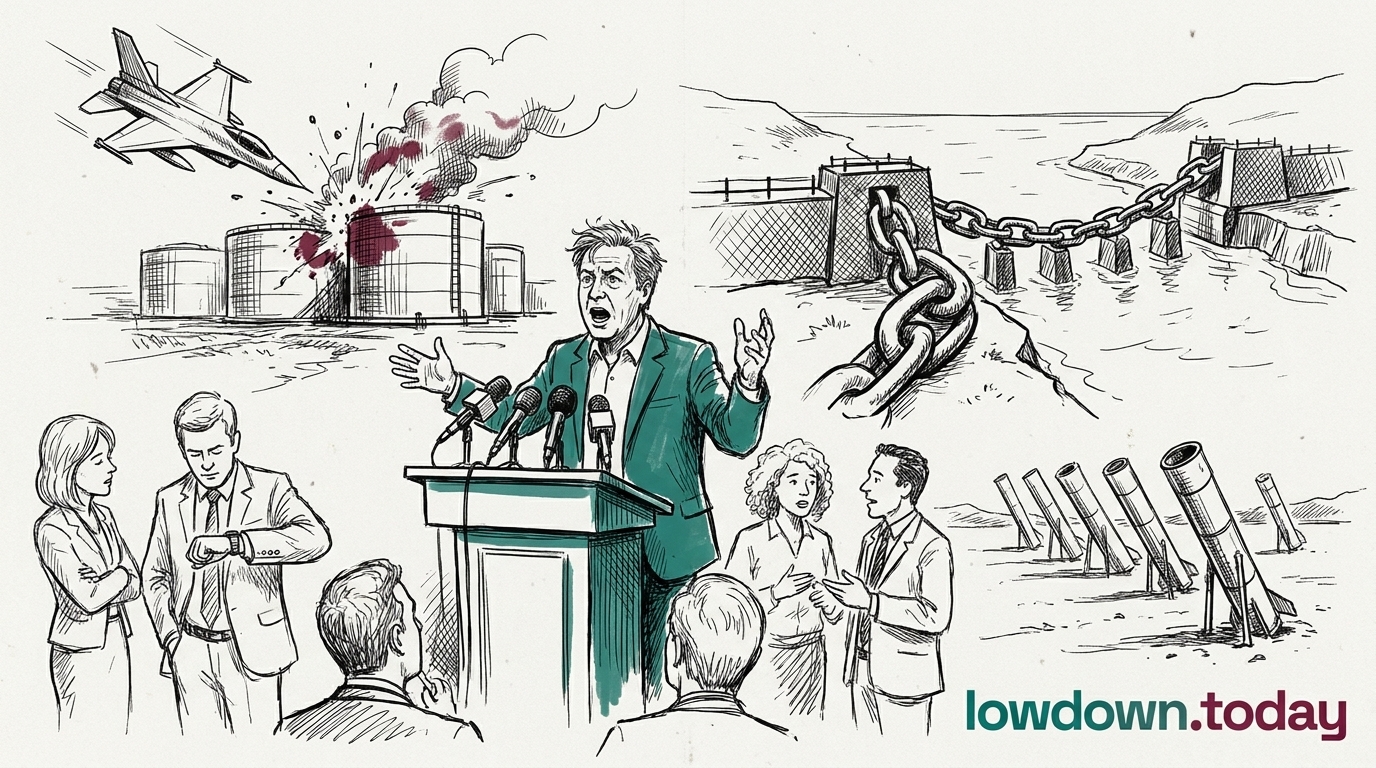
QatarEnergy shut all production at Ras Laffan and Mesaieed — 14 processing trains, 77 million tonnes of annual capacity, one-fifth of the world's LNG supply removed from global markets in a single evening.

ConflictDeveloping
Key takeaway

The critical unknown is not whether production stopped but whether Qatar can credibly signal to Iran that restored production will not be re-targeted — without that security assurance, the shutdown becomes indefinite regardless of physical damage extent.

QatarEnergy confirmed it had ceased all LNG production at Ras Laffan and Mesaieed following Monday's Iranian drone strikes. Ras Laffan is the world's largest LNG export facility — 14 processing trains with 77 million tonnes of annual capacity. Qatar produces 20% of the world's Liquefied Natural Gas. The shutdown is the single largest removal of LNG supply from global markets since the commodity began trading at scale.

The production halt completes a systematic degradation of The Gulf's energy export architecture. The IRGC's closure of the strait of Hormuz cut transit, with more than 150 tankers anchored in open waters . A separate strike shut Saudi Aramco's Ras Tanura refinery — 550,000 barrels per day of refining capacity. With Ras Laffan offline, Iran has disabled all three pillars: production, refining, and transit. No single actor has simultaneously disrupted Gulf energy output at this scale since Saddam Hussein's forces set fire to Kuwaiti oil wells during the 1991 Gulf War.

LNG facilities cannot be rerouted or substituted in days. Liquefaction trains take three to five years to build and require specialised cold-chain infrastructure vulnerable to drone and missile attack. QatarEnergy's decision to halt operations reflects a judgement that continued production under threat is untenable. Restarting LNG trains after a safety shutdown typically takes days to weeks, depending on the damage assessment required.

Qatar had been expanding Ras Laffan through the North Field Expansion — the largest LNG project in history, intended to raise output to 126 million tonnes per year by 2027. Those expansion plans assumed the facilities themselves were not targets. That assumption is now void.

Deep Analysis

In plain English

Ras Laffan is not a factory that can simply be fixed and restarted. It is a tightly integrated system where natural gas from undersea wells is piped in, cooled to minus 162 degrees Celsius to become liquid, loaded onto specialised tankers, and shipped globally. Each of the 14 processing trains is a multi-billion-dollar installation that takes years to build. Even a precautionary shutdown affects the entire chain — the gas still flows from the seabed and must be managed, the tankers sit idle, and the receiving terminals in Europe and Asia receive nothing. Every day offline costs Qatar roughly $200–250 million in lost export revenue at pre-crisis prices, and substantially more at current spot prices.

Deep Analysis
Synthesis

The production halt transforms a military event into an enduring economic one with political feedback loops: the longer Ras Laffan remains offline, the greater the structural pressure on European governments to accept a negotiated settlement on terms that may require concessions Washington and Tel Aviv do not currently support. Iran has effectively weaponised European energy dependency as a de-escalation lever — and the longer the shutdown persists, the more leverage that lever generates.

Root Causes

Qatar's decision to concentrate virtually all LNG production in two adjacent coastal industrial clusters was an economically rational choice driven by North Field geography and the scale economies of co-located liquefaction trains. That concentration created a single-theatre vulnerability: an attacker need not destroy each train individually but merely render the zone unsafe for operations. Economic optimisation has become a strategic liability.

Escalation

Restart probability is low in the near term because Qatar cannot resume production without either Iranian restraint commitments (which require a functioning central command authority in Tehran that the foreign minister has effectively disavowed) or credible air defence guarantees from the US (which imply a deeper US defensive commitment to Qatar than has been publicly acknowledged).

What could happen next?
  • Consequence

    Force majeure invocation by QatarEnergy will cascade through European utility balance sheets and accelerate emergency EU energy intervention, potentially including renewed calls for a joint purchasing mechanism.

    Immediate · Assessed
  • Risk

    If liquefaction train damage is confirmed rather than precautionary, global LNG tradeable capacity is reduced by approximately 77 million tonnes — roughly 20% of global trade — for a reconstruction period of three to five years.

    Long term · Suggested
  • Opportunity

    US LNG exporters (Cheniere, Venture Global) and Australian producers face a structural demand windfall; long-term contract negotiations for non-Gulf supply will accelerate significantly.

    Short term · Suggested
First Reported In

Update #11 · Qatar's LNG dark; Trump eyes ground troops

Al Jazeera· 2 Mar 2026
Read original
Causes and effects
This Event
QatarEnergy halts all LNG production
The shutdown of the world's largest LNG export facility removes one-fifth of global LNG supply, completing Iran's degradation of all three pillars of Gulf energy exports — production at Ras Laffan, refining at Ras Tanura, and transit through the Strait of Hormuz.
Different Perspectives
Markets
Markets
Brent crude rose 2.2 per cent to $96.34 on 10 June, reversing a 7 per cent weekly decline built on deal optimism, as the overnight exchange repriced the Strait of Hormuz risk premium in a single session. The move reflects transit-risk repricing rather than supply shock: Iran's exports had already collapsed to below 300,000 barrels per day.
Pakistan
Pakistan
Pakistan's Naqvi channel, the only mediation track carrying both civilian and military buy-in, was stress-tested by live ordnance within 48 hours of the 6-7 June Tehran visit. Whether Washington informed Islamabad of the imminent strike plan while Naqvi was in Tehran remains undisclosed, putting the channel's neutrality under scrutiny.
Kuwait
Kuwait
Kuwait hosted the third Iranian strike on its soil since the 3 June airport drone attack, with Ali Al Salem airbase targeted in the three-country salvo. Its recent $1.98 billion Anduril Anvil counter-drone purchase signals it is rearming rather than reconsidering its hosting posture.
Bahrain
Bahrain
Bahrain absorbed the IRGC barrage via PAC-3 intercepts with its magazine already at 87 per cent depletion and no resupply before 2027. Sounding air-raid sirens over Manama, it faced the intercept burden with the thinnest defensive stack in the Gulf coalition.
Jordan
Jordan
Jordan reported all five incoming missiles intercepted with no injuries and no damage, a clean defensive performance that strengthens Amman's case for staying in the Western coalition without escalating its own posture. It now sits on Iran's target list for the first time despite not being a party to the Abraham Accords confrontation.
Iran / IRGC
Iran / IRGC
Foreign Minister Araghchi posted on X that US forces should 'leave our region if you want to be safe' and framed the exchange as a US defeat, while the IRGC claimed 21 targets hit and an F-35 hangar destroyed. The claims serve a domestic and Arab-audience framing rather than a verified battle-damage assessment.