Skip to content
Briefings are running a touch slower this week while we rebuild the foundations.See roadmap
Iran Conflict 2026
9JUN

Israel Strikes Iran's Largest Domestic Fuel Facility

2 min read
10:36UTC

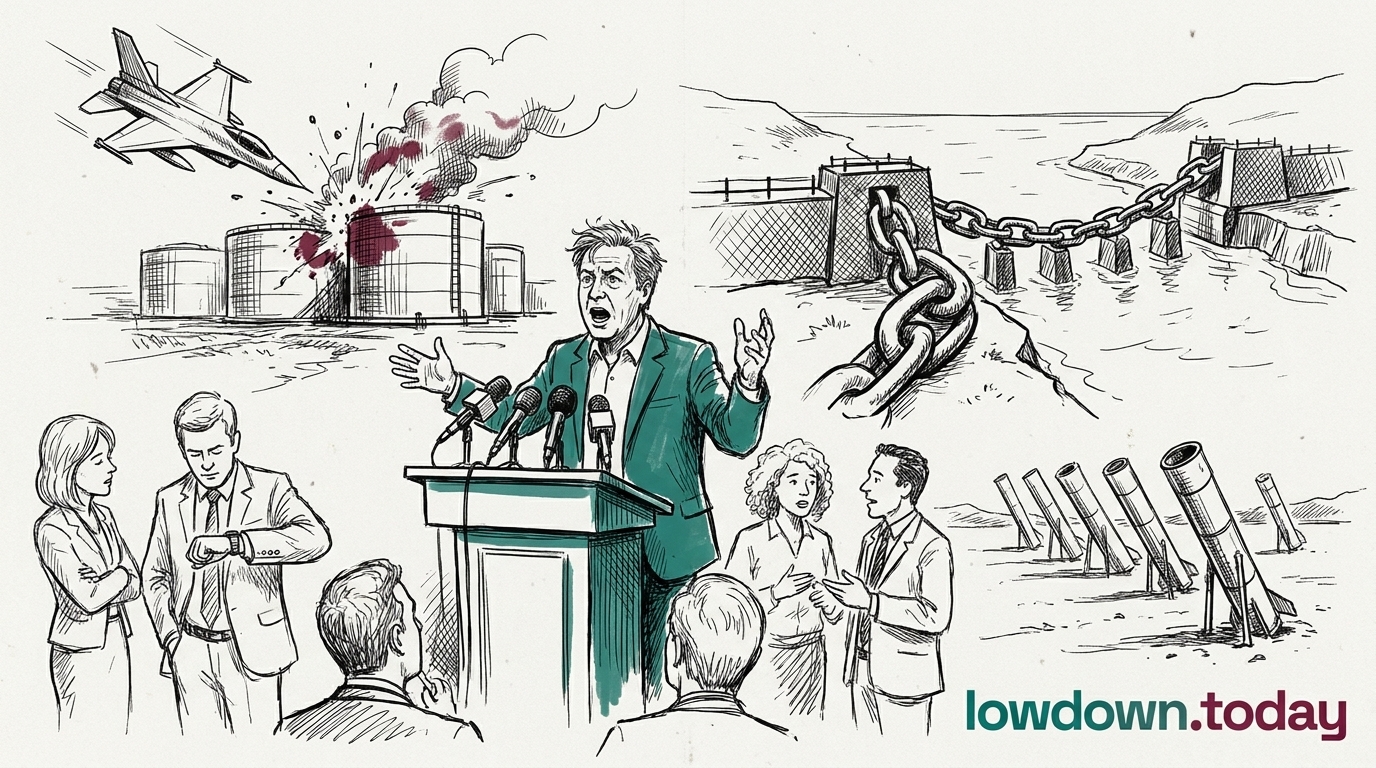
The Mahshahr strike marks a shift from targeting export infrastructure to civilian fuel supply, destroying an estimated 70% of Iran's gasoline production capacity.

ConflictDeveloping
Key takeaway

Israel's targeting shifted from export to civilian fuel supply.

The Israel Defence Forces struck the Mahshahr Petrochemical Complex on 5 April, Iran's largest, responsible for an estimated 70% of domestic gasoline production. The same day, IDF strikes hit air defence systems and ballistic missile arrays in Tehran and the al-Shalamcheh border crossing between Iraq and Iran.

The Mahshahr strike marks a shift in targeting logic. Previous Israeli operations focused on export infrastructure: refineries, terminals, pipeline nodes. Mahshahr supplies the domestic market. Destroying 70% of a country's gasoline production capacity is a material reduction in the civilian population's access to fuel and transportation. The distinction between strategic and civilian-impact targeting has narrowed considerably.

The 100-plus US legal experts who raised IHL concerns about university strikes will find sharper grounds here. Export infrastructure has a clearer dual-use military rationale. A petrochemical complex that supplies civilian petrol does not. The humanitarian consequences will be measured in fuel shortages affecting transportation, agriculture, and heating within days.

Reconstruction of a facility of this scale requires years under normal conditions and is effectively impossible under the current sanctions framework, which restricts the import of industrial equipment. Iran's domestic fuel crisis, already strained by wartime disruption, enters a new phase.

Deep Analysis

In plain English

Israel bombed the facility that makes most of Iran's petrol. This will cause fuel shortages for ordinary Iranians, not just reduce export revenue. It is a different kind of target from oil terminals and military sites, because it directly affects civilians' ability to drive, heat their homes, and transport food.

Deep Analysis
Root Causes

The escalation in targeting follows from the attritional logic of the air campaign. With export infrastructure already degraded over six weeks, the target set necessarily expands to domestic facilities. The distinction between strategic and civilian infrastructure erodes as the campaign matures.

Escalation

Escalatory. The shift from export to domestic fuel infrastructure represents a qualitative change in the campaign's humanitarian impact. It increases internal pressure on the Iranian government but also increases the IRGC's ability to rally domestic support against external aggression.

What could happen next?
  • Fuel shortages affecting civilian transportation and agriculture within days

    days · Assessed
  • International humanitarian law scrutiny intensifies over civilian infrastructure targeting

    weeks · Assessed
  • Internal pressure on Iranian government increases but may rally domestic support for IRGC

    weeks · Suggested
First Reported In

Update #60 · Pakistan's Ceasefire Plan Fills the Vacuum

Alma Center· 6 Apr 2026
Read original
Causes and effects
This Event
Israel Strikes Iran's Largest Domestic Fuel Facility
Previous Israeli operations focused on export infrastructure: refineries, terminals, pipeline nodes. Mahshahr supplies the domestic market. Destroying 70% of a country's gasoline production capacity is a material reduction in the civilian population's access to fuel and transportation. The distinction between strategic and civilian-impact targeting has narrowed to the point of disappearing.
Different Perspectives
Markets
Markets
Brent crude rose 2.2 per cent to $96.34 on 10 June, reversing a 7 per cent weekly decline built on deal optimism, as the overnight exchange repriced the Strait of Hormuz risk premium in a single session. The move reflects transit-risk repricing rather than supply shock: Iran's exports had already collapsed to below 300,000 barrels per day.
Pakistan
Pakistan
Pakistan's Naqvi channel, the only mediation track carrying both civilian and military buy-in, was stress-tested by live ordnance within 48 hours of the 6-7 June Tehran visit. Whether Washington informed Islamabad of the imminent strike plan while Naqvi was in Tehran remains undisclosed, putting the channel's neutrality under scrutiny.
Kuwait
Kuwait
Kuwait hosted the third Iranian strike on its soil since the 3 June airport drone attack, with Ali Al Salem airbase targeted in the three-country salvo. Its recent $1.98 billion Anduril Anvil counter-drone purchase signals it is rearming rather than reconsidering its hosting posture.
Bahrain
Bahrain
Bahrain absorbed the IRGC barrage via PAC-3 intercepts with its magazine already at 87 per cent depletion and no resupply before 2027. Sounding air-raid sirens over Manama, it faced the intercept burden with the thinnest defensive stack in the Gulf coalition.
Jordan
Jordan
Jordan reported all five incoming missiles intercepted with no injuries and no damage, a clean defensive performance that strengthens Amman's case for staying in the Western coalition without escalating its own posture. It now sits on Iran's target list for the first time despite not being a party to the Abraham Accords confrontation.
Iran / IRGC
Iran / IRGC
Foreign Minister Araghchi posted on X that US forces should 'leave our region if you want to be safe' and framed the exchange as a US defeat, while the IRGC claimed 21 targets hit and an F-35 hangar destroyed. The claims serve a domestic and Arab-audience framing rather than a verified battle-damage assessment.