Skip to content
You can now search across every topic, entity and event.What's new
Iran Conflict 2026
3JUN

GPS blacked out across Gulf chokepoints

2 min read
09:04UTC

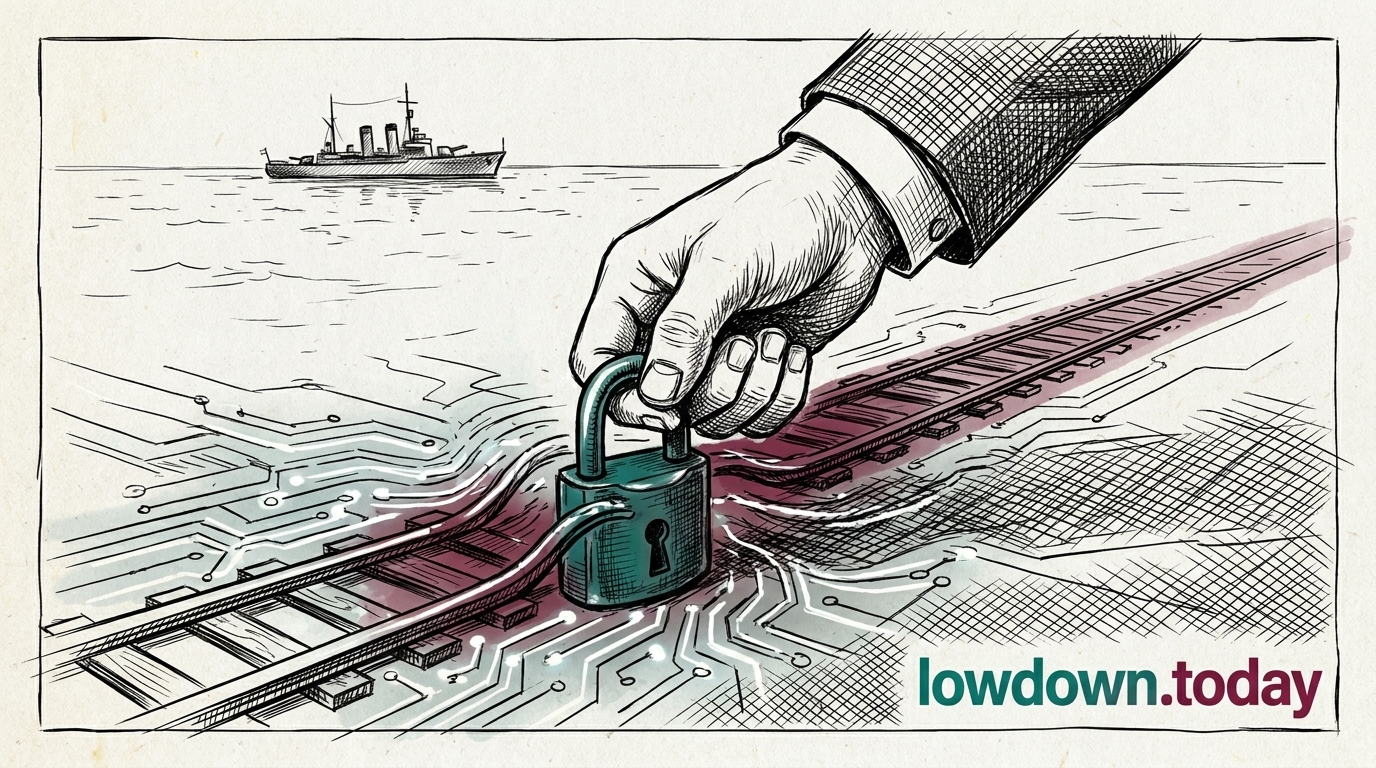
US and British maritime authorities confirm an electronic warfare corridor stretching 2,500 kilometres across two of the world's three critical sea lanes. There is no safe detour.

ConflictDeveloping
Key takeaway

An electronic warfare corridor now links two chokepoints, leaving no safe maritime alternative.

MARAD Advisory 2026-004 and UKMTO data confirm severe GNSS/GPS interference extending from the strait of Hormuz across the Gulf of Oman and into the Red Sea near Bab al-Mandeb 1. This is not a side effect of military operations but a deliberate electronic denial zone spanning two of the world's three critical maritime chokepoints.

No modern peacetime precedent exists for electronic warfare denial at this scale. During the Tanker War (1987 to 1988), mines and missile boats threatened individual vessels. The current denial threatens the navigational infrastructure itself, degrading the ability of any vessel to determine its own position across a 2,500-kilometre corridor. The Houthis threatened Bab al-Mandeb closure the day after Pakistan confirmed talks had stalled.

Vessels diverting from Hormuz toward the Red Sea now navigate degraded positioning systems approaching a second contested chokepoint. Roughly 4.5 million barrels per day and 12% of global trade pass through Bab al-Mandeb. Combined with near-total Hormuz closure, the world's two most important oil chokepoints are under simultaneous pressure for the first time since the 1973 oil crisis 2. The Cape of Good Hope route adds 10 to 14 days and $500,000 to $1 million per voyage in fuel costs.


Deep Analysis

In plain English

Ships navigate using GPS-style satellite signals. Someone is deliberately jamming those signals across a 2,500-kilometre corridor stretching from the Strait of Hormuz in the Gulf to the Bab al-Mandeb in the Red Sea. This matters because ships diverted away from Hormuz (which Iran controls) have been heading toward the Red Sea instead. The GNSS jamming makes that alternative route significantly more dangerous, because ships cannot accurately determine their own position. The practical effect: there is now no safe, insurable sea route between the Gulf and global markets. Ships must go around Africa instead, adding 10 to 14 days and significant fuel costs to every voyage.

First Reported In

Update #51 · Iran hits aluminium plants; Hormuz emptying

International Maritime Organisation / UKMTO· 29 Mar 2026
Read original
Different Perspectives
Oil markets / Lloyd's of London
Brent fell to near $87.33 on 80 per cent deal-probability pricing, but Lloyd's has not de-listed Hormuz from its war-risk register and shipping diversions continue at 139 vessels. Insurance markets are lagging futures: physical risk remains while financial markets have spent the good news before the paper exists.
India
India
Modi is expected to raise the deaths of three Indian sailors in the 11 June CENTCOM strike on the MT Settebello with Trump at G7 sidelines, the first non-party leader to put the blockade's human cost into a formal bilateral. New Delhi is also a major Iranian oil buyer whose import volumes the sanctions-relief terms will govern.
Israel (Netanyahu)
Israel (Netanyahu)
Netanyahu stated Israel is not party to the deal on 12 June; Defence Minister Katz ruled out the Lebanon withdrawal Iran's draft demands, inserting a third blocker the US-Iran negotiating channel cannot resolve. Israel's position tethers Hormuz reopening to a Lebanon settlement Washington has not brokered.
Pakistan (mediator, Sharif/Naqvi)
Sharif declared a final agreed text on 12 June before either principal confirmed it, running two Tehran visits in under a week without securing a written IRGC or Khamenei response. Islamabad's incentive to claim a diplomatic win outpaces its standing to deliver either capital's signature.
Iran foreign ministry (Araghchi)
Araghchi declared digital signing within days while setting dilute-in-Iran as a non-negotiable red line on the 440.9 kg HEU stockpile, a standing Tehran position he cannot override without authorisation from Khamenei, reachable only by courier. The FM track is sprinting to close before the IRGC reasserts control.
Trump administration / CENTCOM
Vance called the deal still TBD on 12 June while CENTCOM downed Iranian drones over Hormuz for a second consecutive night and the White House register stayed blank. Washington holds the ship-out position on HEU and has not signed an Iran instrument in over 100 days of conflict.



