Skip to content
Briefings are running a touch slower this week while we rebuild the foundations.See roadmap
Iran Conflict 2026
29MAY

GL-U expiry nears with no renewal

2 min read
08:47UTC

OFAC's General License U expires 19 April with no Treasury signal, after 23 days of silence on Iran sanctions.

ConflictDeveloping
Key takeaway

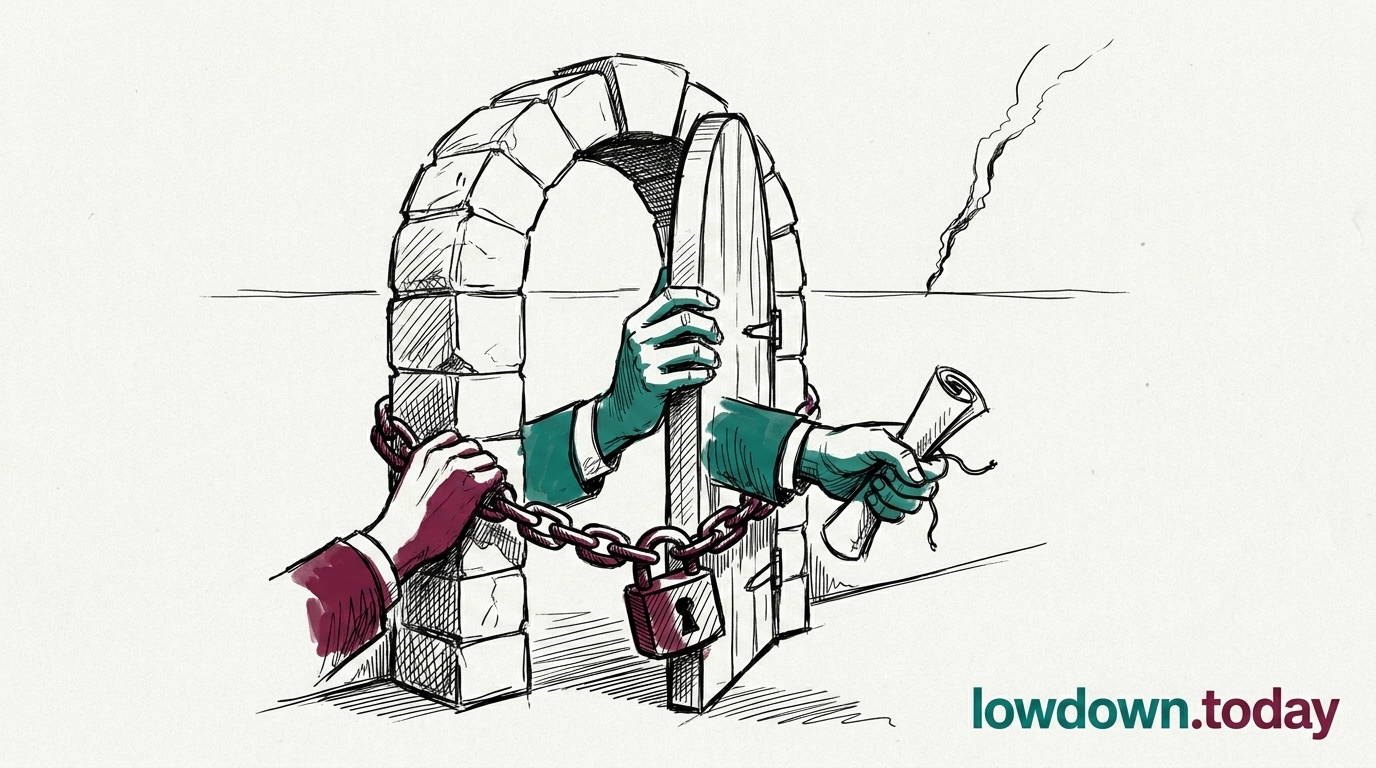
Treasury silence on GL-U renewal leaves stranded tankers in legal uncertainty.

OFAC (Office of Foreign Assets Control) General License U, which authorises the sale and delivery of Iranian-origin crude oil loaded before 20 March, expires on 19 April. No renewal, extension, or replacement licence has been issued as of 12 April. Seven days remain.

OFAC has not published a single Iran-related action since 20 March, 23 days of silence during an active war. It amended general licences for Russia and Venezuela in the same window, making the Iran silence conspicuous.

The licence's scope is narrow. It covers crude and petroleum products loaded on vessels on or before 20 March. It does not authorise new purchases, new loadings, or any transaction after its expiry. The oil tankers stranded in the Gulf are already in legal limbo; GL-U expiry would recriminalise any remaining deliveries.

GL-U expires three days before the ceasefire's own expiry around 22 April, creating back-to-back deadlines. A renewal would signal US willingness to keep a back-channel open despite the talks breakdown. Non-renewal would be read in Tehran as confirmation that the US is tightening pressure rather than extending space. Neither outcome has been signalled, which in itself is a signal: the administration has not decided, or has decided not to show its hand.

Deep Analysis

In plain English

OFAC is the US Treasury office that enforces sanctions. When the US struck a deal to pause hostilities, it issued a special permit called General License U, which temporarily allowed oil that had already been loaded onto ships before 20 March to be delivered and sold legally. That permit expires on 19 April. With talks now collapsed, the US has not signalled any intent to renew it. If it expires without renewal, every Iranian oil delivery currently in transit becomes illegal under US sanctions, meaning any bank or company involved in processing that payment faces US penalties. For the 325 tankers stranded in the Gulf, this creates a legal cliff: even if they get through the strait, their cargo may become unsellable under US sanctions three days before the ceasefire itself expires. It is a tightening vice with two jaws closing simultaneously.

What could happen next?
  • Consequence

    GL-U non-renewal on 19 April would tighten the sanctions regime three days before the ceasefire expires on approximately 22 April, creating a legal and commercial cliff that compounds the diplomatic vacuum from the Islamabad collapse.

  • Opportunity

    A targeted GL-U renewal, possibly extended to cover additional Iranian oil deliveries, could serve as a back-channel signal to Tehran that the US is not yet escalating sanctions, potentially creating space for Pakistan to arrange a further round of talks.

First Reported In

Update #66 · Islamabad collapses: 10 days to expiry

Al Jazeera· 12 Apr 2026
Read original
Different Perspectives
Iran human rights monitors (Amnesty International, Iran HRM, Hengaw)
Monitors documented 30 women held on capital moharebeh charges in a basement prison ward, Benyamin Naqdi's death sentence with a forced-confession broadcast, and 39 political executions since February. Iran's security courts have processed protest cases at uninterrupted wartime tempo regardless of the diplomatic track.
Lloyd's of London (war-risk underwriters)
Lloyd's held its Hormuz war-risk designation at $10-14 million per voyage while Brent fell 19%, maintaining a structural divergence from futures pricing. Underwriters require a UN Security Council resolution or government certification letter, not diplomatic optimism, before de-listing the strait.
Oman (Sultan Haitham's government)
Muscat issued a mine alert in its own territorial waters while denying any Hormuz toll plan after US Treasury threatened sanctions. A suspected mine in Omani waters on the same weekend as US financial pressure forces Muscat to demonstrate sovereignty without appearing to choose sides.
China (PRC)
China (PRC)
Beijing sent scholars rather than its defence minister to Shangri-La for the second year running and addressed Taiwan and multilateralism without mentioning Iran. China maintains its bilateral energy corridor protection with Tehran while refusing the diplomatic exposure of a public position at multilateral forums.
Iran Supreme National Security Council
The SNSC framed the unsigned MOU as a 10-point Iranian victory with enrichment already recognised, and the foreign ministry rejected Trump's nuclear conditions within hours. Tehran treats each unsigned day as validation that Iran has retained its stockpile without surrendering it.
Trump administration (CENTCOM/White House)
Trump posted three non-negotiable public conditions while CENTCOM disabled a commercial ship and Hegseth threatened resumed strikes from Singapore. The administration treats the unsigned MOU as leverage to extract maximum Iranian concessions before any ceasefire instrument is committed to paper.