Skip to content
Briefings are running a touch slower this week while we rebuild the foundations.See roadmap
Iran Conflict 2026
2MAR

Putin condemns war; Il-76s carry the kit

3 min read
19:29UTC

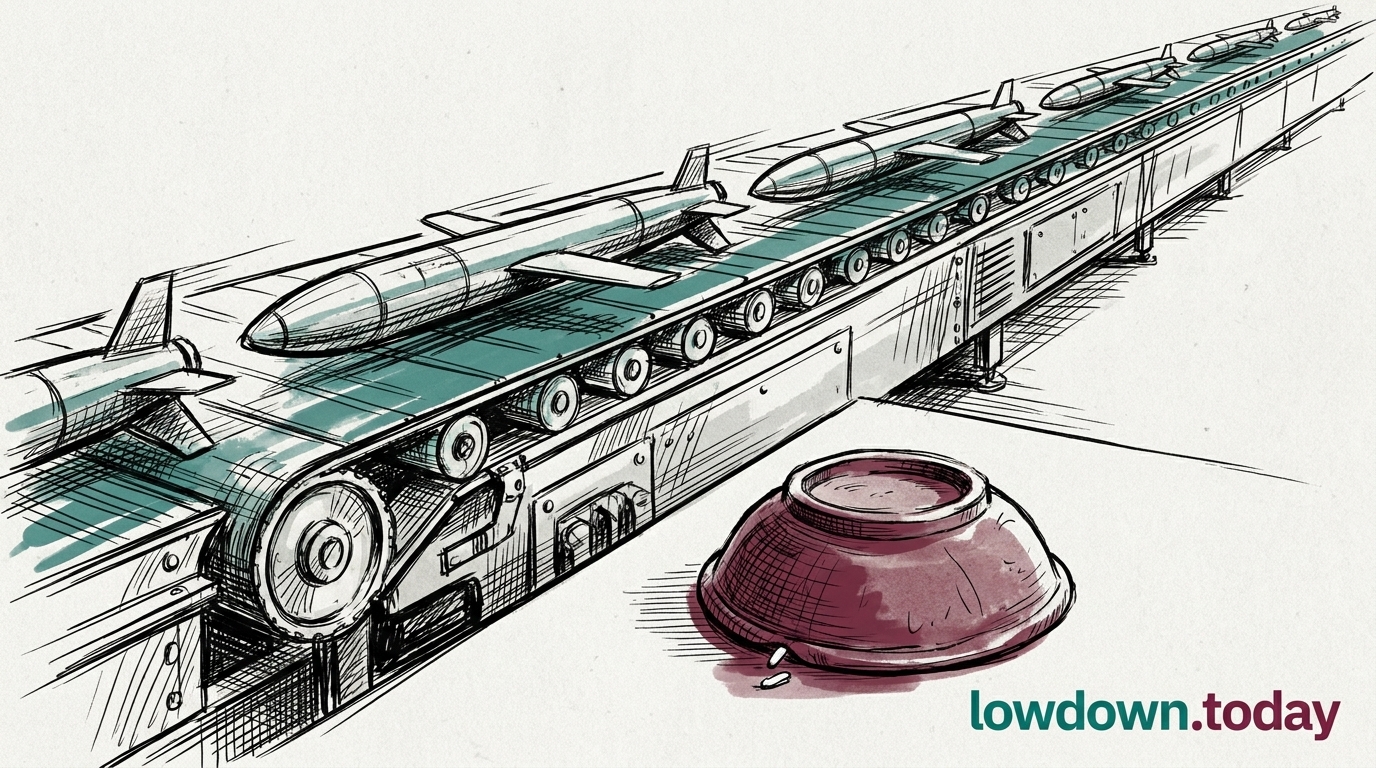
Araghchi met Putin at the Kremlin on 27 April; no joint statement was signed. RFE/RL placed Russian Ilyushin Il-76 transports flying radar and electronic-warfare components into Mehrabad and Bandar Abbas at high tempo.

ConflictDeveloping
Key takeaway

Russia is sustaining Iran's war machine through Il-76 logistics while signing no paper for it.

Abbas Araghchi met Vladimir Putin at the Kremlin on Monday 27 April . Putin told reporters in televised remarks that "this absolutely unprovoked aggression against Iran is unjustified" 1. Foreign Minister Sergei Lavrov sat to Putin's left in the Kremlin photograph released by TASS (the Russian state news agency); beside him sat Igor Kostyukov, Deputy Chief of the Russian General Staff, and Presidential Aide Yury Ushakov.

Kostyukov runs the GRU (Russian military intelligence) directorate that supplies foreign partners with electronic-warfare kit; his seat at the photograph would be unusual for a routine ministerial reception. RFE/RL reports Russian Ilyushin Il-76 transports flying radar systems, electronic-warfare components and aviation parts into Mehrabad and Bandar Abbas at high tempo 2. The Pentagon assesses the China-Russia "two-way street" as the reason Iran's military machine remains operational after the February strikes.

No Lavrov-signed joint statement emerged from the meeting. Lavrov's separate phone-call readout confirmed Iran's commitment to allow Russian shipping to pass safely through Hormuz, the first explicit Iranian carve-out for a third-party flag during the blockade; twenty Rosatom technicians remain at the Bushehr civilian reactor . The pattern is rhetorical condemnation on one channel and material logistics on another, in practice substituting Il-76 sortie tempo for the diplomatic paper that would normally accompany such a shift.


Deep Analysis

In plain English

Russia's foreign minister, a senior military intelligence chief and a presidential aide all sat at the same Kremlin table when Iran's foreign minister visited on 27 April. That combination, a military intelligence chief at what is normally a diplomatic meeting, is unusual by protocol standards. The same day, Radio Free Europe reported Russian military transport planes flying radar systems and electronic-warfare equipment into Iran at an unusually high rate. These are components that help Iran track and potentially jam incoming aircraft and missiles. Russia says the war is unjustified and signs no agreements, while Ilyushin Il-76 transports fly in the equipment that keeps Iran's military functioning. Putin condemns on television; Kostyukov's GRU directorate manages the supply chain.

Deep Analysis
Root Causes

Russia's logistical support to Iran has a specific material driver: the GRU's electronic-warfare kit is the one category of equipment Iran cannot replicate domestically or source from China at comparable quality since the February strikes destroyed key manufacturing facilities. Iran's air-defence radar network suffered significant degradation in the initial strikes; Russian replacement components are the fastest available path to restoring coverage.

Moscow's economic driver is straightforward: the Hormuz carve-out for Russian shipping that Lavrov's phone-call readout confirmed is worth approximately $2-4 billion per year in avoided toll costs at IRGC rates, making the Il-76 supply programme a commercially rational transaction even without ideological alignment.

What could happen next?
  • Consequence

    Russian electronic-warfare components delivered to Bandar Abbas extend Iran's ability to operate its naval and air-defence systems, directly affecting CENTCOM's operational risk calculation for any intensified blockade enforcement.

  • Risk

    If the Pentagon confirms the Il-76 supply tempo publicly, domestic pressure for secondary sanctions against Russian entities involved in the transfers will increase, potentially triggering a confrontation between Washington and Moscow on a second front.

First Reported In

Update #81 · Iran writes Phase 3; Trump posts Phase 1

Kremlin (en.kremlin.ru)· 27 Apr 2026
Read original
Causes and effects
This Event
Putin condemns war; Il-76s carry the kit
The Russia-Iran relationship is shifting from rhetorical to operational without the diplomatic paper that would normally carry such a shift; the Il-76 flights are doing more to sustain Iran's military capacity than Putin's televised condemnations are doing to end the war.
Different Perspectives
Markets
Markets
Brent crude rose 2.2 per cent to $96.34 on 10 June, reversing a 7 per cent weekly decline built on deal optimism, as the overnight exchange repriced the Strait of Hormuz risk premium in a single session. The move reflects transit-risk repricing rather than supply shock: Iran's exports had already collapsed to below 300,000 barrels per day.
Pakistan
Pakistan
Pakistan's Naqvi channel, the only mediation track carrying both civilian and military buy-in, was stress-tested by live ordnance within 48 hours of the 6-7 June Tehran visit. Whether Washington informed Islamabad of the imminent strike plan while Naqvi was in Tehran remains undisclosed, putting the channel's neutrality under scrutiny.
Kuwait
Kuwait
Kuwait hosted the third Iranian strike on its soil since the 3 June airport drone attack, with Ali Al Salem airbase targeted in the three-country salvo. Its recent $1.98 billion Anduril Anvil counter-drone purchase signals it is rearming rather than reconsidering its hosting posture.
Bahrain
Bahrain
Bahrain absorbed the IRGC barrage via PAC-3 intercepts with its magazine already at 87 per cent depletion and no resupply before 2027. Sounding air-raid sirens over Manama, it faced the intercept burden with the thinnest defensive stack in the Gulf coalition.
Jordan
Jordan
Jordan reported all five incoming missiles intercepted with no injuries and no damage, a clean defensive performance that strengthens Amman's case for staying in the Western coalition without escalating its own posture. It now sits on Iran's target list for the first time despite not being a party to the Abraham Accords confrontation.
Iran / IRGC
Iran / IRGC
Foreign Minister Araghchi posted on X that US forces should 'leave our region if you want to be safe' and framed the exchange as a US defeat, while the IRGC claimed 21 targets hit and an F-35 hangar destroyed. The claims serve a domestic and Arab-audience framing rather than a verified battle-damage assessment.



