Skip to content
Welcome, thoughtbot's Giant Robots listeners!Start here
Iran Conflict 2026
18MAY

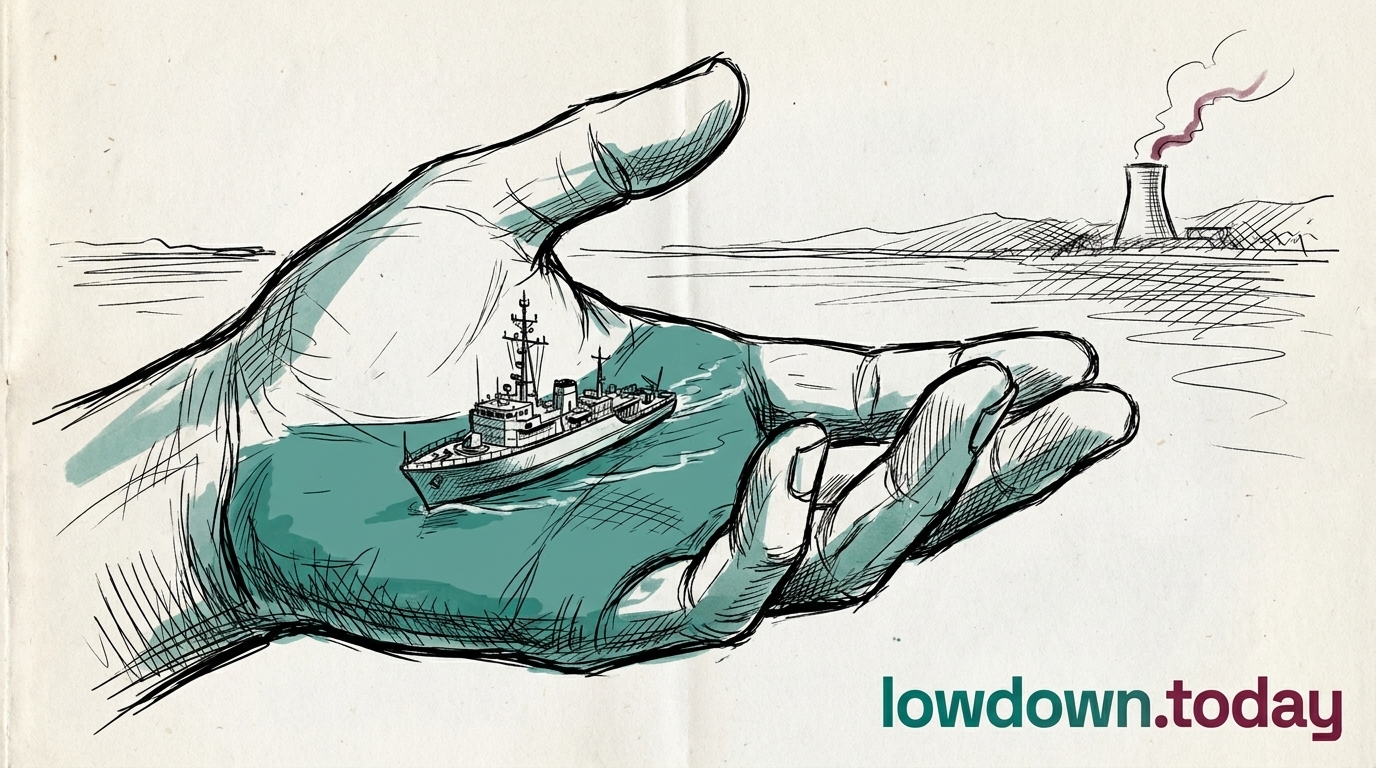
Cooper: 90% of Iran's mines cleared

3 min read
14:44UTC

Admiral Brad Cooper, CENTCOM commander, told a Washington defence forum on Thursday 14 May that US operations had cleared 'roughly 90 per cent' of Iran's naval mine inventory and that Iran's military threat is 'diminished but not eliminated'.

ConflictDeveloping
Key takeaway

Cooper claimed CENTCOM cleared 90 per cent of Iran's naval mines with no published methodology.

Admiral Brad Cooper, CENTCOM commander, told a Washington defence forum on Thursday 14 May that US operations had cleared 'roughly 90 per cent' of Iran's naval mine inventory and that Iran's military threat is 'diminished but not eliminated', as reported by Defense News⁠1. The figure arrived with no published methodology and no independent corroboration.

Cooper's previous '100 per cent halt' claim had been contradicted by Windward, The National, and LSEG, citing the 61-vessel redirection count of 10 May and the earlier 58-redirect baseline. The 90 per cent figure does not state whether it counts mines destroyed in situ, deactivated in storage, neutralised by sweep, or simply absent from a sensor pass at the Larak-Qeshm corridor between Iranian islands. Defense News asked for clarification on methodology and CENTCOM did not provide one.

Counter-perspective: independent analysts at IISS and CSIS have noted that mine-counter-measures statistics are inherently denominator problems, because Iran has never published its mine inventory and Western estimates range from 3,000 to 6,000 weapons across pre-war stockpiles. A 90 per cent claim against an unknown denominator could simultaneously be technically accurate and operationally meaningless. CENTCOM has not addressed this in its public communications.

Pete Hegseth's Article 2 testimony on Tuesday 12 May rests on CENTCOM's operational credibility, and the Alaskan senator's constitutional deadline is days from expiry. A second challenged Cooper figure within four weeks of the first would erode that evidentiary foundation just as the constitutional clock runs down. The Larak-Qeshm corridor remains the test surface: a single mined-vessel incident there would settle the dispute empirically.

Deep Analysis

In plain English

The top US military commander in the Middle East, Admiral Brad Cooper, told a Washington forum on 14 May that US forces have destroyed or neutralised roughly 90% of Iran's sea mines in the strait of Hormuz. P&I insurers require independent verification of that kind of claim before they will reopen war-risk cover for the strait. Cooper's previous claim, that US operations had achieved a '100% halt' of Iranian shipping interference, was directly contradicted by three independent maritime tracking firms: Windward, The National, and LSEG. The 90% figure arrived with no explanation of how it was calculated, and the US Defense Intelligence Agency's 2025 estimate put Iran's total mine inventory at between 2,000 and 5,000 units, a baseline Cooper has not published.

Deep Analysis
Root Causes

CENTCOM's operational communication cadence has a structural incentive to issue progress claims before the War Powers Act 60-day reporting deadline passes. The WPA requires the president to seek congressional authorisation within 60 days of introducing forces into hostilities; Cooper's forum statement on 14 May arrived with the deadline approaching on 19 May.

A commander's public assessment of 90% mine clearance provides the executive branch with a 'success narrative' that reduces congressional pressure for an AUMF without actually closing the legal gap.

The previous '100% halt' claim that Windward, The National, and LSEG contradicted reflects the same structural pressure: CENTCOM's public posture must support The White House's no-congressional-authorisation stance by projecting mission success. The downgrade from 100% to 90% may represent intelligence revision, but the public communication timing is politically determined, not operationally driven.

What could happen next?
  • Risk

    Cooper's two successive challenged mine-clearance claims, first 100% halt then 90% neutralised, erode the evidentiary foundation for Pete Hegseth's Article 2 justification if a third independent contradiction emerges from Windward or LSEG.

    Short term · 0.76
  • Consequence

    P&I insurance underwriters require independent mine-clearance verification, not a US military commander's forum statement, before war-risk cover can reopen; the 90% claim does not move that threshold.

    Immediate · 0.85
  • Meaning

    The WPA deadline of 19 May creates a structural incentive for CENTCOM to issue progress claims in the five days prior; the 14 May forum statement falls within that window and should be read with that context.

    Immediate · 0.79
First Reported In

Update #99 · Two Hormuz papers; Washington on neither

Defense News· 16 May 2026
Read original →
Different Perspectives
Wang Yi
Wang Yi
China's foreign minister and Djibouti's issued a joint communique on 21 October saying the war should not reach the Horn of Africa and stressing free navigation through Bab al-Mandeb. The text names neither Iran nor the Houthis, and Djibouti hosts China's only overseas military base, opposite the Yemeni coast.
Ministry of External Affairs
India's foreign ministry called the attacks on Saudi civilian and energy sites "unacceptable" on 22 October and said they must stop at once. An Indian died at Dammam, Indians were injured there and at Shaybah, and about 4,000 Umrah pilgrims remain stranded by one MP's count.
Iraq
Iraq
Iraq closed the al-Sheeb crossing with Iran to travellers and trucks from 21 October and said other crossings would close gradually. Unlike September's closure, which ended on a staged timetable, this one has none, and Iran's interior ministry said it received no notice.
Abdel Fattah el-Sisi
Egypt's president said on 21 October that Cairo's support would "defend Saudi territory, and does not include an attack on Yemen". Araghchi warned that Egyptian involvement would further complicate the situation, and Cairo's limit matches the one Ankara set on 8 October against attacking another state's soil.
UK Ministry of Defence
The MoD said on 20 October that RAF Typhoons over Saudi Arabia will not strike the Houthis, but extended tanker support to Saudi operations including against Houthi targets in Yemen. The tanker line sets no limit on strikes, so British aircraft may now refuel Saudi jets on bombing runs.
Turkey
Turkey
Ankara sent the Mecca Joint Defence Agreement to parliament around 20 October, and its published text treats an attack on one party as an attack on all. Article 16 brings it into force only on the last ratification, so the 5 October invocation in Riyadh could not yet bind Turkey.

Written with AI from Lowdown's published reporting. Not individually reviewed by an editor. Editorial standards.
