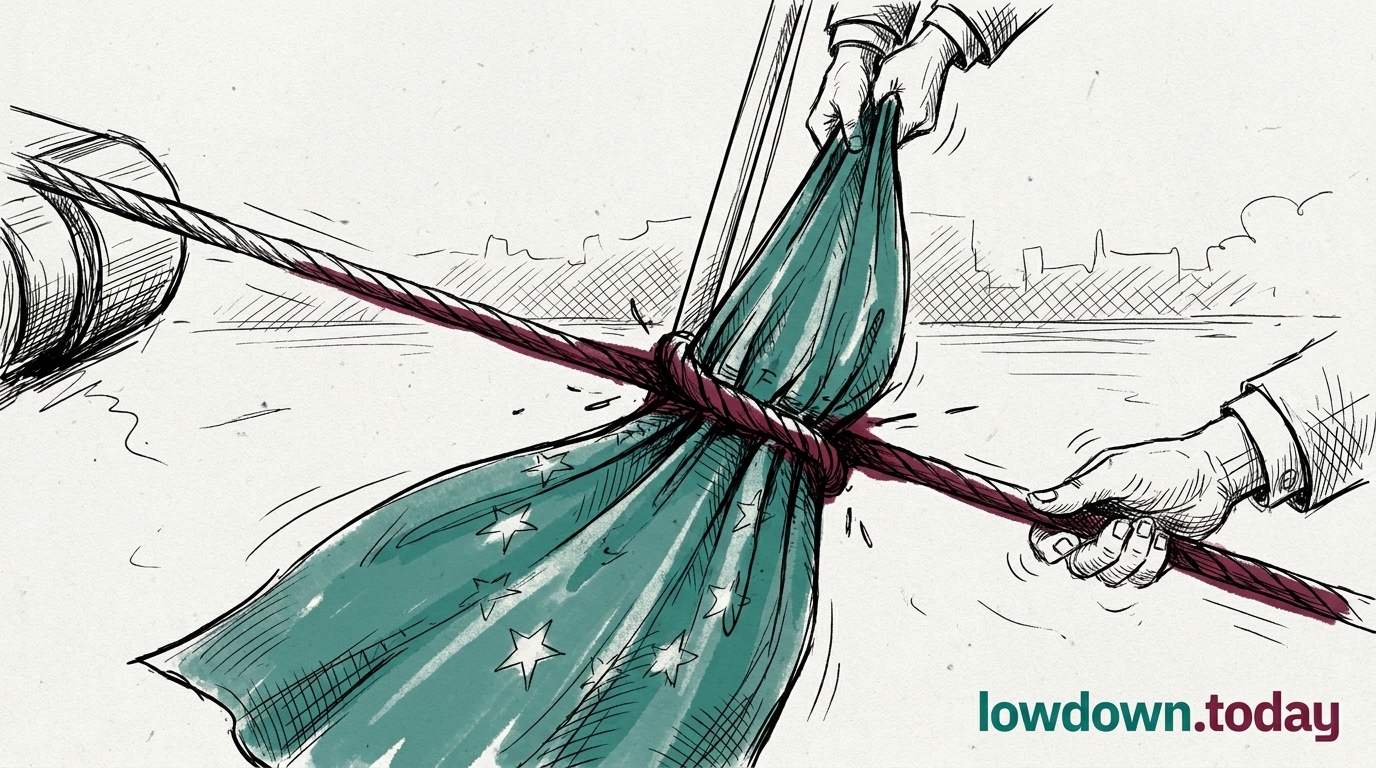
The EU and US ratified a trade deal on 25 June that caps most European export tariffs at 15% but pointedly leaves digital services taxes untouched. A day later, Donald Trump threatened 100% tariffs on any country that taxes American technology firms. Digital services taxes are levies several European states apply to the local revenues of large US technology companies, designed to capture value from firms headquartered elsewhere.
Trump's threat landed one day after the deal, exposing the tariff cap as leverage rather than a settled bargain. A European Commission spokesperson said the bloc would respond "swiftly and decisively" to defend its regulatory autonomy, yet officials privately describe the EU's retaliation toolkit as "depleted" after the June concessions. The bloc's Anti-Coercion Instrument runs a roughly twelve-month investigation before it can impose a single countermeasure.
The same leverage hangs over the Commission's completed Google self-preferencing fine, the penalty for ranking its own services above rivals', which still sits unsigned on Ursula von der Leyen's desk. Civil-society groups allege the delay is meant to avoid handing Washington a fresh grievance before a 24 July US trade determination lands. Washington's case is that these taxes are written to fall on American firms; Brussels' case is that a market may tax the business done inside it as it chooses.





