Skip to content
You can now search across every topic, entity and event.What's new
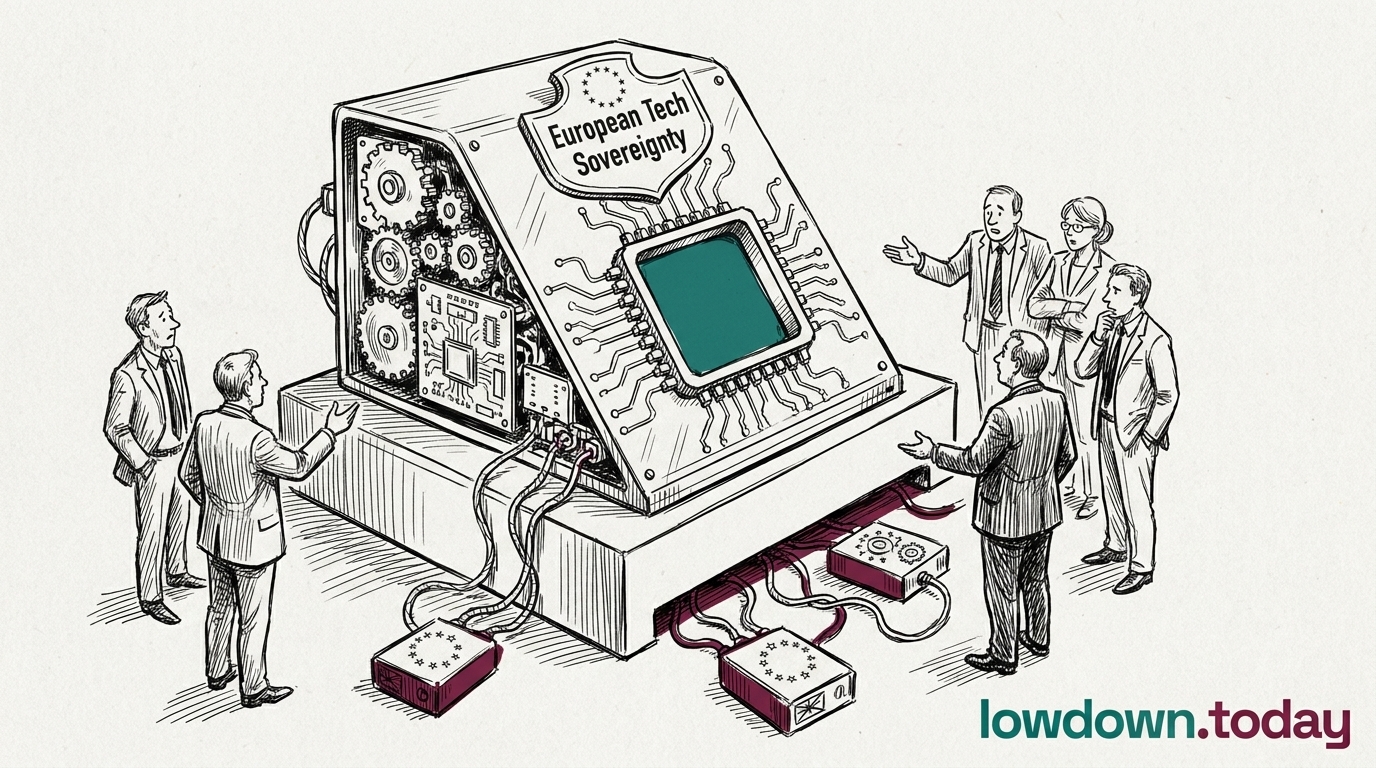
European Tech Sovereignty
23APR

US drops its uranium ship-out demand

3 min read
09:21UTC

The New York Times, citing two US officials, reported Washington has accepted that Iran can dilute its 440.9 kg of enriched uranium at home rather than ship it abroad.

TechnologyDeveloping
Key takeaway

Washington conceded the exact dilution-in-Iran line Tehran set, narrowing the dispute to duration and verification.

The New York Times reported on Saturday, citing two US officials, that the United States has dropped its demand that Iran ship its 440.9 kg of 60 per cent enriched uranium out of the country, accepting dilution inside Iran as the working mechanism 1. Washington had insisted the highly enriched uranium leave Iranian soil, most recently through a Russia-custody arrangement Vladimir Putin reaffirmed at St Petersburg. Tehran refused throughout.

The shift matters because of whose line it crosses. Foreign Minister Abbas Araghchi had named dilution inside Iran as a non-negotiable red line as recently as Friday , so the position Washington just conceded is the one Tehran had set as the wall the deal could not breach. It is the first substantive American give in 106 days of war, and the rhetoric, not the substance, had moved until now.

The concession narrows the open dispute to two questions. The first is duration: Washington wants a 20-year enrichment suspension while Tehran is still discussing roughly 15. The second is verification, the harder of the two, because the UN nuclear watchdog, the IAEA, remains locked out of every facility struck since February. Diluting 60 per cent uranium to reactor grade leaves the material in Iranian hands, so without inspectors on the floor no outside party can confirm the dilution happened.

The White House declined to comment, and Iran issued no public statement on the terms 2. A give sourced to two anonymous officials, with both governments silent on the record, may yet prove deal-spin rather than a fixed position. What is not in doubt is that the substance moved for the first time since the talks began.

Deep Analysis

In plain English

Iran has been building up a stockpile of uranium enriched to 60 per cent purity, partway to weapons grade. The US originally demanded Iran ship that stockpile out of the country so it could not be used quickly to make a bomb. Iran refused, citing national sovereignty. Now, according to the New York Times, the US has backed down from that demand. Instead of shipping the uranium abroad, Iran would dilute it by mixing it with other material to make it less dangerous, while keeping it inside Iran. The remaining arguments are about how long Iran must stop enriching uranium (the US wants 20 years, Iran wants around 15) and how inspectors will verify what happens.

Deep Analysis
Root Causes

Washington's original ship-out demand rested on the Putin brokerage track: Russia would hold the uranium in custody, providing a physical guarantee outside Iranian control. That track collapsed when IRGC factional pressure made any arrangement resembling the surrender of sovereign nuclear assets politically untenable for Mojtaba Khamenei. Dilution inside Iran became the only option Tehran's domestic coalition could accept.

A secondary structural driver is the five-year enrichment-duration gap: the US demands 20 years, Iran has offered approximately 15. The concession on location shifts the negotiating battlefield to duration and verification, where the gap is arithmetic rather than existential, making a deal marginally more tractable even as it concentrates verification risk on IAEA inspector access.

What could happen next?
  • Consequence

    IAEA verification requirements now become the single most contentious technical issue: Iran must grant inspector access to four currently denied facilities for dilution monitoring to be credible.

    Immediate · Assessed
  • Risk

    Dilution inside Iran preserves enrichment infrastructure. A deal collapse within the moratorium window leaves Iran closer to breakout than before the war because centrifuge capacity survived the air campaign.

    Medium term · Assessed
  • Precedent

    Accepting dilution-in-place, if verified, would establish a new non-proliferation template weaker than Libya 2003 but stronger than JCPOA 2015 on the HEU question.

    Long term · Reported
First Reported In

Update #127 · US drops red line; signature still slips

The New York Times· 14 Jun 2026
Read original
Different Perspectives
United States (Google/Alphabet)
Alphabet lost its final Android appeal on 2 July with no further court to hear it, a result its Computer and Communications Industry Association allies frame as precedent, not deterrence, since the €4.1bn fine changed nothing about Google's Play Store terms across eight years of litigation.
UK Department for Science, Innovation and Technology
DSIT opened its £96m second Sovereign AI wave on 3 July, switching from April's equity stakes to fixed-price contracts because Britain has no domestic hyperscaler or Bpifrance-style lender to fund capacity another way. It is betting on buying outcomes it controls alone rather than joining an EU-wide framework.
German federal government
Berlin backed both German deliverables this week, Infineon's fab and Aleph Alpha's merger, but is finding one far harder to close than the other. It wants enforceable protective rights inside Cohere's cap table before the merger closes, a legal instrument the Bundeskartellamt has no filing to review yet.
European Commission
European Commission
The Commission banked a clean CJEU win on the eight-year Android case on 2 July, removing Google's last comparator argument before President von der Leyen rules on the far larger DMA self-preferencing fine due 27 July. Brussels treats Infineon's early Dresden delivery as proof the Chips Act mechanism works, at the node Europe already led.
Bruegel (EU industry sceptics)
Bruegel economist Mario Mariniello argued the EU sovereignty package mimics US and Chinese strategy while EU cloud providers hold roughly 15% of their home market; using nationality as a proxy for security without fixing the underlying capital and energy gaps that drive the dependency creates €86bn of migration cost without the security benefit it is sold as delivering.
France
France
France published a joint sovereignty definition with Germany at VivaTech and mobilised €13bn under Tibi Phase 3, placing SAP's partnership with Mistral as the working proof that a German enterprise-software giant running a French sovereign model inside public administration is what digital sovereignty looks like in practice.
