Skip to content
You can now search across every topic, entity and event.What's new
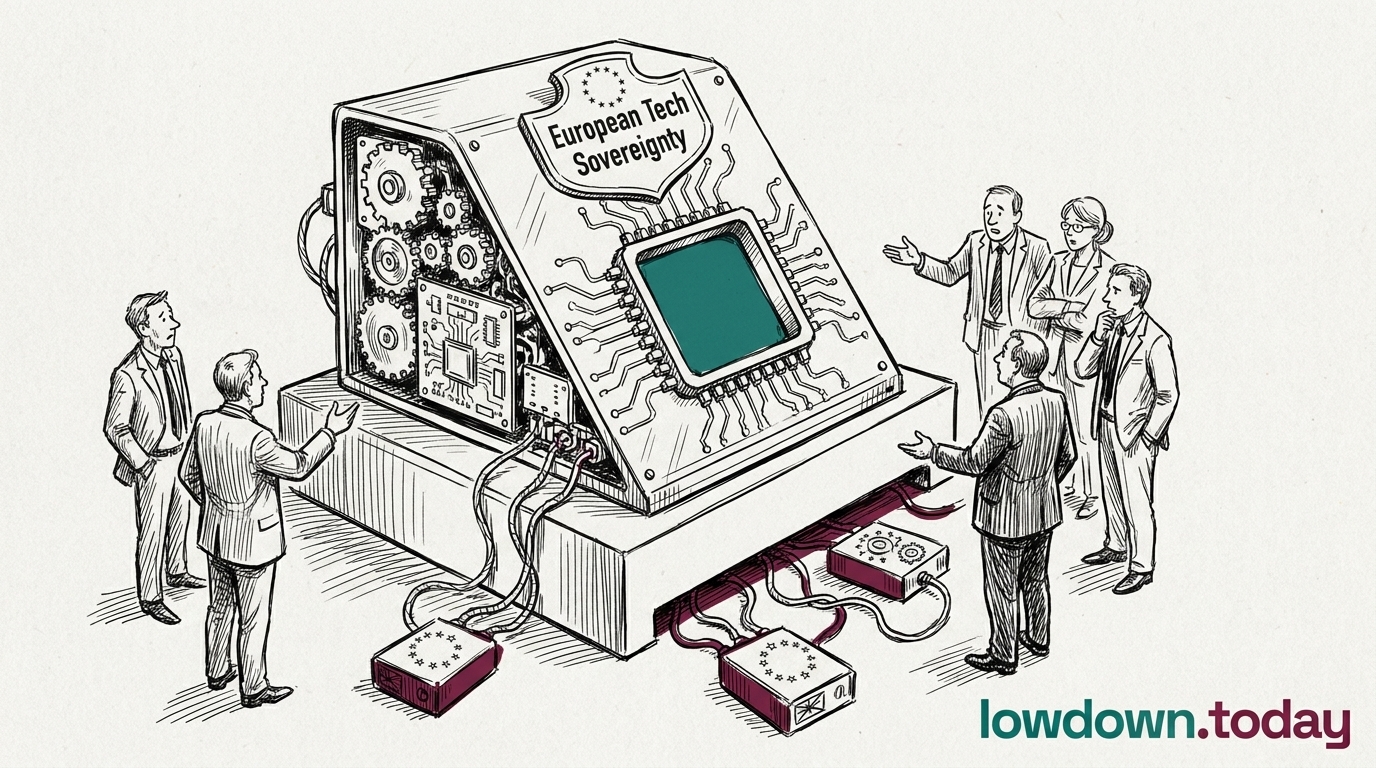
European Tech Sovereignty
23APR

Katz calls Iran's heir 'a dead man'

2 min read
09:21UTC

Israel's defence minister Israel Katz called Iran's new supreme leader Mojtaba Khamenei 'a dead man' on 1 July; foreign minister Abbas Araghchi warned Tehran would answer any strike at once.

TechnologyDeveloping
Key takeaway

Israel has named Iran's new leader a target just as his father's funeral may draw him into public view.

Israel's defence minister Israel Katz called Iran's Supreme Leader Mojtaba Khamenei "marked for death" and "a dead man" on 1 July, in remarks first carried by the Israeli outlet Ynet 1. Iran's foreign minister Abbas Araghchi warned of an "immediate and powerful response" if Israel acted on the threat 2.

Mojtaba, 56, took office on 8 March and has not appeared in public since, governing through handwritten notes carried in sealed envelopes. His father Ali Khamenei, killed in the opening Israeli strike of 28 February, is to be buried over six days from 4 July, and the funeral offers the first occasion on which the son might appear in person 3. That would place the man Israel says it wants dead at a known location and hour, in front of crowds in the tens of millions, on a date printed weeks ahead.

On 1 July the Qom seminary and the Assembly of Experts, the clerical body that installed Mojtaba in an emergency online vote, both faulted the emerging US deal for falling short of his father's red lines . Israel wants him dead; his own clerics say he has already conceded too much.

The colder calculation cuts the other way. Israel gains little from killing a reclusive figurehead whose real authority already runs through the Islamic Revolutionary Guard Corps (IRGC), Iran's ideological military force, rather than his own office, and a great deal from the retaliation Araghchi has promised.

Deep Analysis

In plain English

Israel's defence minister, Israel Katz, called Iran's Supreme Leader Mojtaba Khamenei 'a dead man' in remarks first carried by the Israeli news site Ynet. Mojtaba took over the role in March, after an Israeli strike killed his father, Ali Khamenei, Iran's previous Supreme Leader, along with his wife and son. Iran's Foreign Minister, Abbas Araghchi, warned of an 'immediate and powerful response' if Israel acts on the threat. It is not the first such statement: Israeli officials made near-identical threats against Mojtaba back in March, when he was first installed, so this looks like a repeat of an existing warning rather than a new signal.

Deep Analysis
Root Causes

Mojtaba Khamenei's legitimacy gap widens the threat's political reach. The Assembly of Experts installed him in an emergency online session on 7 March after Israeli strikes destroyed its Qom headquarters, with at least eight of its remaining members boycotting the vote over his lack of the marja theological credentials Article 109 requires.

A leader whose own clerical establishment already contests his authority is more exposed to an external threat aimed at that same legitimacy, which is why the Qom Seminary and Assembly of Experts criticism of the US deal lands at the same moment as Katz's statement rather than before or after it.

What could happen next?
  • Risk

    Escalation risk rises if Israel is perceived to act on the threat during the funeral week, when Iran's leadership is most concentrated and exposed.

  • Meaning

    Katz's repeated targeting language shows Israel treats leadership decapitation as a standing doctrine rather than a one-off statement.

First Reported In

Update #143 · Diplomacy pauses for a funeral under threat

The Express Tribune· 2 Jul 2026
Read original
Different Perspectives
United States (Google/Alphabet)
Alphabet lost its final Android appeal on 2 July with no further court to hear it, a result its Computer and Communications Industry Association allies frame as precedent, not deterrence, since the €4.1bn fine changed nothing about Google's Play Store terms across eight years of litigation.
UK Department for Science, Innovation and Technology
DSIT opened its £96m second Sovereign AI wave on 3 July, switching from April's equity stakes to fixed-price contracts because Britain has no domestic hyperscaler or Bpifrance-style lender to fund capacity another way. It is betting on buying outcomes it controls alone rather than joining an EU-wide framework.
German federal government
Berlin backed both German deliverables this week, Infineon's fab and Aleph Alpha's merger, but is finding one far harder to close than the other. It wants enforceable protective rights inside Cohere's cap table before the merger closes, a legal instrument the Bundeskartellamt has no filing to review yet.
European Commission
European Commission
The Commission banked a clean CJEU win on the eight-year Android case on 2 July, removing Google's last comparator argument before President von der Leyen rules on the far larger DMA self-preferencing fine due 27 July. Brussels treats Infineon's early Dresden delivery as proof the Chips Act mechanism works, at the node Europe already led.
Bruegel (EU industry sceptics)
Bruegel economist Mario Mariniello argued the EU sovereignty package mimics US and Chinese strategy while EU cloud providers hold roughly 15% of their home market; using nationality as a proxy for security without fixing the underlying capital and energy gaps that drive the dependency creates €86bn of migration cost without the security benefit it is sold as delivering.
France
France
France published a joint sovereignty definition with Germany at VivaTech and mobilised €13bn under Tibi Phase 3, placing SAP's partnership with Mistral as the working proof that a German enterprise-software giant running a French sovereign model inside public administration is what digital sovereignty looks like in practice.
