Skip to content
You can now search across every topic, entity and event.What's new
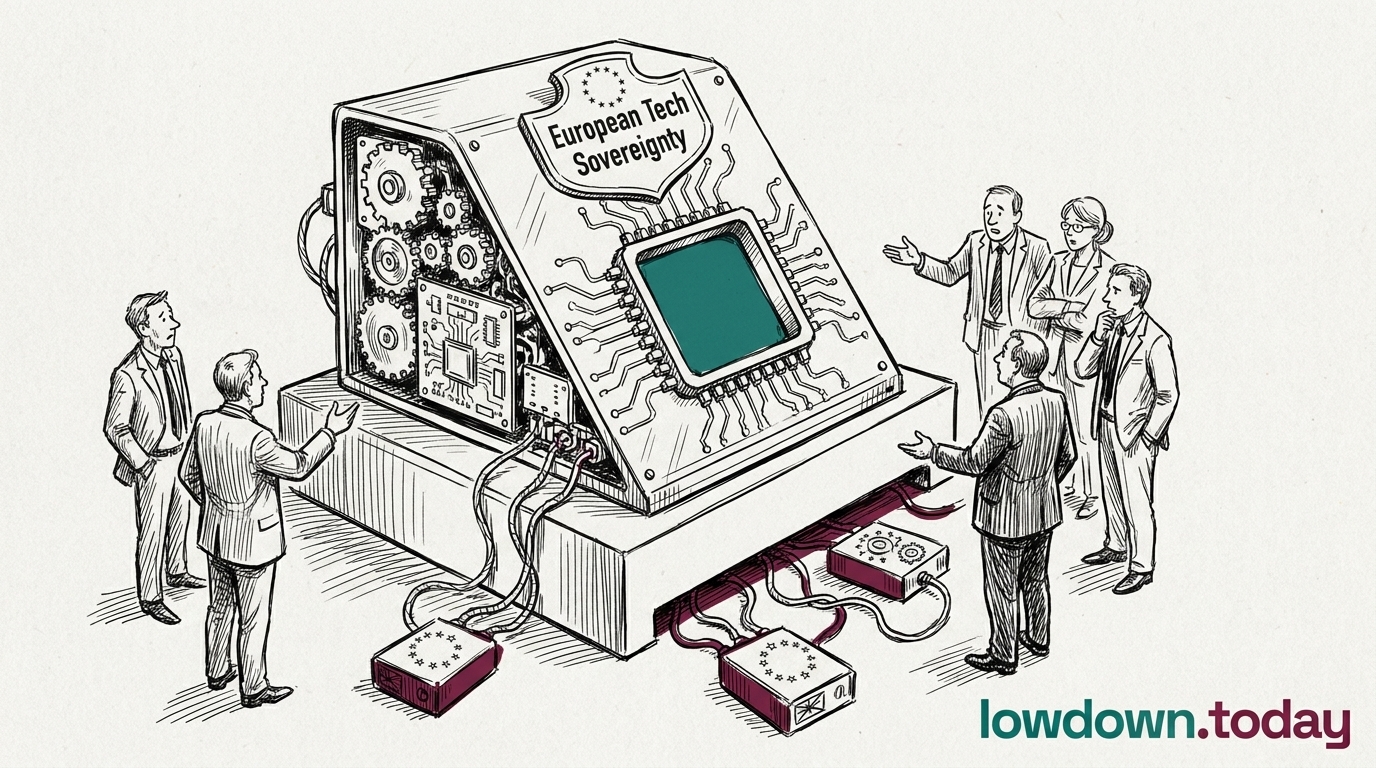
European Tech Sovereignty
23APR

Iran narrows enrichment gap to 3-5 years

4 min read
09:21UTC

Iran shifted its enrichment-pause offer from a firm five-year proposal to a three-to-five-year range; Washington's demand remains 20 years.

TechnologyDeveloping
Key takeaway

Iran moved two years on enrichment duration; the weapons posture has not moved.

Iran shifted its enrichment-pause offer on 16 April from a firm five-year proposal to a three-to-five-year range, delivered alongside the Munir framework . That is a movement of two years on the downside of the range and zero on the upside. Washington's demand has not moved: 20 years. The arithmetic gap is still 15 years at the most generous reading and 17 at the less generous one.

The movement matters nonetheless because it breaks the first-offer lock that had held since the Islamabad round collapsed. A 3-5 range is the diplomatic signal that Iran expects the final figure to be negotiated, not ratified, which is a posture change from the unilateral five Araghchi had held publicly. Abbas Araghchi's prior CBS confirmation that Iran cannot currently enrich uranium at any surviving facility due to strike damage adds a complicating wrinkle: the thing being negotiated is a pause on an industrial capability that physically does not exist today. The range is therefore a marker on future reconstruction, not a freeze on present operations.

Verification is the harder problem. The IAEA has been locked out since the Majlis voted 221-0 on 11 April to suspend all cooperation, which means any pause, at three years or thirty, is currently unverifiable in either direction. The four-country monitoring framework Munir carried from Tehran is the only mechanism with traction to close that gap, but its membership is not public and its technical authority alongside IAEA is not spelled out. A verification architecture without named verifiers produces movement on paper without movement on the ground.

The harder wall remains doctrinal. Supreme Leader Mojtaba Khamenei's written position ruling out nuclear-weapons negotiation continues to hold. Tehran has conceded on monitoring and on enrichment duration; it has not conceded on weapons posture. A negotiation that moves on verification timelines without moving on weapons architecture is a confidence-building sequence, not a settlement. Whether Washington will accept movement on the sequence before movement on the architecture is the operating question through the 22 April ceasefire expiry.


Deep Analysis

In plain English

Iran and the US are trying to agree on how long Iran should pause its uranium enrichment , the process that, at higher concentrations, can lead to nuclear weapons. Iran is now offering a three-to-five-year pause; the US wants twenty years. The gap is enormous. But there is an additional complication: Iran's parliament voted to kick out the UN nuclear inspectors who would verify any pause. Without those inspectors, any agreement is largely unverifiable. Iran also says its enrichment facilities are too damaged to operate anyway, which raises the question of what exactly the pause would be pausing.

Deep Analysis
Root Causes

The enrichment pause negotiation's core structural problem is that Iran cannot currently enrich uranium at any surviving facility due to strike damage (confirmed by Araghchi on CBS on 13 April). This creates a paradox: Iran is being asked to pause something it is already unable to do, while the US is treating the pause as a concession Iran must actively make.

The verification gap compounds this: without IAEA inspectors present, there is no mechanism to confirm that Iran's facilities are damaged rather than simply dormant, which means any 'pause' commitment is not independently verifiable.

The three-to-five-year range also reflects a structural Iranian negotiating constraint: the Majlis suspension of IAEA cooperation can only be reversed by a parliamentary vote, which requires political cover that the four-country monitoring framework discussed in event-04 might provide, but only if the US accepts a non-IAEA verification body, which it has not signalled it will.

Escalation

Marginally de-escalatory: the range shift shows negotiating movement and signals that Khamenei's 'matter of life' statement has not foreclosed all diplomacy. However, the IAEA suspension means any agreed pause is unverifiable without a parallel monitoring-restoration agreement that does not yet exist.

What could happen next?
  • Opportunity

    The three-to-five-year range creates a potential overlap with a US counterproposal in the ten-to-fifteen-year range; a bridging offer in that zone is arithmetically possible even if politically remote.

  • Risk

    The IAEA monitoring suspension makes any enrichment-pause agreement legally unverifiable; the US cannot certify Iranian compliance to Congress without IAEA access, making a deal politically unsellable domestically.

First Reported In

Update #71 · Netanyahu learned from the media

PBS NewsHour / Associated Press· 17 Apr 2026
Read original
Different Perspectives
Trump administration
Washington defends the MATCH Act as closing a loophole that lets ASML's DUV tools reach Chinese fabs indirectly, dismissing the Dutch Cabinet's June complaint of being treated with disregard. Officials expect the bill's progress through Congress to keep the DUV cross-subsidy question live regardless of ASML's Q2 numbers.
Bruegel
Bruegel
Brussels-based economists argue this week's deliverables, specialist fab aid and a digital euro that restricts no US firm, prove Europe's sovereignty agenda advances only where it meets no American resistance. They expect the leading-edge fabrication gap and dependence on US frontier AI models to persist absent a policy that directly confronts a named US interest.
German federal government
Berlin welcomes the €659m tranche funding jobs across North Rhine-Westphalia, Schleswig-Holstein, Hesse and Bavaria, on top of the ESMC Dresden fab already under construction on TSMC-shipped tooling. Officials treat power and analogue capacity as the achievable near-term win while Dresden remains Germany's only bet on leading-edge logic.
House of Commons Science, Innovation and Technology Committee
The committee's 7 July report found the UK has "no coherent strategic framework" for sovereign technology and warns it "risks being cut off at whim", citing the June order that barred foreign access to Anthropic's Fable 5 and Mythos 5 as the trigger case. It expects no domestic hyperscaler or foundry response before the gap widens further.
European Commission
European Commission
The Commission cleared €659m in German state aid on 14 July, taking cumulative Chips Act support to roughly €14.2bn, and let the digital-euro mandate reach trilogue after ECON's floor-vote shortcut was overturned. Brussels presents both as sovereignty delivered, without addressing that neither funds leading-edge logic fabrication.
ASML
ASML
ASML raised FY2026 guidance to €43-45bn on 15 July and, for the first time since Q1, dropped the export-control hedge from its release even with the MATCH Act live in Congress. Fouquet frames the order book, 86 systems against 67 in Q1, as strong enough to outrun the DUV dispute rather than evidence it has cooled.



