Skip to content
You can now search across every topic, entity and event.What's new
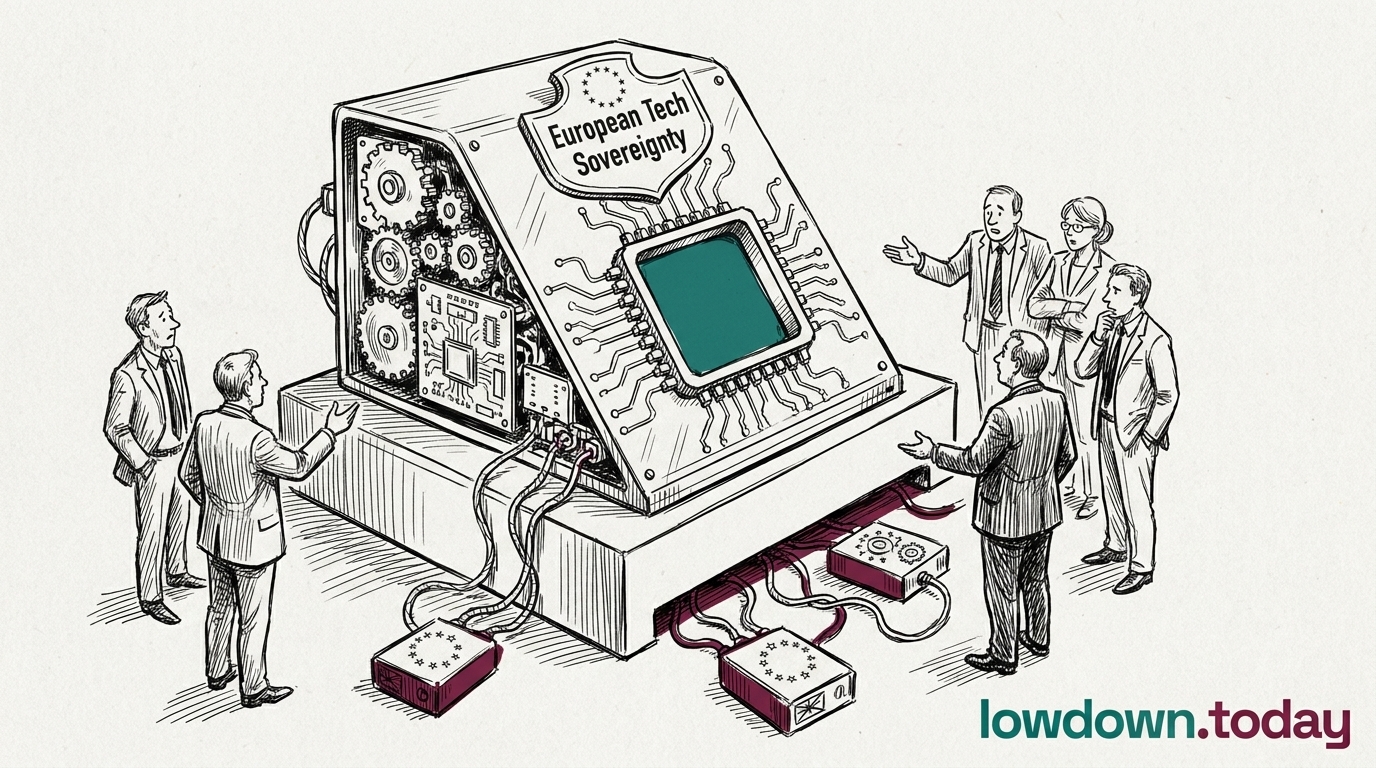
European Tech Sovereignty
23APR

Brent ends worst quarter since 2020

2 min read
09:21UTC

Brent closed the second quarter down about 30%, its worst quarter since 2020, settling near $72-73 as Doha diplomacy and Iranian flows weighed on the benchmark.

TechnologyDeveloping
Key takeaway

Cheaper crude widens European refining margins, but stranded capacity and sanctions law cap how much Europe can capture.

Brent closed the second quarter down about 30%, its steepest quarterly fall since the second quarter of 2020, after a roughly 20% drop in June alone 1. The benchmark fell 2.93% to $72.46 on 26 June as the Doha US-Iran talks resumed and settled near $72-73 into the close 2, extending a descent that had reached a three-month low days earlier as Iranian flows under General License X weighed on the benchmark .

Crude input cost fell faster than physical product prices through June, so European refiners gain from the move rather than lose. With Amsterdam-Rotterdam-Antwerp (ARA) gasoil stocks already at a 2.5-year low , the ICE Gasoil crack, the refining margin between European distillate and crude, stays supported near recent levels around $54/bbl, and the dynamic favours further widening.

European refiners cannot touch the discounted GL X barrels under EU Regulation 833/2014, and BP Rotterdam's second crude unit is still dark, capping how much of the wider crack Europe can actually capture. The margin gift accrues to whoever can run barrels: integrated majors with spare conversion capacity, not the plants with units down for outage.

Deep Analysis

In plain English

Brent crude is the global oil price benchmark, used to price roughly two-thirds of internationally traded oil. A quarterly fall of 30% is extreme: oil markets rarely move that much in three months. The drop was driven mainly by OFAC's GL X authorising Asian buyers to purchase Iranian crude, flooding global markets with additional supply, and by US-Iran diplomacy in Doha reducing the war-risk premium that had been built into the price. European refiners are unusual beneficiaries: the ICE Gasoil crack is the difference between the price a refinery charges for diesel-type fuel (gasoil) and the price it pays for crude oil. When crude falls faster than product prices, that spread widens, improving refinery profits. ARA refers to the Amsterdam-Rotterdam-Antwerp hub, Europe's main oil storage and trading centre. ARA gasoil stocks at a 2.5-year low mean there is unusually little diesel in European storage, supporting gasoil prices even as crude falls. The catch: BP Rotterdam's second large crude unit has been offline since May, limiting how much crude European refineries can actually process to capture this improved margin.

Deep Analysis
Root Causes

OFAC's GL X (issued 22 June) routes Iranian crude to Asian buyers through 21 August, expanding global seaborne crude supply and depressing Brent. Regulation 833 bars European refiners from lifting a single barrel of that Iranian crude.

European refiners therefore sit in an asymmetric position: Brent-linked crude from non-sanctioned suppliers falls in price because of Iranian supply they cannot access, while gasoil product prices remain supported by ARA stock tightness driven by the BP Rotterdam second-unit outage (offline since May) and prior Hormuz-related supply chain disruption.

BP Rotterdam's remaining dark unit caps European crude-processing capacity, preventing refiners from fully expanding throughput to capture the widened crack spread even when the input-cost advantage is at its largest.

What could happen next?
  • Opportunity

    European refiners with available crude throughput capture improved input margins as the ICE Gasoil crack holds near $54/bbl against Brent near $72-73, a spread structurally supported by ARA gasoil stocks at a 2.5-year low.

    Immediate · Assessed
  • Risk

    If OPEC+ announces additional production in early July or GL X flows accelerate, Brent could overshoot lower before the ICE Gasoil crack narrows, trapping European refiners with commitments made at wider-spread assumptions.

    Short term · Reported
  • Consequence

    BP Rotterdam's second unit dark since May means European refinery sector cannot fully monetise the widened crack; the throughput ceiling limits the macro support that higher refinery margins would otherwise provide to European product balances.

    Short term · Assessed
  • Meaning

    Brent's worst quarterly fall since Q2 2020, driven by an Iranian supply waiver rather than demand destruction, confirms that the GL X mechanism can move the global benchmark by amounts comparable to a major demand shock.

    Medium term · Assessed
First Reported In

Update #12 · ISAB Priolo dodges the cliff

CNBC· 30 Jun 2026
Read original
Different Perspectives
United States (Google/Alphabet)
Alphabet lost its final Android appeal on 2 July with no further court to hear it, a result its Computer and Communications Industry Association allies frame as precedent, not deterrence, since the €4.1bn fine changed nothing about Google's Play Store terms across eight years of litigation.
UK Department for Science, Innovation and Technology
DSIT opened its £96m second Sovereign AI wave on 3 July, switching from April's equity stakes to fixed-price contracts because Britain has no domestic hyperscaler or Bpifrance-style lender to fund capacity another way. It is betting on buying outcomes it controls alone rather than joining an EU-wide framework.
German federal government
Berlin backed both German deliverables this week, Infineon's fab and Aleph Alpha's merger, but is finding one far harder to close than the other. It wants enforceable protective rights inside Cohere's cap table before the merger closes, a legal instrument the Bundeskartellamt has no filing to review yet.
European Commission
European Commission
The Commission banked a clean CJEU win on the eight-year Android case on 2 July, removing Google's last comparator argument before President von der Leyen rules on the far larger DMA self-preferencing fine due 27 July. Brussels treats Infineon's early Dresden delivery as proof the Chips Act mechanism works, at the node Europe already led.
Bruegel (EU industry sceptics)
Bruegel economist Mario Mariniello argued the EU sovereignty package mimics US and Chinese strategy while EU cloud providers hold roughly 15% of their home market; using nationality as a proxy for security without fixing the underlying capital and energy gaps that drive the dependency creates €86bn of migration cost without the security benefit it is sold as delivering.
France
France
France published a joint sovereignty definition with Germany at VivaTech and mobilised €13bn under Tibi Phase 3, placing SAP's partnership with Mistral as the working proof that a German enterprise-software giant running a French sovereign model inside public administration is what digital sovereignty looks like in practice.
