Skip to content
You can now search across every topic, entity and event.What's new
European Tech Sovereignty
8SEP

Modi raised dead sailors; Trump gave nil

3 min read
15:06UTC

At the G7 in France, Modi pressed Trump on three Indian seafarers killed by US Navy fire and on Hormuz trade damage; Trump offered no apology, investigation or relief.

TechnologyDeveloping
Key takeaway

Modi pressed Trump on India's dead sailors and blocked trade; Trump offered nothing.

At the G7 summit in France on Wednesday 17 June, Narendra Modi raised with Donald Trump directly the killing of three Indian seafarers who died under US Navy fire in the Hormuz zone . India had already lodged two formal protests over the deaths . Modi also pressed the trade damage: 90 per cent of India's liquefied petroleum gas and 55 per cent of its crude transited Hormuz before the war, and he warned of a "trust deficit" between the two governments 1. The two men exchanged a restrained greeting, no embrace.

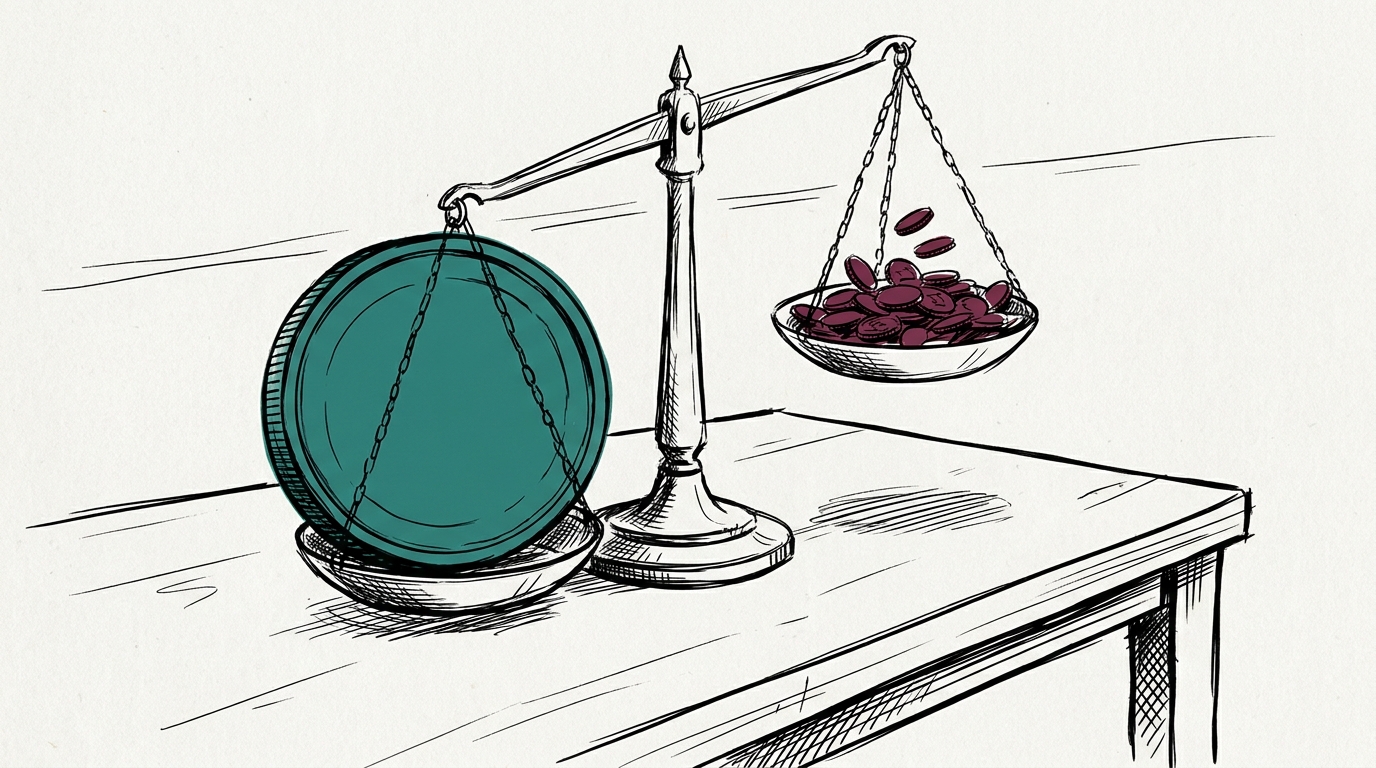
Trump answered none of it. He offered no apology for the sailors, announced no investigation or compensation, signed no tariff relief and made no concession on Iran-routed crude. For a president who had just signed a war to a close, the ledger at the table with the war's most aggrieved neutral party was empty.

The summit itself ended without a joint communique, the body's first such failure in recent memory, and Trump left early as the Iran deal moved . The split was over Iran: G7 members could not agree a common line on a deal whose own text remains unpublished. India sits outside the G7 but supplies the clearest measure of the blockade's cost, and Modi chose to carry that measure straight to the man who ordered the fleet that caused it. He got a handshake and no instrument in return.


Deep Analysis

In plain English

Three Indian sailors died when the US Navy fired on their ship in the Hormuz zone. At the G7 summit in France on 17 June, India's Prime Minister Modi raised this directly with Trump. Modi also pointed out that India imports 90 per cent of its cooking gas and 55 per cent of its crude oil through the strait the US has been blockading. Trump offered no apology, no promise of investigation, and no compensation. Modi's government had already filed two formal protests. The G7 itself ended without a joint communique, which is the summit's main output. India's bill went unpaid at the meeting where Modi came specifically to present it.

What could happen next?
  • Consequence

    Modi's public framing of a US-India trust deficit, without any US response, gives China and Russia a documented example to circulate in Global South forums that US military action in Hormuz carries no accountability to third countries.

  • Risk

    If the 19 June Geneva ceremony does not produce a timeline for Hormuz reopening, India may move toward bilateral LPG and crude contracts with Central Asian and Russian suppliers, accelerating de-dollarisation of its energy imports.

First Reported In

Update #130 · Trump signed the war over; it kept going

Washington Post· 17 Jun 2026
Read original
Different Perspectives
Poland
Poland
Poland leads a self-announced AI Gigafactory consortium with a EUR 100 million phase-one commitment, matched by Czechia and joined by Hungary at EUR 25 million. EuroHPC has confirmed no consortium for the call closing 12 November, so the bloc exists only in national announcements so far.
UK Government (DCMS)
Secretary of State Lisa Nandy told the Commons on 3 September she has inherited the sovereign AI brief from Liz Kendall, but gave no assessment, figure or date on frontier-model access. It is the first public claim of ownership since DSIT's abolition, without the substance the committee asked for.
ASML
ASML
ASML CEO Christophe Fouquet credited Intel Foundry, not a European fab, with shipping the first high-volume logic product made on High-NA EUV, the tool only ASML builds. Europe holds the chokepoint tool; the company that spent it into volume production first is American.
Luxembourg
Luxembourg
Luxembourg joined Mistral's Series D as a new investor on 8 September, the same government that co-funds EuroHPC's MeluXina-AI supercomputer. One small member state now funds the sovereign compute Mistral may need and holds equity in the company using it.
Samsung Electronics
Samsung Electronics
Samsung led Mistral's Series D on 8 September and the same day expanded its ASML collaboration on next-generation lithography. One Korean company now sits atop Europe's largest AI funding round and inside its most sensitive chip-tooling relationship.
Mistral AI
Mistral AI
Mistral closed a EUR 3 billion Series D above a EUR 21 billion valuation on 8 September, with Samsung leading and Luxembourg joining as a new state investor. The company markets itself as Europe's non-American AI option even as the round's lead capital comes from South Korea and two US private-equity firms.