Skip to content
You can now search across every topic, entity and event.What's new
European Tech Sovereignty
8SEP

Baghdad asks Tehran for a carve-out

2 min read
15:06UTC

Iraq's parliament speaker asked his Iranian counterpart in Baghdad on 19 August for special treatment for Iraqi oil going through Hormuz. The request concedes what the region has spent months disputing.

TechnologyDeveloping
Key takeaway

Iraq asked for an exemption, which accepts that Iran controls who passes through the strait.

Iraq asked Iran on 19 August for special consideration for its own oil exports through the Strait of Hormuz, Anadolu reported, citing the state-run Iraqi News Agency. Iraqi Parliament Speaker Haibat al-Halbousi raised it with Mohammad Bagher Ghalibaf, speaker of Iran's Majlis (the Iranian Parliament), during Ghalibaf's visit to Baghdad. 1 The Anadolu report gives no Iranian response and no terms.

Iraq loads its southern crude at Gulf terminals inside the strait, which is why a transit question reaches Baghdad as a revenue question. The request travelled through the legislatures rather than the oil ministries. A speaker-to-speaker approach is deniable in a way a ministerial one is not, and it can be made without a cabinet committing to anything in writing.

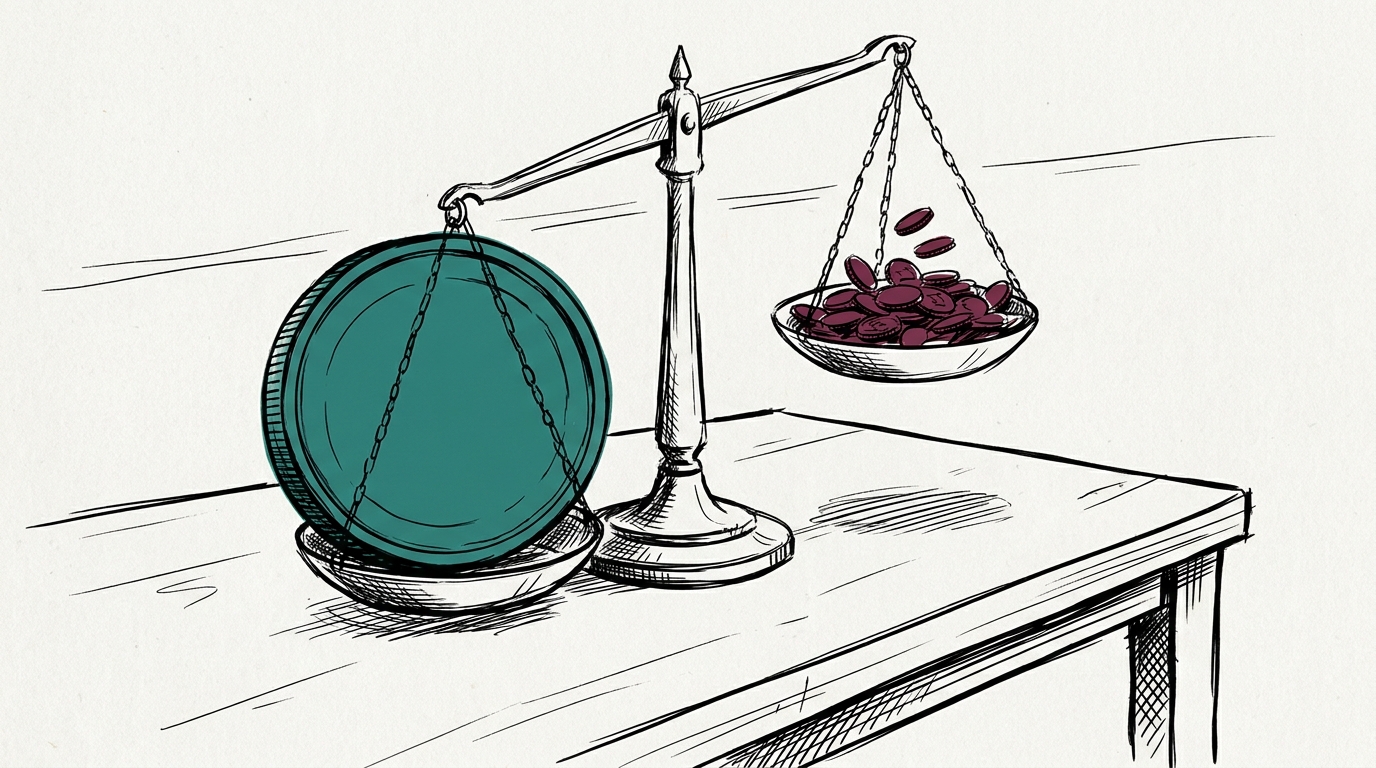
A neighbour asking Tehran for a carve-out concedes the premise the rest of the region has spent months contesting, which is that passage is Iran's to grant. Ghalibaf told parliament's security Commission on 16 August that Iran had won the war . An approach bargaining bilaterally for Iraqi barrels, rather than collectively for a reopening, treats that claim as a working assumption.

Every request of this kind raises the price of the collective one. Tehran now has something to trade that it did not previously have to concede, and it can dispense the same favour twice on different terms.


Deep Analysis

In plain English

Iraq's parliamentary speaker, Haibat al-Halbousi, asked Iran's Parliament Speaker Mohammad Bagher Ghalibaf for a favour during Ghalibaf's visit to Baghdad: let Iraqi oil ships get special treatment when passing through the Strait of Hormuz, the narrow waterway Iran has repeatedly threatened to restrict. Iraq needs this because it sells almost all its oil through or near that strait, and oil pays for roughly nine in every ten dollars the Iraqi government spends. No agreement was reported by the time this was published, only the request.

Deep Analysis
Root Causes

Iraq's state finances depend on oil for roughly 90% of government revenue, making Hormuz access a fiscal survival issue rather than a commercial preference.

Shared Shia religious and political ties between Baghdad and Tehran make a bilateral carve-out cheap for Iran to grant: exempting Iraq costs Tehran little leverage against its stated Western adversaries while relieving Iraq's single largest fiscal risk.

What could happen next?
  • Meaning

    A second Iraqi request for Hormuz consideration, after an April exemption, suggests bilateral carve-outs from Iran's restrictions function as informal and renewable rather than as standing rules.

First Reported In

Update #173 · Seven balance sheets price the strait

Anadolu· 20 Aug 2026
Read original
Different Perspectives
Poland
Poland
Poland leads a self-announced AI Gigafactory consortium with a EUR 100 million phase-one commitment, matched by Czechia and joined by Hungary at EUR 25 million. EuroHPC has confirmed no consortium for the call closing 12 November, so the bloc exists only in national announcements so far.
UK Government (DCMS)
Secretary of State Lisa Nandy told the Commons on 3 September she has inherited the sovereign AI brief from Liz Kendall, but gave no assessment, figure or date on frontier-model access. It is the first public claim of ownership since DSIT's abolition, without the substance the committee asked for.
ASML
ASML
ASML CEO Christophe Fouquet credited Intel Foundry, not a European fab, with shipping the first high-volume logic product made on High-NA EUV, the tool only ASML builds. Europe holds the chokepoint tool; the company that spent it into volume production first is American.
Luxembourg
Luxembourg
Luxembourg joined Mistral's Series D as a new investor on 8 September, the same government that co-funds EuroHPC's MeluXina-AI supercomputer. One small member state now funds the sovereign compute Mistral may need and holds equity in the company using it.
Samsung Electronics
Samsung Electronics
Samsung led Mistral's Series D on 8 September and the same day expanded its ASML collaboration on next-generation lithography. One Korean company now sits atop Europe's largest AI funding round and inside its most sensitive chip-tooling relationship.
Mistral AI
Mistral AI
Mistral closed a EUR 3 billion Series D above a EUR 21 billion valuation on 8 September, with Samsung leading and Luxembourg joining as a new state investor. The company markets itself as Europe's non-American AI option even as the round's lead capital comes from South Korea and two US private-equity firms.