Skip to content
You can now search across every topic, entity and event.What's new
European Tech Sovereignty
8JUL

OFAC opens Iran waiver second track

4 min read
09:50UTC

OFAC published Iran General Licence V on 10 June, quietly extending Iranian crude clearance a week before the 17 June Russian waiver lapses and splitting the sanctions calendar onto two tracks at once.

TechnologyDeveloping
Key takeaway

OFAC's Iran GL V extends Iranian crude clearance on a separate calendar from the 17 June Russian waiver expiry.

OFAC (Office of Foreign Assets Control) published Iran General Licence V in the Federal Register on 10 June (document 2026-11614), alongside fresh Iran SDN designations the same day. 1 OFAC is the US Treasury arm that writes and enforces sanctions, and a General Licence is the carve-out that lets specified transactions proceed without breaching them. GL V is the successor to GL U, which authorised Iranian crude loaded by 20 March through a 19 April expiry that has since lapsed; GL V extends that delivery and sale chain to a later cutoff.

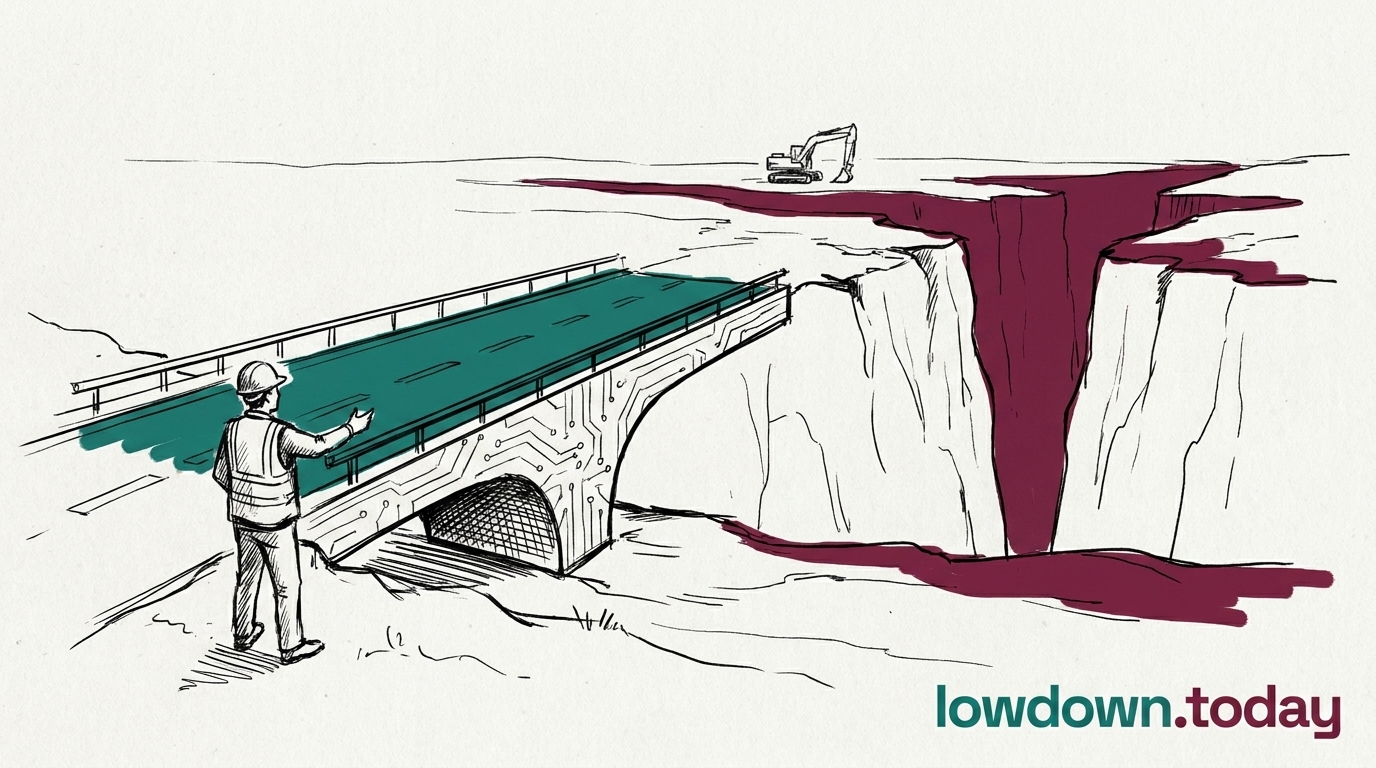
The waiver plumbing now runs on two tracks simultaneously. Russia's General License 134C covers in-transit Russian crude only through 17 June , and Secretary of State Marco Rubio's 5 June line that Washington wants the Russian waivers ended as soon as possible framed that date as the binding event for the market. Yet OFAC extended a parallel Iranian authorisation a week before it, a move desks pricing the Russian clock alone have largely missed.

The GL 134 series and the Iran GL series run on independent calendars, so reading only the Russia leg misprices what stranded supply remains legally clearable after 17 June. If Iranian barrels stay in compliant transit while Russian cover expires, the supply withdrawn from the market is smaller than a single-clock reading implies. The exact GL V loading-cutoff and expiry terms were not retrievable while OFAC's pages were blocked, leaving the precise size of that residual window open. 2

Deep Analysis

In plain English

When the US places sanctions on a country, it sometimes issues special permissions called general licences that allow specific types of trade to continue for a limited period while the broader prohibition phases in. Think of them as temporary exceptions with expiry dates. The US Treasury office that manages sanctions (called OFAC) published one of these permissions for Iranian oil on 10 June. Separately, there is an existing permission for Russian oil expiring on 17 June. Now two different permission clocks are running at once one for Iranian oil, one for Russian and they expire on different dates. Trading desks mostly know about the Russian deadline, but the Iranian one, running quietly alongside it, means more oil can still legally move than the market had assumed.

Deep Analysis
Root Causes

OFAC published Iran GL V on 10 June because three structural pressures made a single-track shutdown politically and economically unworkable.

First, calendar risk from the Russia GL 134 series. Rubio's 5 June statement committed to ending Russian waivers, making a GL 134D politically difficult. Publishing an Iran GL V a week before the Russian clock stops provides OFAC a second legally clearable crude channel as the first closes, preventing a simultaneous shutdown of both authorisation tracks.

Second, the Iran nuclear talks context. Publishing GL V alongside fresh SDN designations signals both tracks of US Iran policy in one action enforcement of the maximum-pressure sanctions perimeter and continued authorisation of the wind-down corridor consistent with keeping negotiating leverage without triggering a physical supply shock.

Third, the OPEC+ supply gap. With actual OPEC+ output 9.58mbd below February levels, OFAC faces political pressure to avoid a supply shock from simultaneous closure of all sanctioned-crude authorisation windows. A second track provides price-shock insurance.

What could happen next?
  • Risk

    Desks pricing only the GL 134C 17 June expiry may be caught short if GL V keeps a residual Iranian crude corridor open, mispricing the net available supply reduction after the Russian waiver lapses.

    Immediate · Assessed
  • Consequence

    OFAC's dual-track architecture makes the clearable-supply picture harder to read from external data alone, increasing the bid for information on GL V's exact loading-cutoff terms once OFAC pages become accessible.

    Short term · Assessed
  • Precedent

    Publishing a new Iran GL on the same day as fresh SDN designations establishes OFAC's paired carrot-and-stick approach as the standard enforcement template, separating enforcement tightening from supply-corridor closures going forward.

    Medium term · Reported
First Reported In

Update #7 · Distillate deficit deepens as runs max out

Federal Register / OFAC· 11 Jun 2026
Read original
Different Perspectives
United States (Google/Alphabet)
Alphabet lost its final Android appeal on 2 July with no further court to hear it, a result its Computer and Communications Industry Association allies frame as precedent, not deterrence, since the €4.1bn fine changed nothing about Google's Play Store terms across eight years of litigation.
UK Department for Science, Innovation and Technology
DSIT opened its £96m second Sovereign AI wave on 3 July, switching from April's equity stakes to fixed-price contracts because Britain has no domestic hyperscaler or Bpifrance-style lender to fund capacity another way. It is betting on buying outcomes it controls alone rather than joining an EU-wide framework.
German federal government
Berlin backed both German deliverables this week, Infineon's fab and Aleph Alpha's merger, but is finding one far harder to close than the other. It wants enforceable protective rights inside Cohere's cap table before the merger closes, a legal instrument the Bundeskartellamt has no filing to review yet.
European Commission
European Commission
The Commission banked a clean CJEU win on the eight-year Android case on 2 July, removing Google's last comparator argument before President von der Leyen rules on the far larger DMA self-preferencing fine due 27 July. Brussels treats Infineon's early Dresden delivery as proof the Chips Act mechanism works, at the node Europe already led.
Bruegel (EU industry sceptics)
Bruegel economist Mario Mariniello argued the EU sovereignty package mimics US and Chinese strategy while EU cloud providers hold roughly 15% of their home market; using nationality as a proxy for security without fixing the underlying capital and energy gaps that drive the dependency creates €86bn of migration cost without the security benefit it is sold as delivering.
France
France
France published a joint sovereignty definition with Germany at VivaTech and mobilised €13bn under Tibi Phase 3, placing SAP's partnership with Mistral as the working proof that a German enterprise-software giant running a French sovereign model inside public administration is what digital sovereignty looks like in practice.
