Skip to content
You can now search across every topic, entity and event.What's new
European Tech Sovereignty
8JUL

Five nations queue for Hormuz toll

3 min read
09:50UTC

India, China, Pakistan, Iraq and Malaysia are negotiating bilateral transit deals with Tehran, splitting global shipping into those who pay Iran and those who cannot pass.

TechnologyDeveloping
Key takeaway

Iran is converting a military chokepoint into bilateral diplomatic leverage, systematically fracturing the anti-Iran coalition.

India, Pakistan, Iraq, Malaysia and China are in direct negotiations with Tehran for bilateral transit arrangements through the strait of Hormuz, following Japan's grant of passage on 21 March 1. China and India are the world's largest and third-largest crude importers. Iraq is OPEC's second-largest producer and exports through the strait. Each is negotiating separately with Iranian intermediaries, not as a bloc.

The mechanism is the IRGC's toll system. Lloyd's List Intelligence documented 89 to 90 vessels transiting under IRGC clearance between 1 and 15 March, with fees reaching $2 million per passage 2. Ships submit ownership details, cargo manifests, crew nationalities and destination ports through Iran-affiliated intermediaries operating outside Iran. Payments are accepted in cash or cryptocurrency. An Iranian lawmaker confirmed the fee collection to Anadolu Agency 3. Charter rates have quadrupled to $800,000 per day; war-risk premiums on very large crude carriers run between $3.6 million and $6 million per voyage 4.

The result is a two-tier global shipping order. Nations aligned with Washington face a de facto embargo. Non-aligned nations pay Iran for access. Twenty-two countries signed a joint statement demanding reopening ; none committed warships. Every ally Trump named for a Hormuz escort coalition formally refused . That gap between declaratory and operational policy gives Tehran space to entrench the toll system as a standing institution rather than a wartime improvisation.

During the 1980–88 Tanker War, both Iran and Iraq attacked commercial shipping indiscriminately. The US responded with Operation Earnest Will, reflagging Kuwaiti tankers under the American flag and escorting them through the strait. Neither belligerent attempted selective access — the concept of granting passage to some nations while denying others did not arise. Tehran's current system is structurally different. It converts military control into differentiated commercial leverage, compelling each government to weigh its relationship with Washington against the price of energy disruption — and to do so alone.

Deep Analysis

In plain English

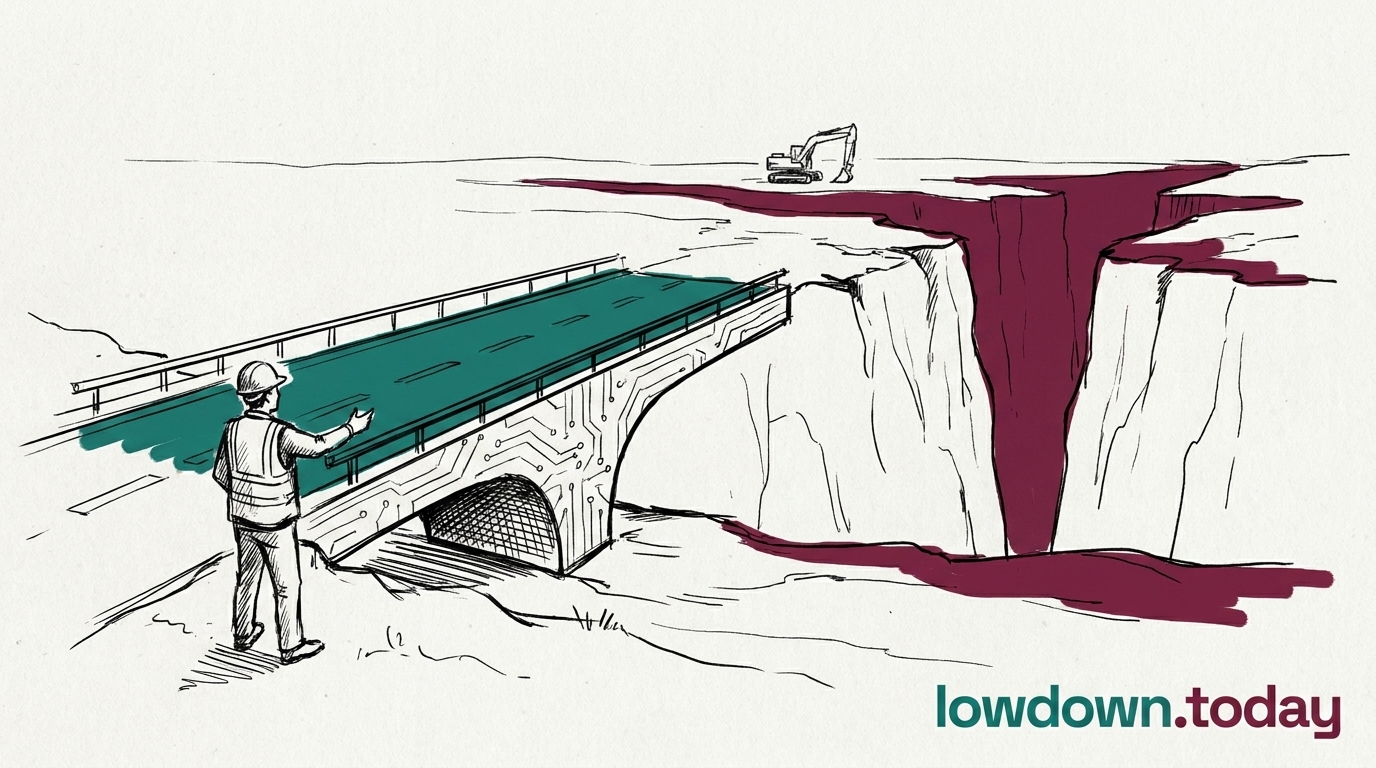
Think of it like a toll bridge operator who has closed the bridge to some drivers but will let others through — for a price. Iran has shut the main oil shipping route to US-allied countries, but is offering individual deals to countries like India and China. Each country that cuts its own deal weakens collective pressure on Iran to reopen the route for everyone. The more countries that accept these bilateral terms, the less reason Iran has to negotiate a full reopening.

Deep Analysis
Synthesis

The bilateral deals invert the traditional US sanctions architecture. Iran is administering its own secondary sanctions regime — charging access fees to non-aligned states while imposing a de facto embargo on US-aligned ones. The US built this tool to isolate Iran; Iran has replicated it to isolate the US-led coalition instead.

Root Causes

The five negotiating states share a structural vulnerability Iran is deliberately exploiting: acute Gulf-origin energy dependency that outweighs their political alignment with Washington. None of the five is treaty-bound to US coalition positions. Each faces severe domestic political costs from refusing passage negotiations while their industries and consumers bear elevated fuel prices.

Escalation

The bilateral negotiation pattern is de-escalatory for individual negotiating states but structurally escalatory for the overall crisis. Each deal Iran closes reduces the economic cost to Tehran of maintaining the closure, entrenching the two-tier system and extending the timeline toward a negotiated resolution.

What could happen next?
  • Consequence

    Each completed bilateral deal reduces multilateral pressure on Iran to reopen Hormuz unconditionally, extending the supply disruption timeline.

    Immediate · Assessed
  • Risk

    Nations completing bilateral transit deals may face US secondary sanctions, forcing a binary choice between IRGC access and US financial market participation.

    Short term · Assessed
  • Precedent

    If formalised, the two-tier system establishes a permanent Iranian veto over individual nations' energy access, restructuring Gulf geopolitics around bilateral leverage relationships with Tehran.

    Medium term · Suggested
First Reported In

Update #45 · Ultimatum expires; Iran tolls Hormuz at $2m

Time· 23 Mar 2026
Read original
Causes and effects
This Event
Five nations queue for Hormuz toll
Iran's bilateral negotiating structure prevents collective bargaining among transit-seeking nations, giving Tehran maximum leverage over each counterpart individually — a feature absent from every previous Hormuz crisis since the 1980s Tanker War.
Different Perspectives
United States (Google/Alphabet)
Alphabet lost its final Android appeal on 2 July with no further court to hear it, a result its Computer and Communications Industry Association allies frame as precedent, not deterrence, since the €4.1bn fine changed nothing about Google's Play Store terms across eight years of litigation.
UK Department for Science, Innovation and Technology
DSIT opened its £96m second Sovereign AI wave on 3 July, switching from April's equity stakes to fixed-price contracts because Britain has no domestic hyperscaler or Bpifrance-style lender to fund capacity another way. It is betting on buying outcomes it controls alone rather than joining an EU-wide framework.
German federal government
Berlin backed both German deliverables this week, Infineon's fab and Aleph Alpha's merger, but is finding one far harder to close than the other. It wants enforceable protective rights inside Cohere's cap table before the merger closes, a legal instrument the Bundeskartellamt has no filing to review yet.
European Commission
European Commission
The Commission banked a clean CJEU win on the eight-year Android case on 2 July, removing Google's last comparator argument before President von der Leyen rules on the far larger DMA self-preferencing fine due 27 July. Brussels treats Infineon's early Dresden delivery as proof the Chips Act mechanism works, at the node Europe already led.
Bruegel (EU industry sceptics)
Bruegel economist Mario Mariniello argued the EU sovereignty package mimics US and Chinese strategy while EU cloud providers hold roughly 15% of their home market; using nationality as a proxy for security without fixing the underlying capital and energy gaps that drive the dependency creates €86bn of migration cost without the security benefit it is sold as delivering.
France
France
France published a joint sovereignty definition with Germany at VivaTech and mobilised €13bn under Tibi Phase 3, placing SAP's partnership with Mistral as the working proof that a German enterprise-software giant running a French sovereign model inside public administration is what digital sovereignty looks like in practice.
