Skip to content
You can now search across every topic, entity and event.What's new
European Oil Markets
18JUN

ISAB Priolo's OFAC clock runs out

3 min read
12:45UTC

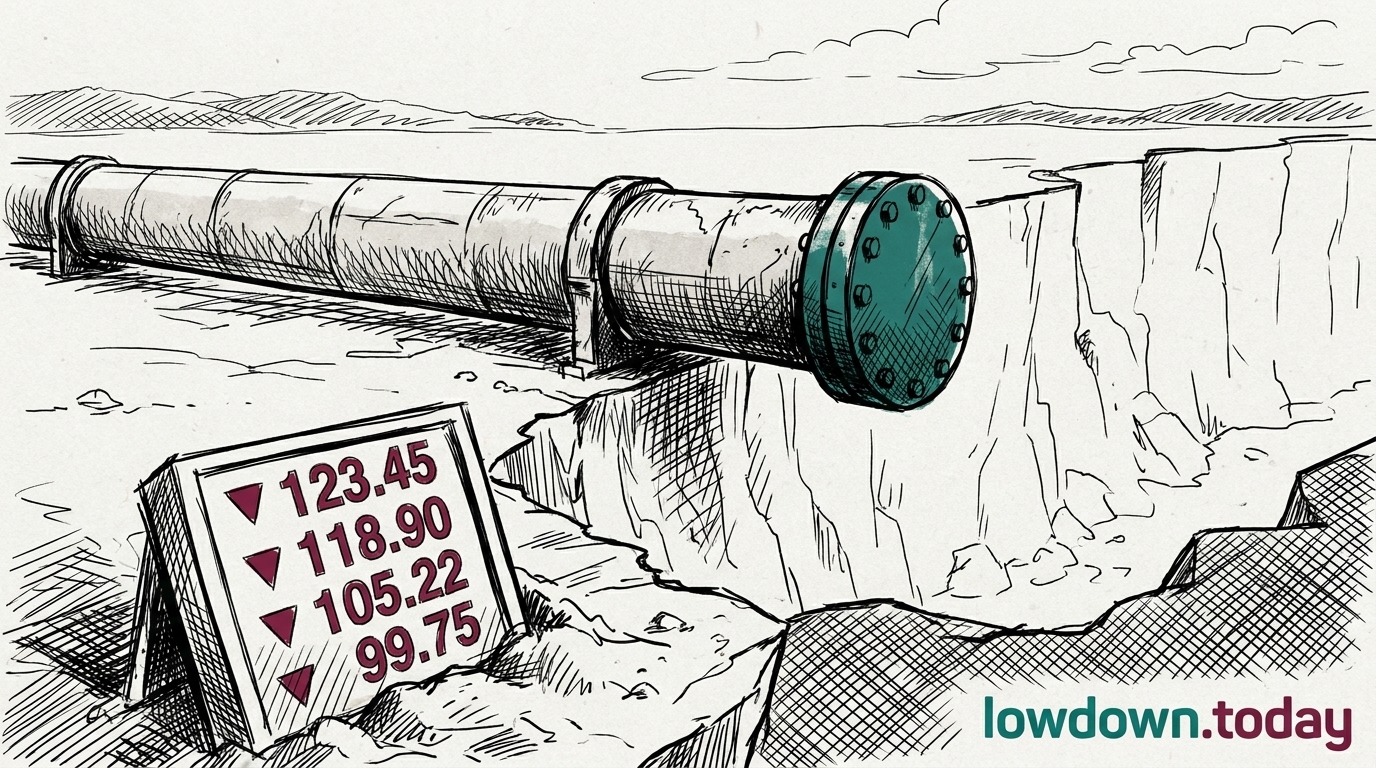
GL 131F, the OFAC licence that lets Lukoil negotiate the ISAB Priolo sale, expires on Sunday 28 June with no transfer licence issued and a 320,000 b/d refinery facing stranding.

EconomicDeveloping
Key takeaway

An OFAC transaction licence, not Italy's clearance, is the only thing that can move ISAB Priolo before Sunday.

OFAC moved the expiry of General License 131F (GL 131F), the authorisation that lets Lukoil International GmbH negotiate the sale of the ISAB Priolo refinery, to Sunday 28 June, one day later than the 27 June briefed last week 1. ISAB Priolo is the 320,000 b/d plant at Priolo Gargallo in Sicily, the largest Russian-owned refinery in the European system. No GL 131G has appeared, and the separate transaction licence that an actual title transfer requires has not been issued.

Italy cleared the deal in early June under its Golden Power foreign-investment framework, subject to conditions . A national-security sign-off in Rome cannot substitute for the missing licence in Washington. Until Sunday the buyer may negotiate; it cannot complete.

GL 131F authorises negotiation and contingent contracts, never the transfer of title. A plant that size with a willing seller, a conditional buyer and no lawful way to change hands becomes the largest stranded refinery in Europe since the war began. The Mediterranean products hole a stranding would open lands into the same flushed positioning book carrying everything else this fortnight.


Deep Analysis

In plain English

ISAB Priolo is a large oil refinery in Sicily, owned by Lukoil International GmbH, the European subsidiary of Russia's Lukoil oil company. It processes 320,000 barrels of crude per day into petrol, diesel, and jet fuel for European markets. That is equivalent to supplying roughly 3.5 million litres of fuel per day. After the invasion of Ukraine, US and EU sanctions targeted Russian companies including Lukoil. Rather than closing the refinery immediately, the US Treasury's Office of Foreign Assets Control (OFAC) issued a series of temporary authorisations called "general licences" allowing negotiations for its sale to a non-Russian buyer. A Cypriot-registered firm, Ludoil Energy, signed a sale agreement in May 2026. The current general licence, GL 131F, expires on 28 June. It allows the parties to negotiate, but does not allow the actual transfer of ownership. A separate "transaction licence" from OFAC is needed to close the deal, and no such licence has appeared. Without it, the 320,000 b/d refinery would remain legally owned by a sanctioned company, unable to be sold lawfully but still processing crude oil for European drivers and airlines.

Deep Analysis
Root Causes

The core structural problem is a three-layer consent requirement with incompatible timelines. OFAC's transaction licence conditions, set out in FAQ 1224, require: (a) the buyer to completely sever Lukoil International GmbH from Lukoil parent company; (b) funds owed to Lukoil to be parked in a US-jurisdiction blocked account; (c) no upfront value transferred to Lukoil.

These are covenanted closing conditions that typically require 45-90 days of legal documentation, escrow arrangement, and regulatory filings. GL 131F's 28 June deadline leaves eight business days from the date it was confirmed, which is structurally insufficient for a first-time transaction licence application.

Italy's Golden Power clearance, granted in principle under Law 21/2012, operates in a separate jurisdiction from OFAC and cannot substitute for the US sanctions authorisation.

The sale is denominated in a currency requiring US dollar clearing; any dollar-leg of the transaction flows through the US correspondent banking system and falls within OFAC's extra-territorial jurisdiction regardless of Italian domestic approval. The bottleneck is not Italian willingness but OFAC's absence of a specific licence instrument that the Italian process cannot supply.

First Reported In

Update #11 · Crude longs flushed flat into a loaded week

OFAC· 26 Jun 2026
Read original
Different Perspectives
Gulf oil producer
Gulf oil producer
Secured OPEC's confirmed 188,000 b/d September increment with the next meeting set for 6 September, but the Secretariat's own 2 August release says nothing about the fourth quarter. Output guidance beyond September remains undisclosed even as delegate sourcing keeps filling that gap.
Money manager positioned in WTI
Added 21,402 lots to a 108,307 net long in NYMEX WTI in the week to 28 July, against just 1,485 added to Brent's 15,740, a roughly fourteen-to-one split. Conviction sits in the American benchmark even as the European diesel story sets the record.
Indian refiner buying Urals
Bought Russian crude at a discount that narrowed to $1-2 a barrel in the week to 29 July from over $10, as Hormuz risk pushed it toward Urals. If that risk eases with the strike now called off, the discount it is currently enjoying could re-widen just as fast.
Russian diesel exporter
Novak tied any lifting of the diesel export ban, due to lapse 31 July, to an unspecified market recovery with no date, and pushed the gasoline ban to end-2026. An open-ended constraint suits an exporter benefiting from the record European crack it feeds.
War-risk underwriter
Withdrew war-risk cover for Saudi-linked hulls on 24 July and has not reinstated it, holding Bab el-Mandeb tanker transits near 7.5 a day. A cancelled strike does not by itself trigger the committee review needed to re-accept the class.
Northwest European refiner
Sources only 17% of diesel imports from Saudi Red Sea ports against the Mediterranean's 24%, so the ARA crack at $85.86 trails the Med print by $5.81. Lower Red Sea exposure is cushioning it against the rerouting cost, not eliminating it.



