Skip to content
You can now search across every topic, entity and event.What's new
European Oil Markets
18JUN

CEPA scale check: 0.46% of Russian oil

3 min read
12:45UTC

David Axe at CEPA, citing RUSI research, assessed Ukraine's 130 oil strikes in 2025 produced $863 million of damage against roughly $189 billion in annual Russian oil revenue.

EconomicDeveloping
Key takeaway

Ukraine's oil strike campaign delivers footage; the revenue figures sit on the wrong side of the scale.

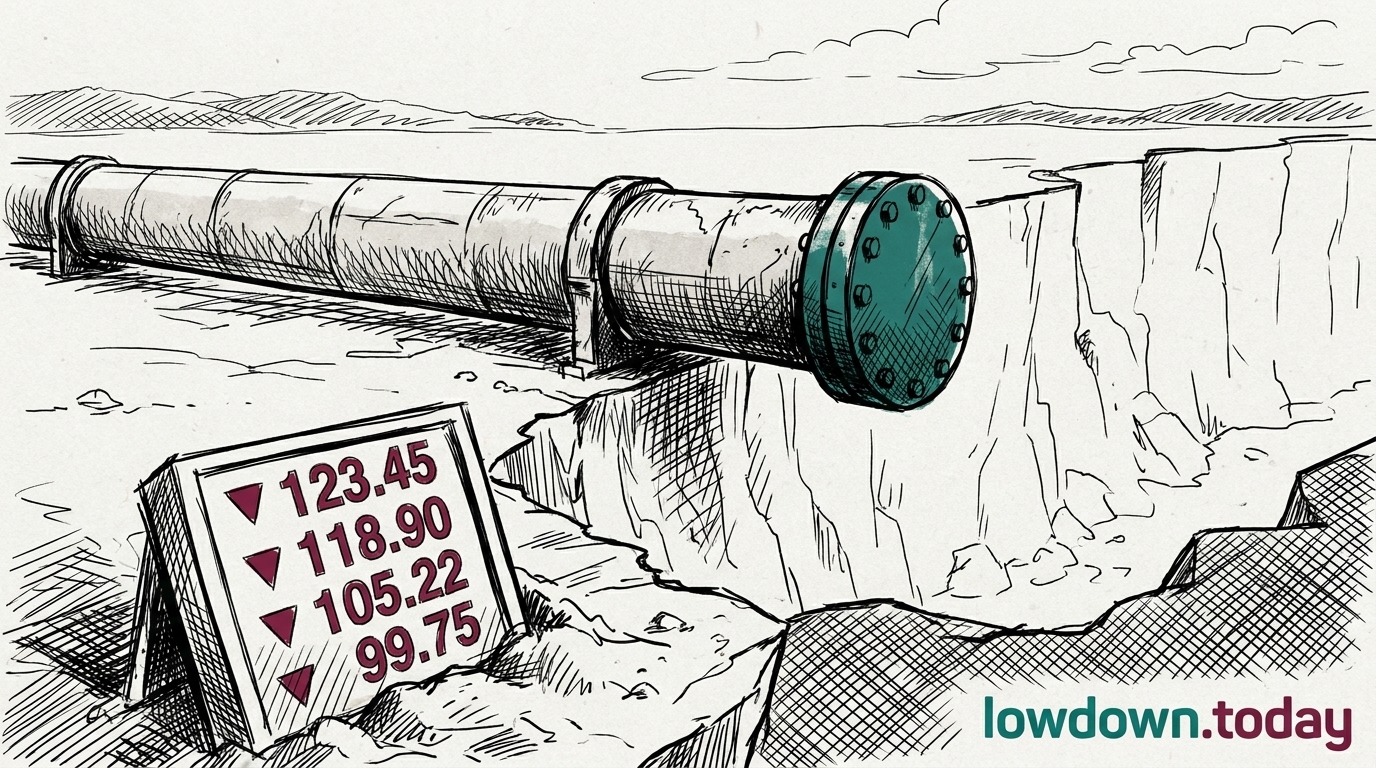
David Axe at CEPA (Center for European Policy Analysis), citing RUSI research published this month, assessed that Ukraine's 130 refinery and port strikes in 2025 delivered only a 6% export reduction against 2024 1. Cumulative damage came to $863 million against roughly $189 billion in annual Russian oil revenue, or 0.46% of the base.

That is roughly the cost of three weeks of Patriot operations in the Middle East, set against a rounding error in Moscow's books. At that tempo, Ukraine would need over two centuries of strike operations to match a single year of Russian oil revenue. Ukrainian targeteers pick lightly-defended terminals for visible damage, leaving hardened core infrastructure intact. Footage does most of the work the revenue figures do not.

Two separate considerations compound the scale problem. Fire Point, the Ukrainian consortium manufacturing the Flamingo cruise missile , is reportedly under investigation by NABU (Ukraine's National Anti-Corruption Bureau). Only nine Flamingos have been fired in six months, against the hundreds that any serious strike campaign against hardened infrastructure would require. And the Iran war separated price from volume in a way the infrastructure campaign cannot control: Urals rode the Hormuz premium while Baltic throughput was recovering. When Kyiv asks for Patriots for ballistic defence while launching its own drones at pipelines Chevron part-owns, the two trade-offs sit on the same ledger.


Deep Analysis

In plain English

Ukraine has been hitting Russian oil refineries and export terminals in a campaign aimed at cutting the revenue that funds Russia's military. A new report from the Center for European Policy Analysis and RUSI found that 130 such strikes across 2025 reduced Russia's oil exports by only 6% and caused $863 million in total damage. Russia earns roughly $189 billion per year from oil. So the entire year of strikes damaged the equivalent of 0.46% of annual revenue. To put that in context, Russia earns back that amount in about 42 hours. The Iran war's oil price spike likely generated more revenue for Russia in a single week than Ukraine's entire 2025 strike campaign cost Russia in a year.

What could happen next?
  • Meaning

    The CEPA finding reframes the Baltic and Black Sea oil campaigns as primarily having operational-denial value, not economic attrition value; Ukraine's justification for the campaign must shift accordingly.

    Immediate · 0.78
  • Risk

    If the Fire Point/NABU investigation reveals systematic corruption in Ukraine's precision strike procurement, it will complicate Western partner willingness to fund further anti-infrastructure weapons deliveries.

    Short term · 0.62
  • Opportunity

    The 6% export-volume reduction, while small in revenue terms, represents real capacity constraints on specific refinery outputs (aviation fuel, diesel) that have strategic value beyond headline revenue figures.

    Medium term · 0.55
First Reported In

Update #12 · Three narrowings of US support for Kyiv

Center for European Policy Analysis· 11 Apr 2026
Read original
Causes and effects
This Event
CEPA scale check: 0.46% of Russian oil
Load-bearing counter-evidence against the narrative that Ukraine's strike campaign is constraining Russian oil revenue.
Different Perspectives
Gulf oil producer
Gulf oil producer
Secured OPEC's confirmed 188,000 b/d September increment with the next meeting set for 6 September, but the Secretariat's own 2 August release says nothing about the fourth quarter. Output guidance beyond September remains undisclosed even as delegate sourcing keeps filling that gap.
Money manager positioned in WTI
Added 21,402 lots to a 108,307 net long in NYMEX WTI in the week to 28 July, against just 1,485 added to Brent's 15,740, a roughly fourteen-to-one split. Conviction sits in the American benchmark even as the European diesel story sets the record.
Indian refiner buying Urals
Bought Russian crude at a discount that narrowed to $1-2 a barrel in the week to 29 July from over $10, as Hormuz risk pushed it toward Urals. If that risk eases with the strike now called off, the discount it is currently enjoying could re-widen just as fast.
Russian diesel exporter
Novak tied any lifting of the diesel export ban, due to lapse 31 July, to an unspecified market recovery with no date, and pushed the gasoline ban to end-2026. An open-ended constraint suits an exporter benefiting from the record European crack it feeds.
War-risk underwriter
Withdrew war-risk cover for Saudi-linked hulls on 24 July and has not reinstated it, holding Bab el-Mandeb tanker transits near 7.5 a day. A cancelled strike does not by itself trigger the committee review needed to re-accept the class.
Northwest European refiner
Sources only 17% of diesel imports from Saudi Red Sea ports against the Mediterranean's 24%, so the ARA crack at $85.86 trails the Med print by $5.81. Lower Red Sea exposure is cushioning it against the rerouting cost, not eliminating it.



