Skip to content
You can now search across every topic, entity and event.What's new
European Oil Markets
18JUN

Pentagon: war will last 'weeks not days'

3 min read
12:45UTC

A US defence official concedes the conflict will last weeks. The Pentagon has not produced evidence for the 'imminent threat' that justified starting it without Congress.

EconomicDeveloping
Key takeaway

A US official's 'weeks, not days' assessment is the first explicit acknowledgement of campaign duration from a US source, signalling that Washington is prepared for a sustained operation with direct consequences for markets, politics, and regional stability.

A US defence official told Al Jazeera the war against Iran is expected to last "weeks, not days." President Trump told CNBC the operation was "ahead of schedule." The two statements are compatible — a long campaign can move quickly — but together they frame a war measured in weeks while insisting it is going well.

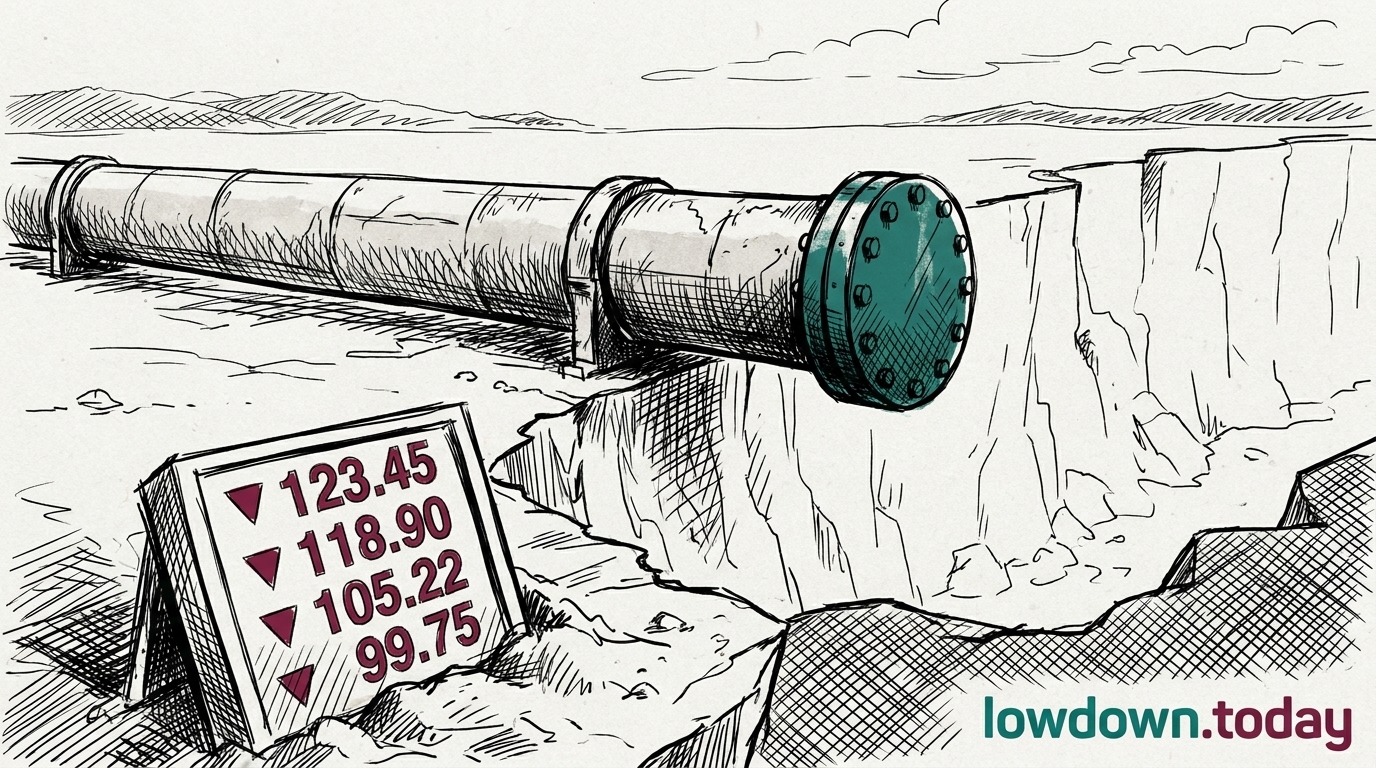
Each week the campaign continues, the strait of Hormuz remains closed to commercial shipping , Brent Crude climbs past $82.37 per barrel toward the $110–130 range Goldman Sachs and JP Morgan project for a sustained conflict, and Gulf States absorb more Iranian retaliatory fire from a war they did not initiate. The UAE alone has taken 137 missiles and 209 drones. The campaign's costs are being borne by countries that had no say in launching it.

The Pentagon briefed Congress for 90 minutes on Saturday and, according to Newsweek, produced no evidence for the 'imminent threat' that justified bypassing congressional authorisation. Senator Mark Warner, the senior Democrat on the Senate Intelligence Committee: "I have seen no intelligence that Iran was on the verge of launching any kind of preemptive strike. Trump has started a war of choice." War powers votes this week cannot override a presidential veto, but they place Congress on the record. The distinction between 'necessary response' and 'war of choice' determines how long domestic support holds.

President Trump has ruled out ground forces and nation-building . A weeks-long air-only campaign against 88 million people, with no ground component and no articulated end state, has limited modern precedent. NATO's 1999 Kosovo air campaign lasted 78 days before Belgrade accepted terms — against a population of 10 million with no Ballistic missile arsenal and no leverage over global energy supply. Iran has both.


Deep Analysis

In plain English

When a senior US defence official tells a major news outlet that a war is going to last 'weeks, not days,' that is not a casual remark — it is a calibrated signal. It tells allies how long to hold firm, tells markets how long the disruption will last, and tells Congress that this is not a quick strike. It is also notably honest: officials in past conflicts have been accused of underplaying duration to avoid domestic opposition. The statement does not mean the war will last only weeks — 'weeks' is a floor, not a ceiling. What it does mean is that the Pentagon is not expecting Iran to fold quickly, and that the operational plan assumes an extended air campaign rather than a single decapitating blow.

Deep Analysis
Synthesis

The 'weeks, not days' statement is the US government's first explicit demarcation of campaign scope, and it transforms the conflict from a possible one-night affair into a sustained military operation with multi-domain consequences. It validates the oil market's risk premium (without yet justifying the higher end of Goldman and JP Morgan projections), it defines the window during which war powers votes will become politically salient, and it sets the temporal frame against which regional actors — Turkey, the Gulf states, Iraq — must now calibrate their own responses. Most significantly, it confirms that the United States is not a bystander providing political cover for an Israeli unilateral action: a 'weeks' assessment implies US intelligence, logistics, and possibly kinetic involvement that cannot be sustained without active US commitment.

Root Causes

The 'weeks' assessment reflects the physical scale of Iran's strategic infrastructure. Iran's nuclear programme, missile manufacturing network, and air defence architecture are distributed across hardened, geographically dispersed sites — many deep underground, specifically designed to survive a short strike campaign. A multi-week campaign is operationally necessary if the objective is genuine destruction rather than symbolic degradation of these capabilities. The statement also reflects US intelligence assessments of Iranian regenerative capacity: a shorter campaign would likely allow Iran to reconstitute damaged systems from surviving stocks and manufacturing capacity.

Escalation

The 'weeks' timeline, paired with air supremacy and the command decapitation sequence, suggests a campaign architecture designed to systematically dismantle Iran's strategic capabilities rather than achieve a single decisive blow and negotiate. A multi-week air campaign creates a prolonged window during which Iranian proxies, surviving missile forces, and the IRGC can escalate horizontally — in Lebanon, Iraq, Yemen, and the Gulf. The longer the campaign runs, the greater the probability of a threshold event — a Hezbollah rocket barrage on Tel Aviv, an IRGC mine in Hormuz, or an attack on a US carrier — that compels a response expanding the conflict beyond its current air-campaign frame. Markets are currently pricing a contained scenario; a 'weeks' duration materially increases the probability of the uncontained scenario they have not yet priced.

What could happen next?
  • Meaning

    The US government has formally signalled preparedness for a sustained campaign, moving the conflict beyond the threshold of a single-night symbolic strike.

    Immediate · Reported
  • Risk

    A multi-week campaign window substantially increases the cumulative probability of a threshold escalation event — proxy attack, Hormuz mining, or carrier strike — that forces horizontal escalation.

    Short term · Assessed
  • Consequence

    Energy price disruption, aviation disruption, and insurance premium increases are locked in for at least the duration of the stated campaign timeline.

    Short term · Assessed
  • Risk

    Congressional war powers pressure will intensify over the weeks-long timeline, potentially constraining US operational flexibility if a veto-proof majority coalesces — an unlikely but non-trivial scenario.

    Short term · Suggested
First Reported In

Update #6 · Pentagon produced no evidence for Iran war

Al Jazeera· 1 Mar 2026
Read original
Causes and effects
This Event
Pentagon: war will last 'weeks not days'
The acknowledgement that the campaign will last weeks, combined with the absence of evidence for the stated justification, reframes the conflict from emergency defensive action to extended war of choice. The distinction determines its political sustainability in Washington and its economic cost to every country dependent on Gulf energy.
Different Perspectives
Gulf oil producer
Gulf oil producer
Secured OPEC's confirmed 188,000 b/d September increment with the next meeting set for 6 September, but the Secretariat's own 2 August release says nothing about the fourth quarter. Output guidance beyond September remains undisclosed even as delegate sourcing keeps filling that gap.
Money manager positioned in WTI
Added 21,402 lots to a 108,307 net long in NYMEX WTI in the week to 28 July, against just 1,485 added to Brent's 15,740, a roughly fourteen-to-one split. Conviction sits in the American benchmark even as the European diesel story sets the record.
Indian refiner buying Urals
Bought Russian crude at a discount that narrowed to $1-2 a barrel in the week to 29 July from over $10, as Hormuz risk pushed it toward Urals. If that risk eases with the strike now called off, the discount it is currently enjoying could re-widen just as fast.
Russian diesel exporter
Novak tied any lifting of the diesel export ban, due to lapse 31 July, to an unspecified market recovery with no date, and pushed the gasoline ban to end-2026. An open-ended constraint suits an exporter benefiting from the record European crack it feeds.
War-risk underwriter
Withdrew war-risk cover for Saudi-linked hulls on 24 July and has not reinstated it, holding Bab el-Mandeb tanker transits near 7.5 a day. A cancelled strike does not by itself trigger the committee review needed to re-accept the class.
Northwest European refiner
Sources only 17% of diesel imports from Saudi Red Sea ports against the Mediterranean's 24%, so the ARA crack at $85.86 trails the Med print by $5.81. Lower Red Sea exposure is cushioning it against the rerouting cost, not eliminating it.



