Skip to content
You can now search across every topic, entity and event.What's new
European Oil Markets
15JUN

GL 131F resets the Lukoil sale clock

3 min read
11:33UTC

OFAC issued General Licence 131F on 28 May, running the Lukoil European-refinery divestment to a 27 June deadline, ten days behind GL 134C's vessel-cover lapse.

EconomicAssessed
Key takeaway

Six rollovers in, the Lukoil clock is a low-carry June option layered on a divergence already visible in the prints.

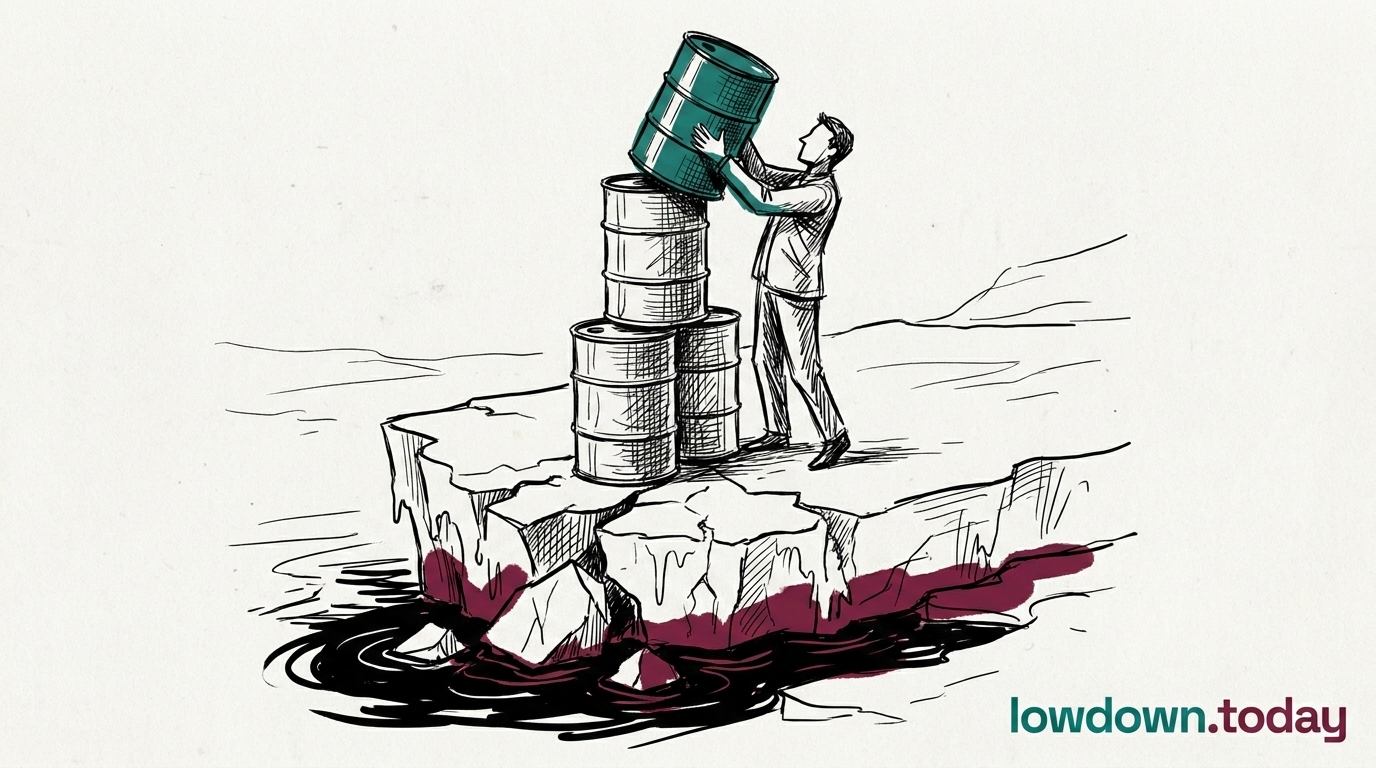
OFAC issued General Licence 131F on 28 May, the sixth iteration of the Lukoil-sale series, superseding 131E of 29 April and running negotiation rights to a 27 June clock 1. It authorises talks and contingent contracts for the sale of Lukoil International GmbH (the Swiss holding company for Lukoil's non-Russian refineries), not the transfer itself. The licence sits ten days behind GL 134C, whose Russian in-transit vessel cover lapses on 17 June , so two Russia-supply deadlines now compress into one fortnight.

LIG holds ISAB (the Priolo Gargallo complex in Sicily, roughly 800kbd), Neftochim Burgas in Bulgaria and Petrotel Ploiesti in Romania: close to a million barrels a day of throughput on Adriatic and Med sour runs. The companion FAQ 1224 sets the buyer terms: complete severance from Lukoil, funds owed parked in a US-jurisdiction blocked account, no upfront value transferred 2. That structure forces a buyer to front capital with zero recourse, which is why the deal has not closed through six rollovers.

The arbitrage sits in the divergence. Brent below $95 is pricing the Iran ceasefire while the regulatory calendar tightens into late June, so a desk fading the flat-price premium can hold long optionality on the June crude legs for little carry. The base rate cuts the other way: this series rolled six times, and 134B gave way to 134C before it . Read the position as the gap between a relaxing screen and a tightening compliance pool, with the June dates as the option on top, not as a bet on a hard cliff.


Deep Analysis

In plain English

OFAC is the US government office that enforces financial sanctions. When Russia was sanctioned, its oil company Lukoil was barred from operating freely in Western markets. Lukoil owns three European refineries, including a giant one in Sicily that processes nearly a million barrels of oil a day. The US has been issuing temporary licences allowing a buyer to negotiate a purchase of those refineries, but each licence keeps expiring without a deal. The latest licence, GL 131F, extends the deadline to 27 June 2026 and is the sixth in a row. A companion ruling (FAQ 1224) says that any buyer must deposit the full purchase price in a blocked account with no guarantee of ever getting it back if the deal falls through, and cannot give Lukoil any money upfront. That condition is why six deadlines have passed without a close: no commercial buyer wants to front hundreds of millions with zero security.

Deep Analysis
Root Causes

GL 131F's sixth extension without a close traces to two separable causes operating at different levels.

The proximate cause is the FAQ 1224 blocked-account condition itself: requiring a buyer to provide full purchase capital with no recourse to Lukoil and no upfront value flowing to Lukoil eliminates the seller's incentive to engage, making voluntary divestiture structurally irrational for Lukoil at any price below replacement cost of the assets.

The structural cause is the G7's inability to agree a mandatory divestiture order: absent an EU-level asset-seizure regulation or a US executive order compelling the sale, OFAC can authorise but not compel, and GL 131F is the sixth iteration of that authorise-without-compelling architecture.

What could happen next?
  • Risk

    If no buyer closes by 27 June under GL 131F conditions, OFAC must issue GL 131G or allow 1,016kbd of Mediterranean refining capacity to fall into an unlicenced grey area, repricing Med heavy-sweet differentials.

    Short term · Assessed
  • Consequence

    Two OFAC deadlines (GL 134C on 17 June, GL 131F on 27 June) compressing into the same fortnight amplifies June calendar risk for European crude and product spreads.

    Immediate · Assessed
  • Opportunity

    A sovereign-backed buyer (Italian state or Gulf SWF) that can absorb the FAQ 1224 blocked-account condition secures 800kbd of Mediterranean refining at distressed-asset pricing.

    Short term · Suggested
First Reported In

Update #3 · OFAC loads a June squeeze the screen ignores

EIA· 29 May 2026
Read original
Different Perspectives
Money managers
Money managers
Managed money rebuilt a dual crude net-long in the week to 9 June at entries $5-6 above the 12 June close; the 20 June print will show whether the flush ran. The RBOB long (+64,125 contracts) adds crack-compression exposure if crude overshoots lower before the product position unwinds.
OPEC+ / Saudi Arabia
OPEC's June MOMR cut 2026 demand growth to 970kbd for a third successive month; the 7 June ministerial added a third 188kbd July increment into a 37-year output low. Saudi Arabia's $108-111 fiscal breakeven sits above both the current Brent screen and the EIA's $79 2027 forecast, meaning Riyadh absorbs revenue pain to hold market share.
United States / OFAC
OFAC's 11 June issuance of GL 55F for Sakhalin-2 while declining to publish GL 134D signals a deliberate commodity-class split: gas licences for allied energy dependencies renewed; crude-vessel services allowed to run to lapse. Secretary Rubio's earlier statement (ID:4009) set the political intention; GL 55F confirms the architecture rather than contradicting it.
European Commission
European Commission
Brussels proposed the 21st package on 9 June to lock the $44.10 cap before the 15 July formula review auto-lifts it; Malta and Greece's block on the maritime-services ban risks delaying adoption past that deadline. A failed freeze converts the EU's primary revenue constraint on Russian oil into a decorative mechanism for H2 2026.
Russia
Russia
GL 134C's lapse on 17 June removes Western insurance cover from the fraction of Russian seaborne crude still routed through European P&I clubs, tightening placement at commercial terms. A 15 July cap review lifting the ceiling from $44.10 toward ~$75 would restore ~$93 million per day in export earnings at 3mbd, partly offsetting the vessel-services squeeze.
European Commission / EU energy regulators
The EU 21st sanctions package, announced 26 May, targets shadow-fleet tankers and banks but has not accelerated a resolution of the ISAB ownership question. A 27 June GL 131F lapse without OFAC issuing a transaction licence creates a supply-security problem for Med products that Brussels cannot solve unilaterally.



