Skip to content
You can now search across every topic, entity and event.What's new
European Oil Markets
15JUN

Lukoil-ISAB sale licence runs to 27 June

2 min read
11:33UTC

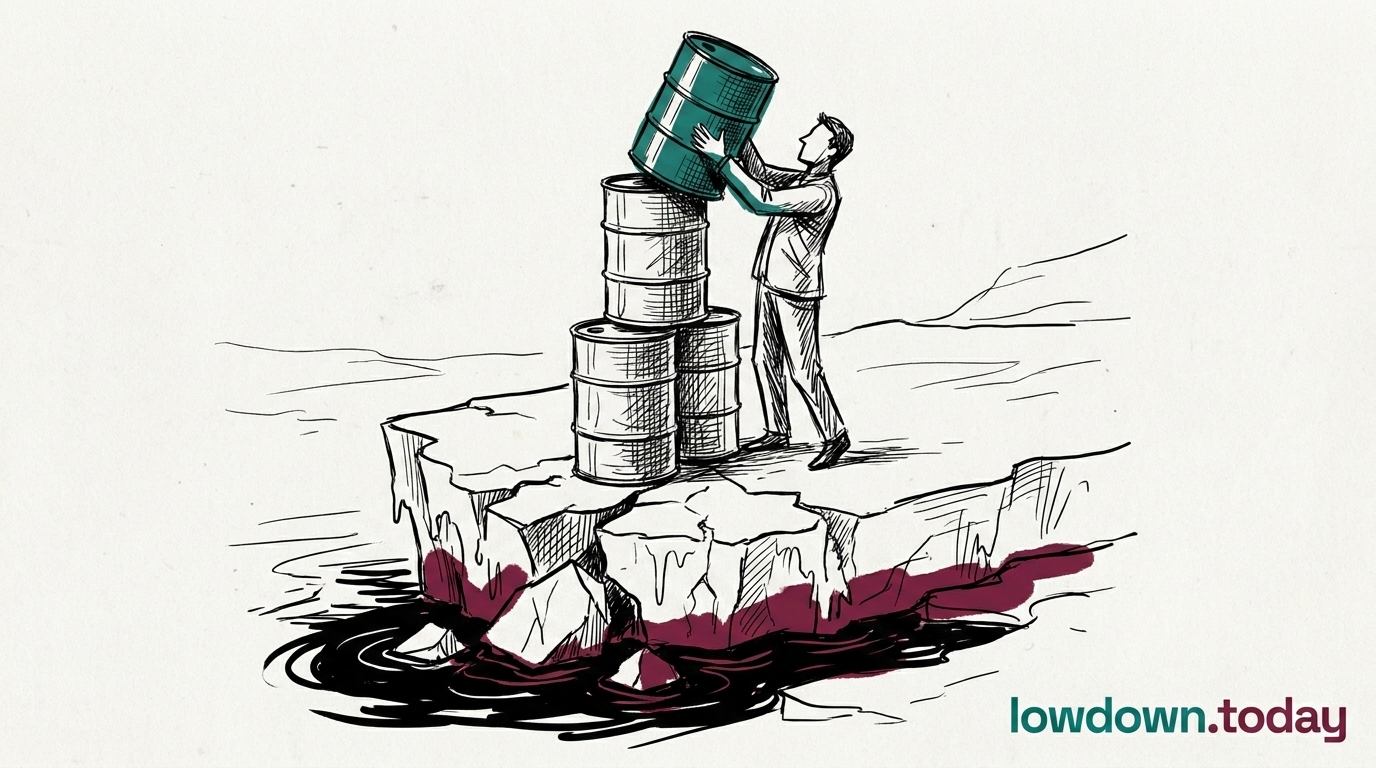
General License 131F, which authorises only negotiation of the Lukoil-ISAB sale, runs to 27 June, keeping the Sicilian refinery's crude procurement under a sanctions overhang ten days after the GL 134C cliff.

EconomicDeveloping
Key takeaway

Two OFAC deadlines ten days apart turn late June into a concentrated squeeze on European crude access.

General License 131F, the OFAC authorisation governing the sale of the ISAB refinery by its sanctioned owner Lukoil, runs to 27 June. The licence permits only negotiation of the sale, not its completion, which leaves the Sicilian plant's crude procurement under a sustained sanctions overhang. ISAB is one of Italy's largest refineries; Lukoil is the Russian oil major that has owned it since 2008.

GL 131F lets the parties talk without letting money or assets change hands, a holding pattern rather than a resolution, so the refinery operates under the constant question of whether its ownership clears sanctions before the licence lapses. Procurement counterparties price that uncertainty into every cargo, which raises the refinery's effective crude cost regardless of the spot market.

The 27 June expiry twins with the GL 134C waiver cliff on 17 June , creating back-to-back sanctions deadlines that both tighten European-accessible crude inside a single fortnight. One governs whether Russian oil keeps flowing to Indian buyers; the other governs whether a major Mediterranean refinery's ownership stays in limbo. Together they make late June a concentrated test of how far the US will press the Russian-oil chokehold against European refining capacity.


Deep Analysis

In plain English

ISAB is a large oil refinery in Sicily, on the southern tip of Italy, owned by Lukoil, the Russian oil company. Because Lukoil is subject to US sanctions, ISAB has been operating under a series of temporary OFAC waivers that allow certain business activities to continue while a sale of the refinery is negotiated. The current waiver, called GL 131F, only permits negotiating the sale, not actually completing it. It expires on 27 June. If it is not renewed and no sale completes, the refinery faces a hard choice about what crude oil it can legally buy and how. ISAB processes crude from North Africa and the Middle East into petrol, diesel, and jet fuel for European markets, so its procurement constraints have real effects on Southern European fuel supply.

What could happen next?
  • Risk

    GL 131F expiry on 27 June without a renewal or a completed transaction licence would leave ISAB's 800kbd refinery in prolonged procurement limbo, forcing continued spot sourcing at elevated CPC/Augusta freight rates.

  • Consequence

    The back-to-back GL 134C (17 June) and GL 131F (27 June) deadlines create a ten-day window in which both Russian crude in-transit cover and ISAB sale negotiation authority simultaneously lapse, compounding European crude access uncertainty.

First Reported In

Update #6 · OPEC's quota is fiction at a 37-year low

OilPrice.com· 8 Jun 2026
Read original
Different Perspectives
Money managers
Money managers
Managed money rebuilt a dual crude net-long in the week to 9 June at entries $5-6 above the 12 June close; the 20 June print will show whether the flush ran. The RBOB long (+64,125 contracts) adds crack-compression exposure if crude overshoots lower before the product position unwinds.
OPEC+ / Saudi Arabia
OPEC's June MOMR cut 2026 demand growth to 970kbd for a third successive month; the 7 June ministerial added a third 188kbd July increment into a 37-year output low. Saudi Arabia's $108-111 fiscal breakeven sits above both the current Brent screen and the EIA's $79 2027 forecast, meaning Riyadh absorbs revenue pain to hold market share.
United States / OFAC
OFAC's 11 June issuance of GL 55F for Sakhalin-2 while declining to publish GL 134D signals a deliberate commodity-class split: gas licences for allied energy dependencies renewed; crude-vessel services allowed to run to lapse. Secretary Rubio's earlier statement (ID:4009) set the political intention; GL 55F confirms the architecture rather than contradicting it.
European Commission
European Commission
Brussels proposed the 21st package on 9 June to lock the $44.10 cap before the 15 July formula review auto-lifts it; Malta and Greece's block on the maritime-services ban risks delaying adoption past that deadline. A failed freeze converts the EU's primary revenue constraint on Russian oil into a decorative mechanism for H2 2026.
Russia
Russia
GL 134C's lapse on 17 June removes Western insurance cover from the fraction of Russian seaborne crude still routed through European P&I clubs, tightening placement at commercial terms. A 15 July cap review lifting the ceiling from $44.10 toward ~$75 would restore ~$93 million per day in export earnings at 3mbd, partly offsetting the vessel-services squeeze.
European Commission / EU energy regulators
The EU 21st sanctions package, announced 26 May, targets shadow-fleet tankers and banks but has not accelerated a resolution of the ISAB ownership question. A 27 June GL 131F lapse without OFAC issuing a transaction licence creates a supply-security problem for Med products that Brussels cannot solve unilaterally.



