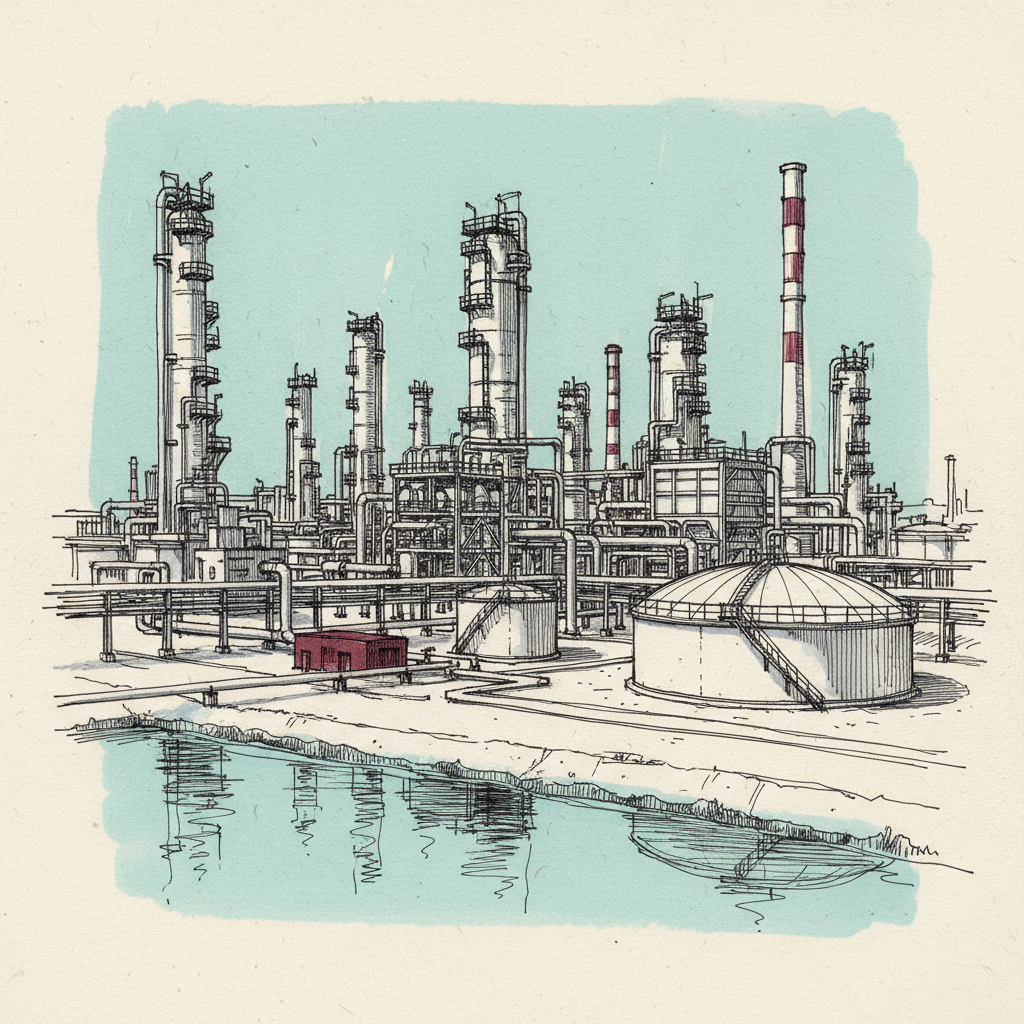
Petrotel Ploiesti
Romanian refinery at Ploiesti with approximately 99kbd capacity; held by Lukoil International GmbH and subject to OFAC-supervised divestment.
Last refreshed: 29 May 2026 · Appears in 1 active topic
Who will buy Petrotel and can a deal clear OFAC's blocked-account conditions before 27 June?
Timeline for Petrotel Ploiesti
remained within the sanctions-perimeter sale scope under GL 131F
European Oil Markets: GL 131F resets the Lukoil sale clockBackground
Petrotel Ploiesti is a petroleum refinery located at Ploiesti, Prahova County, roughly 60 km north of Bucharest in Romania's historic oil belt. With a nameplate throughput of approximately 99,000 Barrels Per Day, it is a mid-scale complex configured for sour crude runs on the Med-Adriatic supply axis. Ploiesti has been a refining centre since the late nineteenth century, when Romania was among the world's earliest commercial oil producers; the site reflects that long industrial Heritage. Petrotel was acquired by Lukoil in the late 1990s as part of the company's POST-Soviet expansion into Central and Eastern European downstream assets. It is held within Lukoil International GmbH, the Swiss-registered holding company for Lukoil's non-Russian refineries, alongside ISAB in Sicily and Neftochim Burgas in Bulgaria.
Following OFAC's redesignation of Lukoil to the SDN list on 16 April 2026, Petrotel entered the sanctions perimeter as an asset of a blocked party. OFAC has since issued a series of general licences authorising negotiation and contingent contracts for the sale of Lukoil International GmbH and its European refining portfolio. The sixth iteration, GL 131F, extended that negotiating window to 27 June 2026. Any completed transfer requires a separate specific licence; the buyer must fully sever LIG from Lukoil and park funds in a US-jurisdiction blocked account with no upfront value passed to Lukoil.
Romania is an EU and NATO member with an active domestic refining industry; Petrotel's fate matters to regional fuel balances in South-East Europe. The refinery supplies products into a market where Lukoil's downstream retail network extends across the Balkans, and a disorderly transfer or operational freeze could tighten the distillate crack along the Adriatic coast. The sale process has rolled six times without closing, reflecting the structural difficulty of fronting capital with zero recourse to the seller, which shapes the desk view of any June Deadline as a rolling option rather than a hard cliff.