Skip to content
You can now search across every topic, entity and event.What's new
European Oil Markets
4JUN

State publishes Lebanon text; zero for Iran

3 min read
10:20UTC

Lowdown Bureau / Diplomatic. The State Department published a formal Israel-Lebanon cessation document the same week the Iran ceasefire has reached 52 days without any equivalent text.

EconomicDeveloping
Key takeaway

The Lebanon text proves the State Department's drafting machinery works; the Iran silence is editorial, not procedural.

The US State Department published on state.gov the formal text Ten Day Cessation of Hostilities to Enable Peace Negotiations Between Israel and Lebanon this week, following 14 April talks. The document names the parties as the 'Government of Israel and Government of Lebanon' and declares the cessation 'brokered by the United States'. The two governments are scheduled for a second round of direct talks in Washington on Thursday, the first direct bilateral engagement in decades.

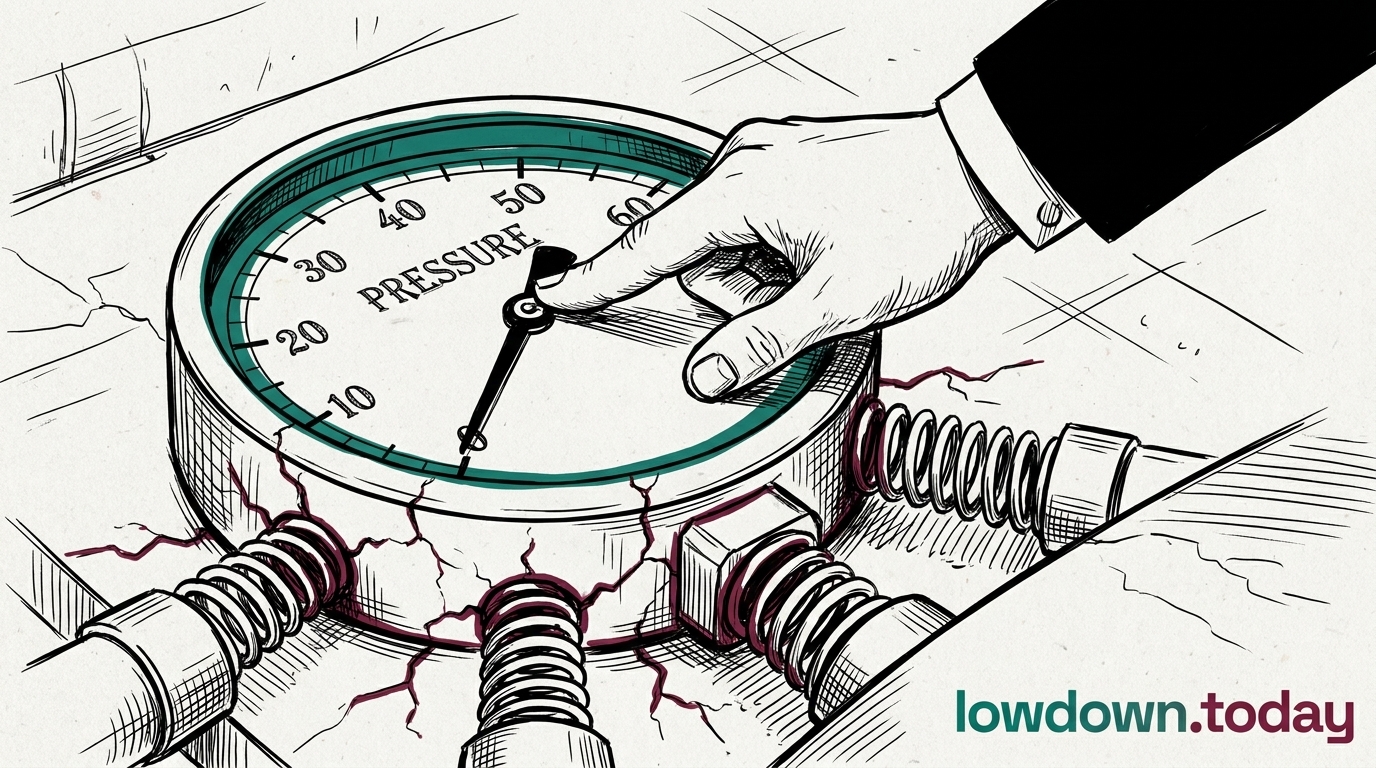
No equivalent Iran document exists. The Iran ceasefire, announced by Donald Trump through a Truth Social post at the start of this month, has produced no text on state.gov, whitehouse.gov, or the Federal Register after fifty-two days. The Federal Register's Iran-tagged documents feed has been empty since the start of last week. The Ten Day Cessation text and its handling of party identification, duration, and US brokerage role are exactly the template an Iran cessation would require.

The absence has now acquired structural consequences. Four unsigned deadlines now converge inside a fortnight . A UK-France-led coalition has been writing rules of engagement for the strait without US signatures at the table, leaving American vessels to operate under a document they did not draft. European Protection and Indemnity (P&I) underwriters are now pricing the Lebanon track on paper and the Iran track on Trump's remarks, widening the premium spread between the two theatres.

The counter-argument that unsigned pressure preserves flexibility carried weight through weeks two and three. With a Lebanon cessation text drafted the same week and five domestic-energy PDs signed the day before Iran's expiry, that flexibility argument is now what the absence is being used to produce, not what the absence reveals. The State Department's publication architecture is the neutral witness: it can produce Iran cessation paper, and it has not.


Deep Analysis

In plain English

Russia built and operates Iran's only nuclear power station at Bushehr, on the Persian Gulf coast. Russia has now evacuated almost all of its engineers and workers from the plant, citing the conflict. Only 24 volunteers remain. The plant contains two types of nuclear material: 72 tonnes of fresh nuclear fuel (the kind that goes into the reactor to generate power) and 210 tonnes of spent fuel (the used material that comes out, which remains radioactive for thousands of years). This material needs continuous expert management. At the same time, UN nuclear inspectors (from the agency called the IAEA) have been locked out of Iran since Iran's parliament voted unanimously to expel them on 11 April. That means there is nobody independent watching over 282 tonnes of nuclear material in a war zone, managed by just 24 people.

Deep Analysis
Root Causes

The evacuation gap between Rosatom's completed withdrawal and the 24 volunteers reflects a specific contractual structure: Rosatom's 1992 and 2014 Bushehr agreements gave Russian technicians exclusive responsibility for fuel loading, reactor operation, and spent fuel management. Iran's own nuclear engineering workforce was trained in operation procedures but not in the fuel cycle management protocols Rosatom retained exclusively; creating a dependency that cannot be resolved in days.

The Majlis 221-0 IAEA lockout vote on 11 April removed the independent monitoring layer that would otherwise provide real-time verification of spent fuel inventory integrity. The combination of missing technical staff, missing IAEA inspectors, and 282 tonnes of nuclear material creates a verification black hole that makes any uranium custody deal Peskov advances structurally unverifiable.

Escalation

The 24-volunteer skeleton crew represents a medium-term technical degradation risk rather than an immediate weapons diversion threat. Bushehr is a light-water reactor producing low-enriched waste; it is not a proliferation pathway. The escalation risk is plant failure under degraded maintenance conditions, not a weapons route.

What could happen next?
  • Risk

    Without Rosatom's full technical team, Bushehr's cooling and waste management systems depend on 24 volunteers operating without the manufacturer's direct technical supervision; a maintenance degradation pathway that carries radiological risk within 6-12 months if staff are not returned.

  • Consequence

    Peskov's continued public advancement of a uranium custody offer that requires technicians no longer in Iran creates a diplomatic credibility gap: any agreement signed on the basis of that offer would be unimplementable until Rosatom staff can return.

First Reported In

Update #75 · Ceasefire ends in the water, a day early

US State Department· 21 Apr 2026
Read original
Causes and effects
This Event
State publishes Lebanon text; zero for Iran
A live, current State Department cessation document for Lebanon demonstrates the drafting architecture works; its absence for Iran is a choice, not a capacity constraint.
Different Perspectives
Kuwait
Kuwait
Kuwait absorbed the Iranian strike that knocked generating units offline at a combined power-and-desalination plant on 17 July, the event that finally moved freight and insurance in lockstep with Brent. The strike hit essential civilian infrastructure, not a trading desk's benchmark.
Asian buyers (Singapore)
Singapore's middle distillates rose 12% month-to-date to 8.91m barrels and fuel oil passed 19m barrels on a 105% net-import surge, buyers retaining barrels as the East-West arbitrage window narrows. Cargoes are being stockpiled ahead of further Hormuz-driven freight repricing rather than released west.
Austria (Coreper holdout)
Vienna is blocking the same package over roughly EUR 2bn of frozen Russian assets earmarked for Raiffeisen, a domestic banking dispute with no connection to the oil cap racing toward its 23 July expiry. The linkage forces the whole package to wait on a bilateral compensation fight.
Greece (Coreper holdout)
Athens is holding the 21st sanctions package at the 22 July Coreper vote over Russian LNG re-export rights, a condition unrelated to the oil price cap itself, leaving the $44.10 freeze one day from expiry without a deal. Greece's own tanker registry gives it a direct stake in how any shadow-fleet measures are drafted.
Marine underwriters (Gulf war-risk)
Hull war-risk cover for Hormuz transits widened to a 3-10% band on 17 July with 5% the emerging norm, up from a 3-4% baseline set in late June, the first repricing in six weeks to track a flat-price move rather than lag it. Cover resets on actuarial evidence of loss, not on diplomatic or price signals.
Money managers (CFTC-tracked)
The CFTC's week-to-14-July snapshot, released 17 July, showed WTI managed-money net long collapsing 69% to 19,783 contracts and a standalone 60,141-contract net short on Brent Last Day (NYMEX). Both readings predate the Kuwait strike and the 20 July escalation, so any covering since is not yet visible in public data.