Skip to content
Briefings are running a touch slower this week while we rebuild the foundations.See roadmap
European Oil Markets
4JUN

EU 21st package squeezes shadow tonnage

3 min read
10:20UTC

Von der Leyen announced the EU's 21st sanctions package on 26 May, built on fresh shadow-fleet tanker listings and banks rather than a price-cap revision.

EconomicAssessed
Key takeaway

The 21st package hits freight and the Urals discount, thinning compliant tonnage as GL 134C nears its 17 June lapse.

Ursula von der Leyen announced the EU 21st sanctions package on 26 May, the European Commission President fronting a set of measures built around additional shadow-fleet tanker listings and bank restrictions 1. It is the follow-through on the 20th package's deferred maritime-services ban , which a lack of EU-27 unanimity had blocked in April. The choice of instrument matters more than the headline.

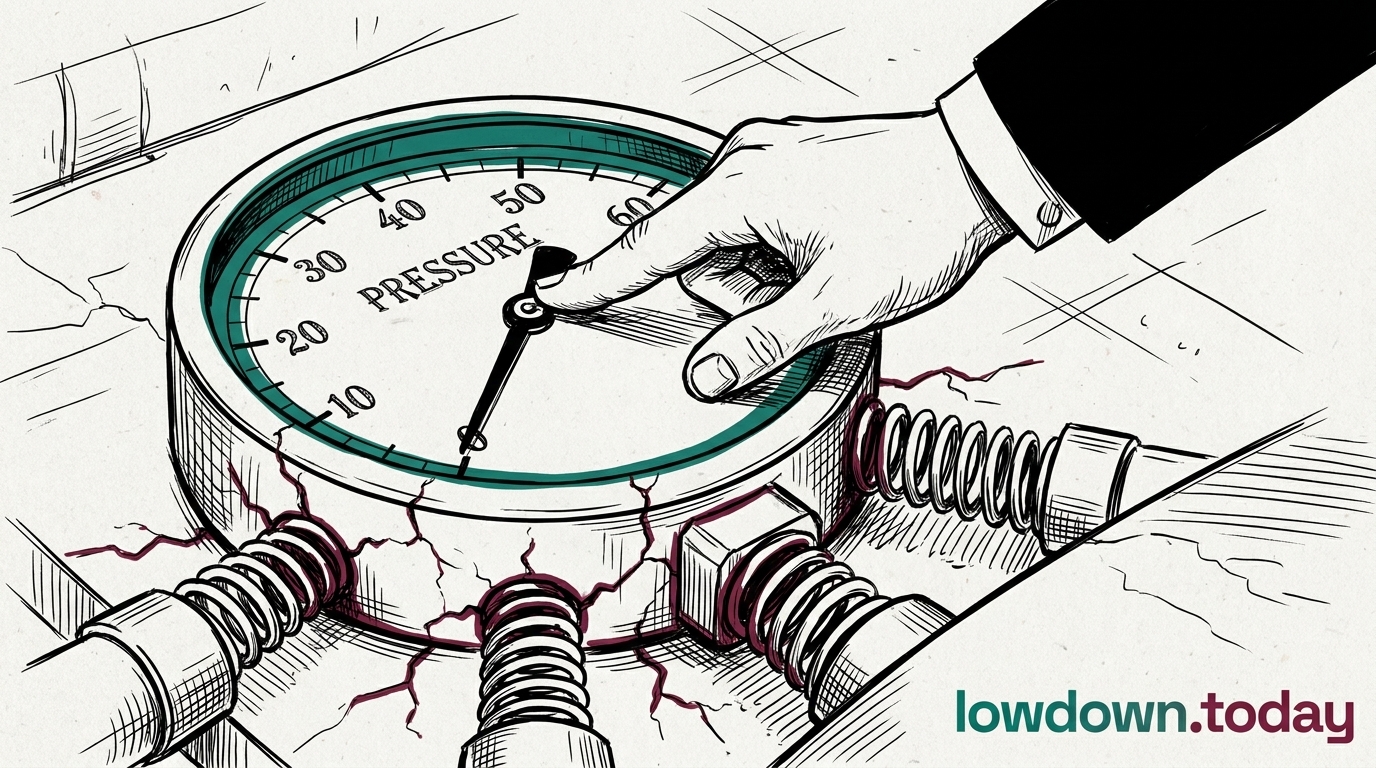
von der Leyen's package targets carry, not the cap: it raises the cost of moving Russian crude rather than revising its assessed value, so the pressure surfaces in freight rates and the Urals discount rather than in a price-cap number. That distinction routes the consequence straight to European spreads: every hull listed is a hull pulled from the pool that moves Russian barrels.

The timing stacks. Fresh shadow-fleet tonnage comes out via the EU package precisely as GL 134C nears its 17 June lapse , which had eased the Baltic Aframax compliance bid when it restored in-transit cover. The compliant pool thins from the Russian side just as in-transit cover is set to expire. The last hard freight read is the BDTI at 2,249 on 20 May ; the direction is set up, not yet printed.

Deep Analysis

In plain English

The European Union has been imposing sanctions on Russia since the 2022 invasion of Ukraine, targeting the oil trade that funds Moscow's government. Each new package adds more names to a blacklist and makes it harder (and more expensive) for Russian oil to reach buyers. This 21st package focused on the so-called shadow fleet: hundreds of tankers operating outside Western insurance and regulatory systems, used to move Russian crude without triggering Western sanctions. Rather than changing the price cap (the maximum price Western buyers are allowed to pay for Russian oil), this package raises the cost of shipping by listing more shadow-fleet ships. When a ship is listed, Western banks and insurers cannot touch it, which raises freight costs and eats into the discount Russia has to offer buyers to compensate. The result shows up in the Urals discount, not in headline prices.

Deep Analysis
Root Causes

The 21st package's carry-led rather than cap-led design reflects two distinct political constraints.

The EU-27 unanimity requirement for price-cap revision effectively vetoed a headline cap change: Hungary, Slovakia, and Austria have each conditioned cap-revision support on domestic supply guarantees that are not resolvable in one round of Council negotiations. Carry-led measures (freight cost, insurance, bank restrictions) require only qualified majority in some instruments and are tactically easier to advance.

The G7 Kananaskis summit on 12-15 June 2026 is the structural prerequisite for a full maritime-services ban. The 21st package advances what can be advanced before that summit to demonstrate EU resolve while preserving cap-revision as the summit deliverable.

What could happen next?
  • Consequence

    Carry-led packages widen the Urals-Brent discount and compress the freight margin available to shadow-fleet operators, reducing their willingness to accept Russian crude at existing freight rates.

    Short term · Assessed
  • Risk

    With 632 vessels now listed and no G7 insurance backstop withdrawal yet, the package hits diminishing returns on the listing-mechanism alone; volume disruption requires the G7 Kananaskis (12-15 June) insurance coordination step.

    Short term · Assessed
  • Precedent

    The 21st package confirms the EU is proceeding in parallel with OFAC rather than waiting for G7 summit coordination, setting a precedent for unilateral EU carry-pressure between G7 milestones.

    Medium term · Assessed
First Reported In

Update #3 · OFAC loads a June squeeze the screen ignores

Reuters· 29 May 2026
Read original
Different Perspectives
Kazakhstan (Tengiz / CPC pipeline operators)
Kazakhstan's 322kbd Tengiz overage runs on the CPC pipeline, which bypasses the Gulf, making it structurally durable and effectively quota-exempt within the cartel. The Tengiz expansion reached plateau production in early 2026 and cannot be throttled without reservoir damage, setting a precedent for infrastructure-forced overproduction as an OPEC+ carve-out.
NWE sell-side macro desk
The divergence between sub-$97 Brent and a crack near $54 is the structural trade: long the crack against crude, with the June OFAC calendar as convexity on top. With the WTI unwind complete and Brent-WTI at $2 with no mechanical compressor, the Brent-WTI spread carries cheap optionality on the three June dates rather than a directional flat-price call.
Italian government / ISAB / Priolo Gargallo operators
Six GL rollovers without a completed ISAB sale leave the 320kbd Sicilian refinery under a sanctions-perimeter procurement overhang; the Italian Golden Power review has no confirmed timeline and can block the Ludoil deal independently of OFAC. Rome secured a 30-day EU derogation for ISAB in 2012 and is expected to seek one again if 27 June approaches.
Chinese state refiners (CNPC / Sinopec)
Chinese seaborne crude imports ran at a decade-low 6.78mbd in May as refining margins stayed negative near -$2/bbl, with state refiners drawing on onshore strategic stocks rather than buying at $90-plus Brent. The demand hole, not a reopened Hormuz, compressed the Brent-Dubai EFS off its $6-plus peak; restart signal is margin recovery above $3-5/bbl.
EU Council sanctions directorate
Brussels adopted its 21st sanctions package on 26 May targeting shadow-fleet tanker listings and bank financing rather than revising the G7 price cap, a doctrine that routes pressure through freight and financing costs rather than cap arithmetic. The EU's approach compounds OFAC's tonnage drain without requiring G7 consensus on a new cap number.
US Treasury / OFAC
US Treasury / OFAC
OFAC has issued no GL 134D rollover as of 04 June, leaving a 13-day cliff on the Russian vessel-services umbrella while simultaneously running a negotiation-only clock on the ISAB divestiture to 27 June. The dual-deadline architecture, authorise-without-compelling on the Russian refinery track while closing Iranian buyer legs, is OFAC's deliberate June compliance design.
