Skip to content
You can now search across every topic, entity and event.What's new
European Oil Markets
26MAY

Trump says taking Iran's oil is his goal

3 min read
08:52UTC

The US president told the Financial Times he wants to seize Iran's oil, claimed a peace deal was imminent, and sent thousands of troops to the Gulf. All on the same day.

EconomicAssessed
Key takeaway

Three incompatible US objectives persist until one is abandoned.

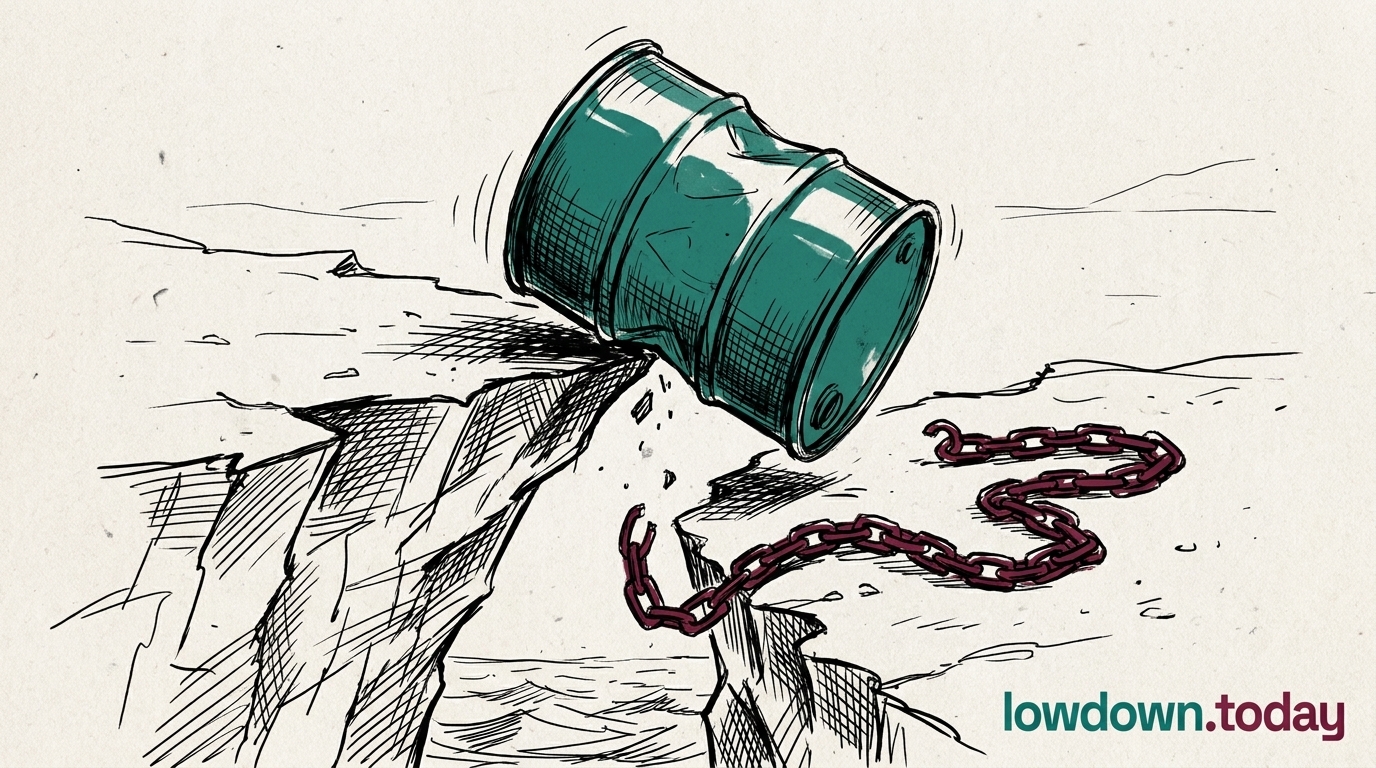
Trump told the Financial Times on 30 March that his 'favourite thing is to take the oil in Iran,' directly naming Kharg Island, the terminal handling 90% of Iran's crude exports. 1 In the same interview he claimed Tehran had accepted 'most of' a US 15-point framework and that a deal 'could be soon.' He also acknowledged that killing Iran's leaders constitutes "regime change," contradicting weeks of administration denials. 2

Vice President Vance told a podcast five days ago that Iran's military is 'effectively destroyed,' then rebuked Prime Minister Netanyahu for "overselling the likelihood of Iran regime change" . Secretary of State Rubio told G7 ministers on 27 March that the war needs two to four more weeks . CENTCOM declared victory while the 82nd Airborne deployed . Iran's senior security officials responded through CNN: Tehran will determine when the war ends. Trump's own words have sharpened a contradiction that was already visible into something no diplomatic interlocutor can ignore.

No state enters peace negotiations while its adversary publicly declares intent to seize its primary revenue source. Pakistan's Foreign Minister Ishaq Dar was offering to host direct US-Iran talks 'in coming days' at the exact moment Trump's interview circulated. The Islamabad diplomatic track, the strongest multilateral initiative of the conflict , concluded without a communique. A counter-perspective exists: some analysts argue Trump's statements are negotiating pressure, not operational intent. But the Pentagon's simultaneous confirmation of 'weeks of ground operations' planning and the arrival of 3,500 Marines in CENTCOM make that reading harder to sustain.

The 1968 Vietnam parallel is uncomfortable but relevant. Washington simultaneously escalated forces and pursued peace talks in Paris. The war continued seven more years. Negotiations succeeded only when military options were exhausted. The structural conditions here are similar: no mechanism exists to force a choice between the three tracks until one fails on its own terms.


Deep Analysis

In plain English

On the same day that American warships with thousands of troops arrived near Iran, President Trump gave an interview saying he most wanted to 'take the oil' from Iran, naming a specific island where most of Iran's oil exports leave from. At the same time, he said a peace deal was close. These two things directly contradict each other. No country will negotiate peace while the other side is publicly planning to seize its main source of income. Pakistan was at that very moment hosting a meeting of four countries trying to arrange peace talks. Trump's interview landed in the middle of it.

Deep Analysis
Root Causes

The US entered the conflict without a unified political objective. The military mission (degrade Iranian nuclear and missile capability) diverges structurally from the economic goal (reopen Hormuz) and the political goal (not government overthrow, per administration denials).

Trump's instinct to seize tangible assets reflects a transactional approach to conflict that treats oil as collateral, not as part of a coherent strategic objective. The administration inherited no policy consensus, and Trump's personal interventions have repeatedly overridden diplomatic channels before they consolidate.

What could happen next?
  • Consequence

    The Islamabad diplomatic track is structurally compromised. Pakistan cannot host talks where one party has publicly declared intent to seize the other's primary revenue source.

    Immediate · 0.9
  • Risk

    Three simultaneous and incompatible US objectives, with no internal mechanism to choose between them, increase the probability of unintended escalation as each track operates independently.

    Short term · 0.85
  • Precedent

    A presidential declaration of intent to seize a foreign state's primary resource terminal during active hostilities has no precedent in post-1945 international law outside colonial-era seizures.

    Long term · 0.95
First Reported In

Update #52 · Trump wants Iran's oil; 3,500 Marines land

CNBC / Financial Times· 30 Mar 2026
Read original
Different Perspectives
Greek shipping registries
Flag states dominating the tanker fleet await the EU's 15 July cap-freeze vote. A formula unlock toward $75 would loosen the ceiling squeezing insurance and crewing costs on their registered hulls.
US money managers
US money managers
NYMEX WTI managed-money net long fell 23% to +64,041 in the week to 7 July, trimming length into the rally on doubt the Hormuz premium survives without freight or war-risk confirmation.
European refiners (ARA)
ARA refiners are capturing an $80/bbl US diesel crack as Russian gasoil loadings collapsed to 234kbd before Novak's 31 July export ban even bites, widening the arbitrage straight into refining margins.
OPEC+
OPEC+
The seven-member group confirmed a fourth consecutive 188kbd August hike on 5 July, defending market share even though Saudi Arabia's $108-111/bbl breakeven means every added barrel costs Riyadh revenue it cannot recoup.
Indian refiners
Indian refiners
Refiners kept lifting discounted Urals as the India/Baltic split widened past $9-10 a barrel on 7 July. A wider Urals-Brent gap means cheaper feedstock locked in against Baltic buyers.
Russia
Russia
Urals traded $48.95-55.12 on 12-13 July, below Moscow's $59 budget floor even as Brent gained $6. Oil and gas fund roughly 30% of federal revenue, and Novak's diesel export ban is rationing a shrinking export base.