Skip to content
You can now search across every topic, entity and event.What's new
European Oil Markets
26MAY

Qatar confirms $6bn assets still frozen

2 min read
08:52UTC

Iran claimed the US agreed to release the funds; Qatar says Treasury approval was never granted.

EconomicDeveloping
Key takeaway

The $6 billion claim was aimed at Tehran's domestic audience, not at the negotiating table.

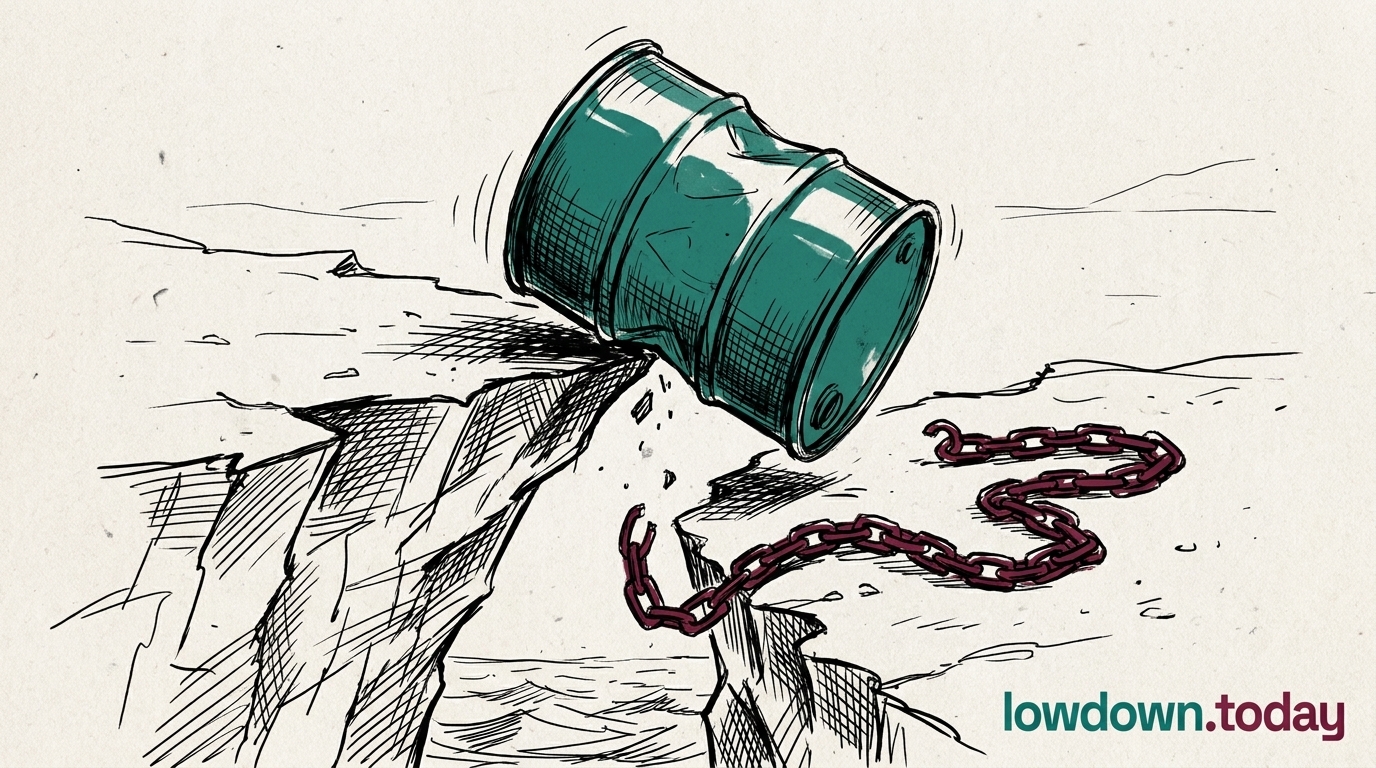
Qatar confirmed on 11 April that $6 billion in frozen Iranian assets remain frozen and any release requires US Treasury Department approval, which has not been granted. Iran had entered the Islamabad talks claiming the US had already agreed to release these funds.

The money traces back to the 2023 prisoner-swap deal and was frozen again under sanctions renewed by Trump in March . It was originally earmarked for Iranian humanitarian imports, food and medicine purchases that sanctions otherwise block. Subsequent US sanctions froze it again. Iran's parliament speaker framed the release as settled, not a subject for negotiation. Qatar's correction on 11 April flatly contradicted that position.

The gap between Iran's characterisation ("agreed") and Qatar's statement ("pending Treasury approval, not granted") is instructive. It suggests the asset claim served as domestic political framing rather than an operational negotiating position. The $6 billion was a bargaining chip pointed inward, not outward: it told the Iranian public that sanctions relief was already won before talks began.

Releasing the funds would ease domestic pressure on the Iranian government without touching the nuclear or military files. That is precisely why neither side moved on it. For Washington, releasing $6 billion before Iran agreed to any nuclear concession would collapse domestic support for the talks. For Tehran, claiming the release was already agreed gave parliament speaker Ghalibaf cover to present Islamabad as a position of strength, not supplication. The money never moved. Vance left without the matter resolved.


Deep Analysis

In plain English

In 2023, Iran and the US agreed a prisoner swap. As part of that deal, Iran was allowed access to $6 billion of its own money that had been held in South Korean and Qatari banks, frozen by sanctions. The money was meant to be used only for food and medicine. Iran turned up to the Islamabad talks saying the US had already agreed to release those funds as a precondition. Qatar then stated publicly that the money is still frozen and the US has not approved its release. The gap tells you something about how both sides were managing domestic audiences. Iran was telling its public that it had already won a concession before the talks even started. The US was saying nothing, which is itself a position.

Deep Analysis
Root Causes

The asset freeze is a product of the Biden-era prisoner swap mechanics being overtaken by the Trump administration's policy of maximum pressure.

Iran's claim that the funds were 'agreed' most likely reflects a genuine private signal that was communicated informally during pre-talk contacts and then not followed through in writing. The absence of any written US commitment gave Washington the ability to deny the concession publicly without technically lying.

What could happen next?
  • Consequence

    Iran's parliament speaker publicly framing the asset release as 'already agreed' before talks succeeded creates a domestic accountability problem: if the funds are not released, the regime must explain the gap to an audience that was told it had already won the point.

  • Opportunity

    GL-U expiry on 19 April and the asset-release question are both Treasury decisions; a package renewal of GL-U combined with asset release could serve as a good-faith signal without requiring nuclear or military concessions, potentially reopening talks before the ceasefire expires.

First Reported In

Update #66 · Islamabad collapses: 10 days to expiry

PressTV· 12 Apr 2026
Read original
Causes and effects
This Event
Qatar confirms $6bn assets still frozen
The gap between Iran's public claim and Qatar's factual correction reveals the $6 billion was a domestic framing device, not an operational concession.
Different Perspectives
Greek shipping registries
Flag states dominating the tanker fleet await the EU's 15 July cap-freeze vote. A formula unlock toward $75 would loosen the ceiling squeezing insurance and crewing costs on their registered hulls.
US money managers
US money managers
NYMEX WTI managed-money net long fell 23% to +64,041 in the week to 7 July, trimming length into the rally on doubt the Hormuz premium survives without freight or war-risk confirmation.
European refiners (ARA)
ARA refiners are capturing an $80/bbl US diesel crack as Russian gasoil loadings collapsed to 234kbd before Novak's 31 July export ban even bites, widening the arbitrage straight into refining margins.
OPEC+
OPEC+
The seven-member group confirmed a fourth consecutive 188kbd August hike on 5 July, defending market share even though Saudi Arabia's $108-111/bbl breakeven means every added barrel costs Riyadh revenue it cannot recoup.
Indian refiners
Indian refiners
Refiners kept lifting discounted Urals as the India/Baltic split widened past $9-10 a barrel on 7 July. A wider Urals-Brent gap means cheaper feedstock locked in against Baltic buyers.
Russia
Russia
Urals traded $48.95-55.12 on 12-13 July, below Moscow's $59 budget floor even as Brent gained $6. Oil and gas fund roughly 30% of federal revenue, and Novak's diesel export ban is rationing a shrinking export base.