Skip to content
You can now search across every topic, entity and event.What's new
European Oil Markets
16JUL

Rubio sets the US sequence on oath

3 min read
09:39UTC

In his first war testimony, Marco Rubio told the Senate the strait reopens before any centrifuge talks, with no sanctions relief for reopening alone.

EconomicDeveloping

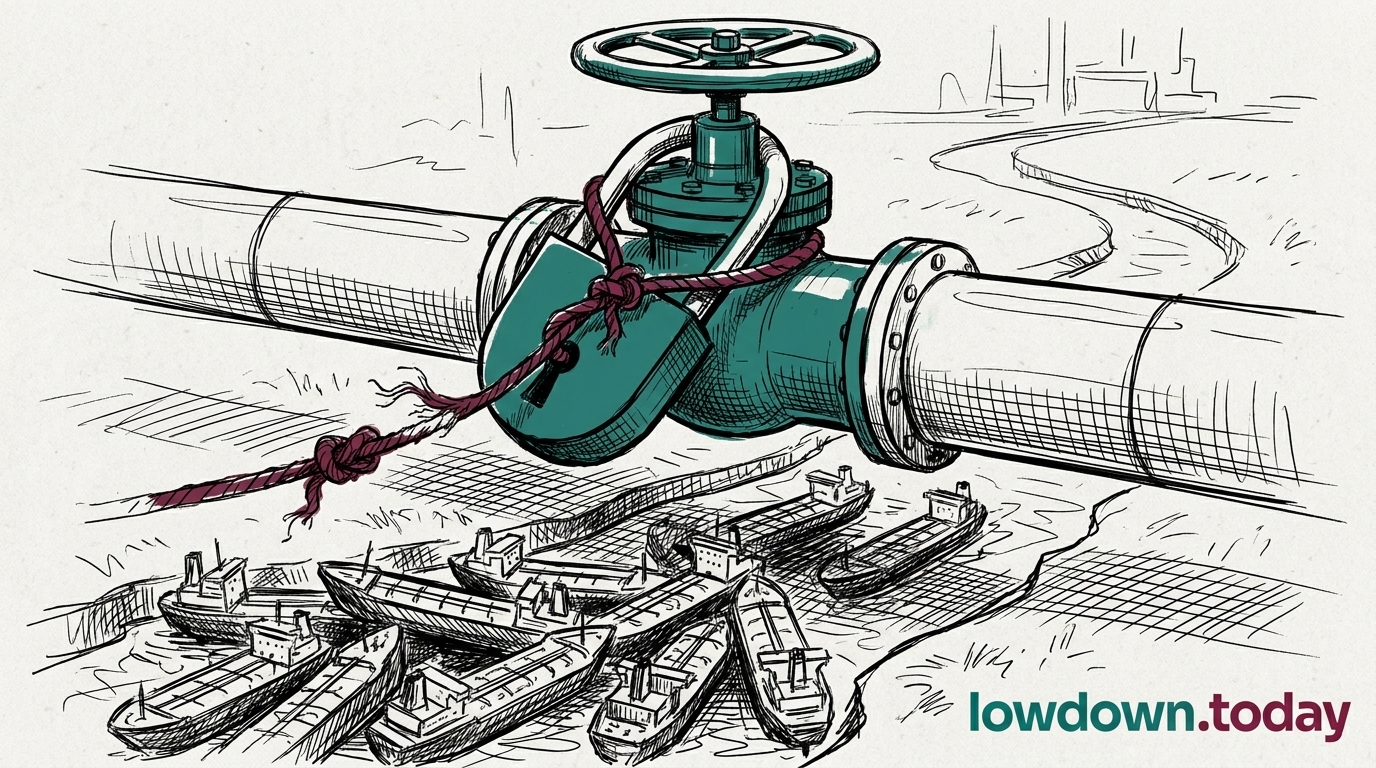
Secretary of State Marco Rubio gave the SFRC (Senate Foreign Relations Committee) his first testimony since the war began, on 2 June. He laid out the US order of operations under oath: the Strait of Hormuz reopens first, then 30, 60 or 90-day technical talks on cutting or cancelling enrichment 1. Reopening alone buys Tehran nothing. "We have not offered Iran any sanctions relief" for that first step, Rubio told the committee 2.

The sequence answers a question the war has dodged for three months, which side moves first. Washington wants the strait open before the centrifuges are discussed, and the same week it cut the IRGC's stablecoin toll rail through OFAC , the demand to reopen Hormuz is the diplomatic face of that financial squeeze. Iran must give up the chokepoint leverage before it gains anything at the table.

Rubio also gave the first US read on the Supreme Leader's channel. Mojtaba Khamenei "appears increasingly engaged, although all of his communications have been in writing and through intermediaries" 3. On the 440.9 kg enriched uranium stockpile, Rubio offered no new custody plan: it is, he said, "still buried deep in a mountain somewhere" 4. Washington has a sequence and a read on Tehran's top channel, but no answer yet on where the uranium goes.


Deep Analysis

In plain English

US Secretary of State Rubio told Congress on 2 June that Iran must reopen the Strait of Hormuz first, before any nuclear talks begin and before any sanctions are lifted. He laid out a timeline of 30, 60 or 90 days of technical negotiations that would only start after Iran acts. Iran's leverage in these negotiations is the Hormuz closure itself. Rubio is asking Tehran to relinquish that leverage before Washington offers anything in return. He also confirmed for the first time that Supreme Leader Mojtaba Khamenei is sending written messages through intermediaries, a slow channel that sits awkwardly against the 30/60/90-day timetables Rubio proposed.

Deep Analysis
Root Causes

The sequencing deadlock has one structural driver: Iran's only strategic leverage is the Strait of Hormuz. Reopening it for free removes Tehran's ability to compel a sanctions-relief deal.

The Hormuz toll mechanism and the PGSA architecture (built at significant political cost inside Iran between March and May 2026) were designed specifically to create a concession Iran could offer in exchange for something. Asking Iran to dismantle that mechanism before talks produce a verified commitment violates the basic exchange logic that any negotiated settlement requires.

Rubio's characterisation of Mojtaba Khamenei as writing-only-through-intermediaries is the public US record that the Supreme Leader is engaging. It simultaneously constrains Tehran's ability to deny talks are happening and confirms that the channel is indirect and slow, meaning that the 30/60/90-day timelines Rubio proposed require Khamenei to sanction moves faster than his communication channel permits.

Escalation

Rubio's testimony does not escalate the military situation but hardens the US diplomatic position. The explicit statement that no sanctions relief accompanies a Hormuz reopening reduces the probability of a rapid deal and increases the risk that Iran will interpret the framework as structurally bad-faith.

What could happen next?
  • Risk

    Iran's SNSC will likely read the no-sanctions-relief condition as confirming that Hormuz reopening is a unilateral concession, reinforcing the hardliners' argument that Araghchi's diplomacy delivers nothing.

  • Consequence

    The 440.9 kg enriched uranium stockpile remains in Iranian territory with no agreed custody plan; every week without an agreement extends the proliferation-risk window Rubio acknowledged but did not resolve.

First Reported In

Update #116 · Washington signs a sanction, not a strike

Al Jazeera· 3 Jun 2026
Read original
Different Perspectives
Indian refiners
Indian refiners
Indian refiners kept lifting discounted Urals as the India/Baltic price split widened past $9-10 a barrel, a gap that only grows as GL X1's Iranian wind-down cuts an alternative discounted grade off the market by 17 July. Cheaper Russian feedstock is being locked in while it lasts.
Chinese refiners
Chinese refiners
Chinese refiners gain leverage as the Urals-Brent discount widens, since Beijing's state buyers already source discounted Russian barrels near the fiscal floor unaffected by Western insurance costs. A wider discount, if it holds past 23 July, lets them lock in cheaper term contracts regardless of the cap's outcome.
US money managers (CFTC-tracked)
Managed money trimmed WTI net length into the rally, positioning that reflects doubt the Hormuz premium survives without freight or war-risk confirmation. The Brent-WTI spread widening almost entirely on the Brent leg supports that scepticism about a broad-based repricing.
OPEC+ (Saudi-led subgroup)
Saudi Arabia is defending market share through a fourth straight 188kbd August hike even as OPEC's own July MOMR cut 2026 demand growth for the fourth consecutive month. At a $108-111 fiscal breakeven, every added barrel costs Riyadh revenue it cannot recoup, so the hike reads as a positioning signal, not a demand bet.
Greek shipping registries
Greece, backed by Cyprus and Malta, is pushing a three-month cap-freeze compromise against the Commission's freeze to January 2027 ahead of the 23 July vote. Athens' and Valletta's combined tanker registrations mean a shorter review gives their insurers more frequent chances to reprice risk on Russian cargoes.
Russia (Deputy PM Alexander Novak)
Novak extended the diesel export restriction to producers on 8 July, the first producer-binding curb of the war, protecting the domestic pump price ahead of any refinery repair timeline. Urals still trades below Russia's $59 budget floor even as Brent gained, so the ban trades export revenue for fiscal stability at home.