Skip to content
You can now search across every topic, entity and event.What's new
European Oil Markets
13JUL

Trump posts "call us" as new US condition

3 min read
10:34UTC

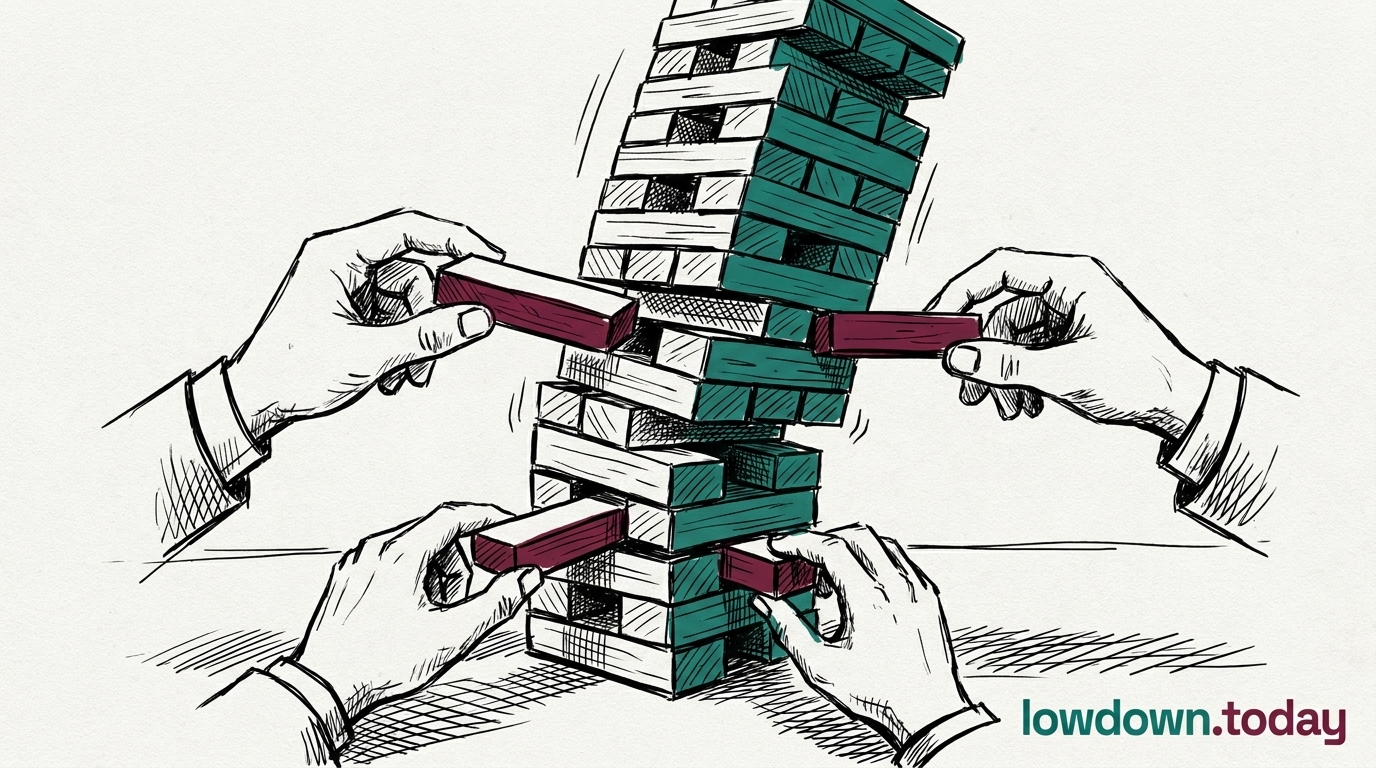
Donald Trump told Iran on Truth Social that talks require a phone call, not a delegation. Tehran's procedural floor is Pakistani mediation; the two conditions are opposite, not adjacent.

EconomicDeveloping
Key takeaway

Trump's "call us" demand makes the modality dispute, not the substance gap, the binding obstacle to talks.

Donald Trump posted to Truth Social on 25 April: "If they want to talk, all they have to do is call!!!" 1 The post followed his Fox News statement that he would not authorise an 18-hour flight for Steve Witkoff and Jared Kushner to meet Iran's foreign minister in Pakistan. As an operational fact, the Truth Social line establishes direct phone contact as the new US procedural condition for any engagement with Tehran.

Iran's stated condition runs in the opposite direction. Spokesperson Esmaeil Baqaei has confirmed "no meeting is planned", and Tehran continues to route through Pakistani mediation. Iran has been publicly clear it will not accept direct US contact as the modality; Washington has now been publicly clear it will not pay to send envoys. A modality dispute is categorically harder to resolve than a substance gap because each side's procedural condition is also a domestic political signal: Tehran accepting a Trump phone call concedes the supplicant framing, and Washington dispatching envoys to Pakistan concedes Iran's parity claim.

The "call us" line follows the cancellation of the Witkoff and Kushner mission that had been prepared in coordination with the Vance Islamabad 2 track now postponed . With six days remaining on the WPR clock, neither side has a face-saving exit because both have committed in public.


Deep Analysis

In plain English

In most conflicts, before the big negotiations start, diplomats first agree on the basic logistics: who talks to whom, where, and through what channel. Trump wants a direct phone call; Iran will only talk through Pakistan as a go-between. Neither side will budge on how first contact happens, so there has been no first contact. This matters because Trump has conducted this war's diplomacy via social media posts: the ceasefire extension, orders to the Navy, the cancellation of the delegation. Iran's government cannot respond to a Truth Social post through its own formal channels, which deepens the format mismatch.

Deep Analysis
Root Causes

Across 57 days of war, the White House presidential-actions index recorded zero Iran executive instruments. Trump's operational preferences, including the ceasefire extension, mine-clearing orders, and delegation cancellations, were issued via Truth Social posts with no legal standing as executive instruments. Iran's government, which operates through formal written instruments, cannot respond to a social media post in its own decision-making framework.

A direct telephone call between a US president and an Iranian foreign minister would be the first senior US-Iranian contact since 1979. For Trump, a call carries low political cost: Iran called him. For Iran's civilian government, a direct call without Pakistani mediation exposes ministers to domestic accusations of capitulation, given the IRGC's stated position that negotiation under blockade is unacceptable.

What could happen next?
  • Risk

    The format deadlock extends directly to the 1 May WPR deadline: with no channel agreed, no substantive talks can happen in the remaining six days.

  • Consequence

    Pakistan's role as mediator is weakened each time Trump publicly bypasses it, reducing Islamabad's leverage with Tehran to deliver any US concessions via the channel.

First Reported In

Update #79 · Islamabad 3 collapses; Witkoff grounded, talks stall

NPR· 25 Apr 2026
Read original
Causes and effects
This Event
Trump posts "call us" as new US condition
The two governments have now publicly committed to incompatible modalities six days before the 1 May War Powers Resolution deadline.
Different Perspectives
Greek shipping registries
Flag states dominating the tanker fleet await the EU's 15 July cap-freeze vote. A formula unlock toward $75 would loosen the ceiling squeezing insurance and crewing costs on their registered hulls.
US money managers
US money managers
NYMEX WTI managed-money net long fell 23% to +64,041 in the week to 7 July, trimming length into the rally on doubt the Hormuz premium survives without freight or war-risk confirmation.
European refiners (ARA)
ARA refiners are capturing an $80/bbl US diesel crack as Russian gasoil loadings collapsed to 234kbd before Novak's 31 July export ban even bites, widening the arbitrage straight into refining margins.
OPEC+
OPEC+
The seven-member group confirmed a fourth consecutive 188kbd August hike on 5 July, defending market share even though Saudi Arabia's $108-111/bbl breakeven means every added barrel costs Riyadh revenue it cannot recoup.
Indian refiners
Indian refiners
Refiners kept lifting discounted Urals as the India/Baltic split widened past $9-10 a barrel on 7 July. A wider Urals-Brent gap means cheaper feedstock locked in against Baltic buyers.
Russia
Russia
Urals traded $48.95-55.12 on 12-13 July, below Moscow's $59 budget floor even as Brent gained $6. Oil and gas fund roughly 30% of federal revenue, and Novak's diesel export ban is rationing a shrinking export base.