Skip to content
You can now search across every topic, entity and event.What's new
European Oil Markets
13JUL

Pakistan Host Neutrality Blown on X

2 min read
10:34UTC

Khawaja Asif, Pakistan Defence Min.

EconomicDeveloping
Key takeaway

No alternative venue exists if Pakistan's neutrality is credibly challenged.

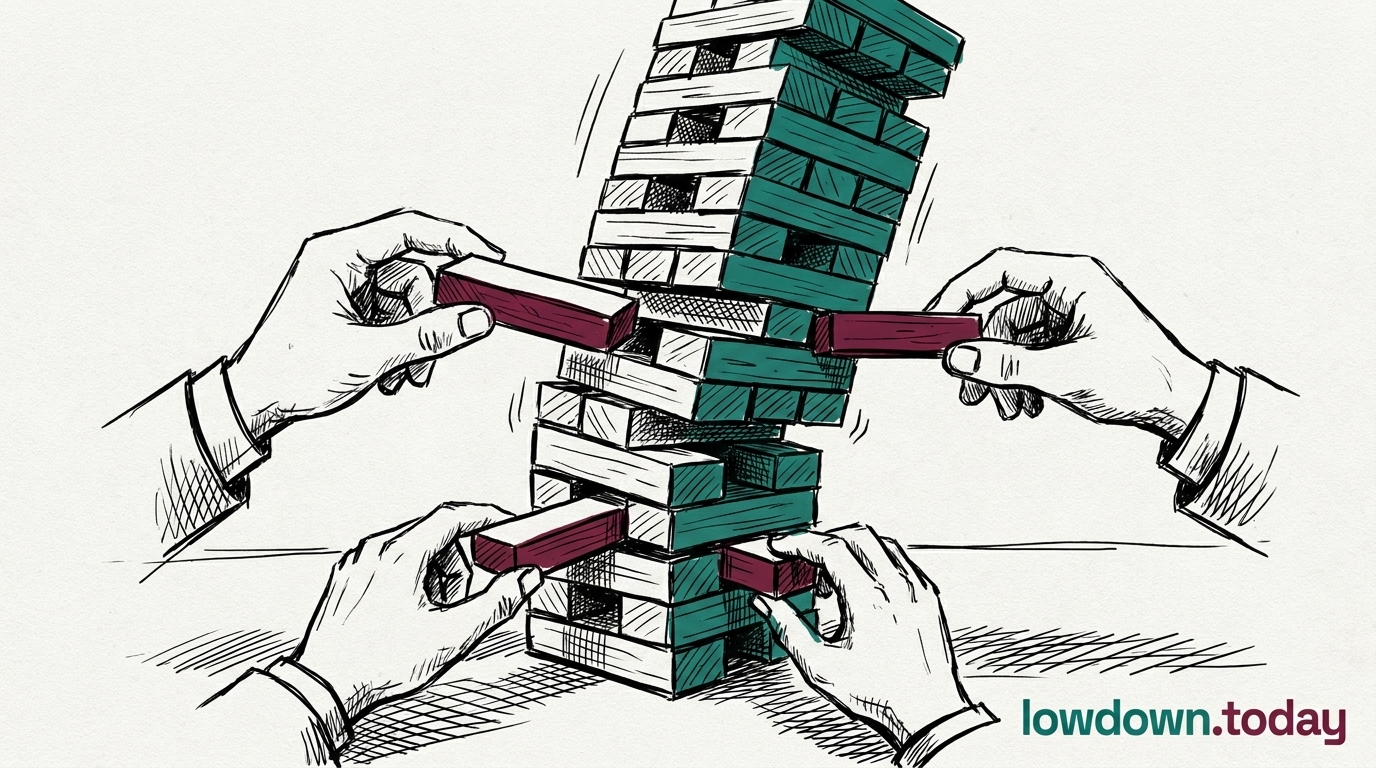
Pakistan Defence Minister Khawaja Asif posted on X that Israel is "evil and a curse for humanity" and described it as a "cancerous state on Palestinian land." He deleted the post; the screenshots circulated before he could. Benjamin Netanyahu's office called the remarks "outrageous" and declared Pakistan unfit as a neutral arbiter. Israeli Ambassador Leiter called Asif "the problem."

The Islamabad process was already structurally fragile. Asif's remarks removed any residual pretence of host-country neutrality and gave Netanyahu a pretext to delegitimise the process entirely, should talks fail. The damage is asymmetric: Iran has no objection to Pakistan's position, but Israel, whose cooperation is required for any deal addressing Lebanon, now holds a procedural weapon it can deploy at any moment.

With Qatar refusing mediation in March and no other capital with simultaneous standing in Washington and Tehran, the alternatives if Islamabad is discredited are nil. Netanyahu's statement was calibrated: it does not require withdrawal from talks, but it reserves the right to blame the venue if substance collapses. The post was deleted, but the diplomatic damage is structural and cumulative.


Deep Analysis

In plain English

The country hosting peace talks is supposed to be trusted by both sides. Pakistan's defence minister posted on social media that Israel is evil and should not exist. He deleted it, but the screenshots spread. Now Israel says Pakistan cannot be an honest broker. The talks have not even started and the room's credibility is already in question — and there is no other country ready to step in.

Deep Analysis
Root Causes

Pakistan's mediation role emerged by elimination: Qatar declined in March, Switzerland lacks Gulf standing, and Oman declined to extend its previous back-channel role. Pakistan had proximity to both parties through its ISI relationships with the IRGC and its US dependency through military aid. Asif's post destroyed the fiction of neutrality that this structural asymmetry had papered over.

The underlying problem is that no capital currently has genuine standing with both Washington and Tehran simultaneously. The post-1979 architecture of dual containment left no natural interlocutor.

What could happen next?
  • Risk

    If talks fail on substance, Netanyahu's office can credibly attribute failure to venue bias rather than Israeli positions, providing political cover without accountability.

  • Consequence

    With Qatar refusing and no other candidate, Islamabad's delegitimisation leaves the ceasefire process with no replacement venue and no replacement mediator.

First Reported In

Update #64 · Islamabad talks open already cracked

Jerusalem Post· 10 Apr 2026
Read original
Causes and effects
This Event
Pakistan Host Neutrality Blown on X
If the venue loses credibility, there is no obvious replacement: Qatar refused mediation in March and no other capital has standing with both parties.
Different Perspectives
Indian refiners
Indian refiners
Indian refiners kept lifting discounted Urals as the India/Baltic price split widened past $9-10 a barrel, a gap that only grows as GL X1's Iranian wind-down cuts an alternative discounted grade off the market by 17 July. Cheaper Russian feedstock is being locked in while it lasts.
Chinese refiners
Chinese refiners
Chinese refiners gain leverage as the Urals-Brent discount widens, since Beijing's state buyers already source discounted Russian barrels near the fiscal floor unaffected by Western insurance costs. A wider discount, if it holds past 23 July, lets them lock in cheaper term contracts regardless of the cap's outcome.
US money managers (CFTC-tracked)
Managed money trimmed WTI net length into the rally, positioning that reflects doubt the Hormuz premium survives without freight or war-risk confirmation. The Brent-WTI spread widening almost entirely on the Brent leg supports that scepticism about a broad-based repricing.
OPEC+ (Saudi-led subgroup)
Saudi Arabia is defending market share through a fourth straight 188kbd August hike even as OPEC's own July MOMR cut 2026 demand growth for the fourth consecutive month. At a $108-111 fiscal breakeven, every added barrel costs Riyadh revenue it cannot recoup, so the hike reads as a positioning signal, not a demand bet.
Greek shipping registries
Greece, backed by Cyprus and Malta, is pushing a three-month cap-freeze compromise against the Commission's freeze to January 2027 ahead of the 23 July vote. Athens' and Valletta's combined tanker registrations mean a shorter review gives their insurers more frequent chances to reprice risk on Russian cargoes.
Russia (Deputy PM Alexander Novak)
Novak extended the diesel export restriction to producers on 8 July, the first producer-binding curb of the war, protecting the domestic pump price ahead of any refinery repair timeline. Urals still trades below Russia's $59 budget floor even as Brent gained, so the ban trades export revenue for fiscal stability at home.