Skip to content
You can now search across every topic, entity and event.What's new
European Oil Markets
13JUL

$19bn war bill Congress will not fund

4 min read
10:34UTC

At $900 million per day, three weeks of Operation Epic Fury have cost an estimated $19 billion — and the Pentagon's $200 billion supplemental request faces opposition from both parties with no constitutional off-ramp in sight.

EconomicAssessed
Key takeaway

Operation Epic Fury's $900 million daily expenditure rate may be the highest in US military history.

At the burn rate the Center for Strategic and International Studies calculated — $900 million per day — three weeks of Operation Epic Fury have cost the United States an estimated $19 billion 1. The Pentagon has responded with a $200 billion supplemental funding request, with no timeline for the war's conclusion and no stated conditions for its end . Defence Secretary Hegseth said the figure "could move" 2. Fortune calculated $200 billion funds approximately 140 more days at the current tempo.

The spending request has fractured the political Coalition that launched the war. Senator Lisa Murkowski will not vote without a White House strategy outline. Representative Lauren Boebert declared herself "a no on any war supplemental." CNN reported Republican leaders "do not believe they have the votes" within their own caucus . Representative Rosa DeLauro, ranking Democrat on House Appropriations, called the figure "outrageous." The opposition is bipartisan in a way the constitutional question was not — six Democratic senators forced a War Powers Resolution vote on 18 March, which Senate Republicans blocked , but on the money, members of both parties are refusing.

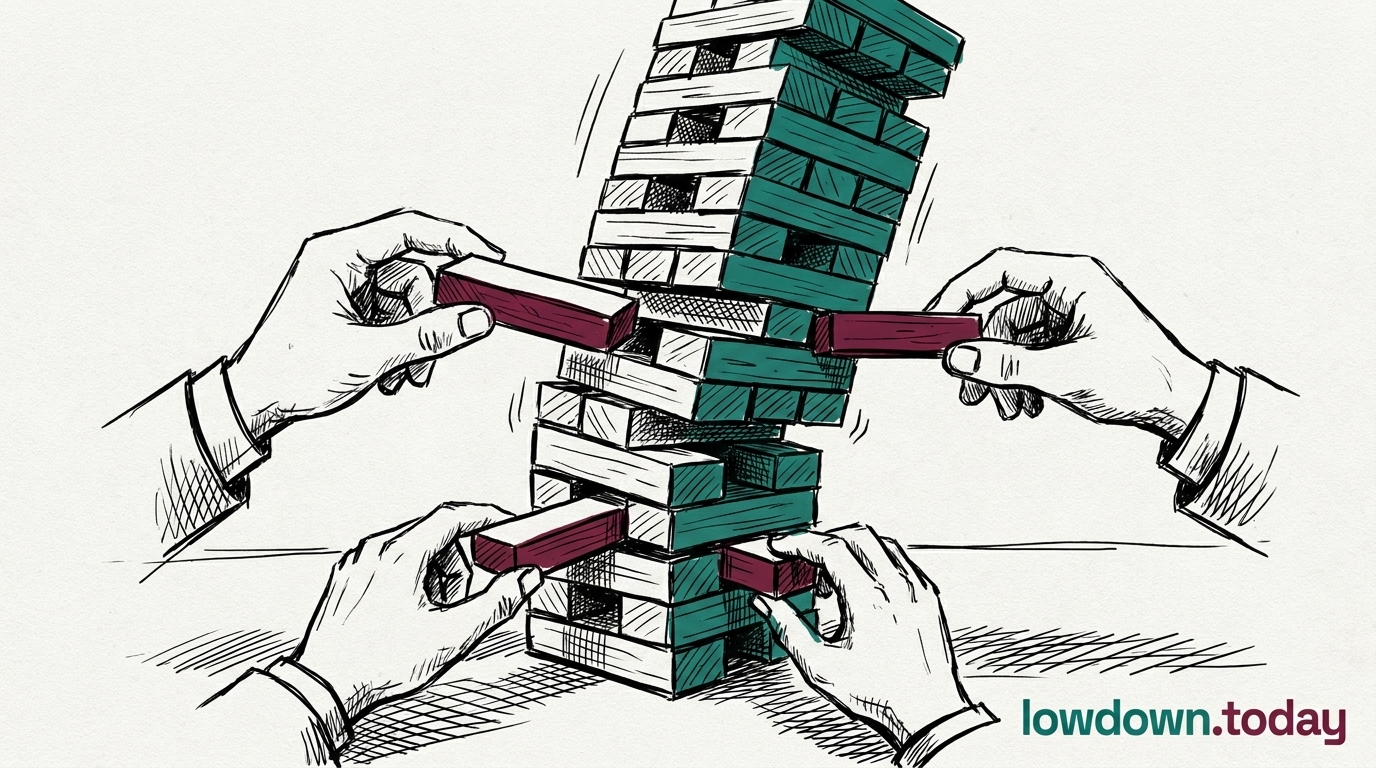
Congress has declined to authorise the war under the War Powers Act and is now declining to fund it. The White House has not exercised any of the off-ramp options that NBC News reported military officials include in daily briefings . Without new appropriations, existing defence accounts will be exhausted within weeks. The IDF's operational planning extends through at least Passover in mid-April, with deeper plans through mid-May . Iran's foreign minister has stated the country "never asked for a ceasefire" and "never asked even for negotiation" 3. A war that neither belligerent intends to stop has collided with a legislature that will not pay for it — and American governance has no mechanism designed to resolve that impasse while ordnance is already in the air.

The $19 billion figure does not capture the full fiscal exposure. Secretary of State Rubio bypassed congressional review to push through $16.5 billion in emergency arms sales to Kuwait, the UAE, and Jordan — weapons to defend the very Gulf States whose infrastructure Iran is destroying in retaliation for the American campaign. Representative Gregory Meeks said the waiver showed "lack of preparation for the war." Israel approved NIS 2.6 billion (~$826 million) in emergency defence procurement of its own . The cost of the war is being distributed across allied defence budgets, but the central question remains in Washington: who authorises expenditure of $900 million every day it continues, and what happens when nobody does?


Deep Analysis

In plain English

The US is spending $900 million every single day — enough to fund the entire US Department of Education for roughly a week, repeated daily. Unlike ground wars, where costs spread across troops and logistics, this operation burns money primarily on precision munitions: a Tomahawk cruise missile costs approximately $2 million; a THAAD interceptor roughly $12.5 million. The US is consuming in weeks stockpiles built over decades. Critically, the defence industrial base cannot replenish at anything near this rate. Tomahawk production runs in the hundreds per year. Once stockpiles are depleted, they cannot be quickly rebuilt — meaning the capacity to sustain this tempo has a hard ceiling that no amount of congressional funding can immediately overcome.

Deep Analysis
Synthesis

The $19 billion expended to date must be read against the IAEA and US intelligence community's joint assessment that Iran's nuclear capacity cannot be militarily eliminated. The US is spending $900 million daily toward a declared objective its own intelligence community assesses as unachievable. No modern American military operation has exhibited this gap between expenditure rate and attainable strategic outcome.

Root Causes

The $900 million daily rate reflects the structural economics of precision-munitions warfare: each strike wave consumes stockpiles accumulated over years of peacetime procurement at rates the defence industrial base was never designed to replenish quickly. The root cause is a strategic doctrine — precision air power — whose peacetime logistics assumptions do not survive contact with sustained high-intensity conflict.

Escalation

The bipartisan spending impasse combined with the $900 million daily burn rate creates a mathematical constraint on operational tempo, not merely a political one. Existing defence accounts will exhaust within weeks without the supplemental. A perceived US capacity ceiling could encourage Iran or its proxies to accelerate operations rather than de-escalate — turning a domestic funding standoff into a battlefield signal.

What could happen next?
  • Risk

    Pentagon draw-down of readiness accounts to sustain operations may degrade US deterrence posture in the Taiwan Strait and Korean Peninsula simultaneously and invisibly.

    Immediate · Suggested
  • Risk

    If Congress blocks the $200 billion supplemental, operational tempo may fall within weeks — potentially signalling a capacity ceiling to Tehran at a critical juncture.

    Short term · Assessed
  • Consequence

    Munitions stockpile depletion will require years of industrial replenishment, constraining US capacity to respond to concurrent crises in other theatres long after the conflict ends.

    Medium term · Assessed
  • Precedent

    Sustaining a $19 billion-plus operation without congressional authorisation normalises executive warmaking at historically unprecedented expenditure rates, weakening the War Powers framework durably.

    Long term · Assessed
First Reported In

Update #42 · Iran hits four countries; Brent at $119

International Institute for Strategic Studies· 20 Mar 2026
Read original
Causes and effects
This Event
$19bn war bill Congress will not fund
The war is sustained by neither formal congressional authorisation nor approved funding. Senate Republicans blocked the War Powers Resolution; bipartisan opposition now threatens the spending request. Without new appropriations, existing defence accounts will be exhausted within weeks.
Different Perspectives
Indian refiners
Indian refiners
Indian refiners kept lifting discounted Urals as the India/Baltic price split widened past $9-10 a barrel, a gap that only grows as GL X1's Iranian wind-down cuts an alternative discounted grade off the market by 17 July. Cheaper Russian feedstock is being locked in while it lasts.
Chinese refiners
Chinese refiners
Chinese refiners gain leverage as the Urals-Brent discount widens, since Beijing's state buyers already source discounted Russian barrels near the fiscal floor unaffected by Western insurance costs. A wider discount, if it holds past 23 July, lets them lock in cheaper term contracts regardless of the cap's outcome.
US money managers (CFTC-tracked)
Managed money trimmed WTI net length into the rally, positioning that reflects doubt the Hormuz premium survives without freight or war-risk confirmation. The Brent-WTI spread widening almost entirely on the Brent leg supports that scepticism about a broad-based repricing.
OPEC+ (Saudi-led subgroup)
Saudi Arabia is defending market share through a fourth straight 188kbd August hike even as OPEC's own July MOMR cut 2026 demand growth for the fourth consecutive month. At a $108-111 fiscal breakeven, every added barrel costs Riyadh revenue it cannot recoup, so the hike reads as a positioning signal, not a demand bet.
Greek shipping registries
Greece, backed by Cyprus and Malta, is pushing a three-month cap-freeze compromise against the Commission's freeze to January 2027 ahead of the 23 July vote. Athens' and Valletta's combined tanker registrations mean a shorter review gives their insurers more frequent chances to reprice risk on Russian cargoes.
Russia (Deputy PM Alexander Novak)
Novak extended the diesel export restriction to producers on 8 July, the first producer-binding curb of the war, protecting the domestic pump price ahead of any refinery repair timeline. Urals still trades below Russia's $59 budget floor even as Brent gained, so the ban trades export revenue for fiscal stability at home.