Skip to content
Welcome, thoughtbot's Giant Robots listeners!Start here
European Oil Markets
6JUL

Trump declares the Iran deal over

2 min read
09:52UTC

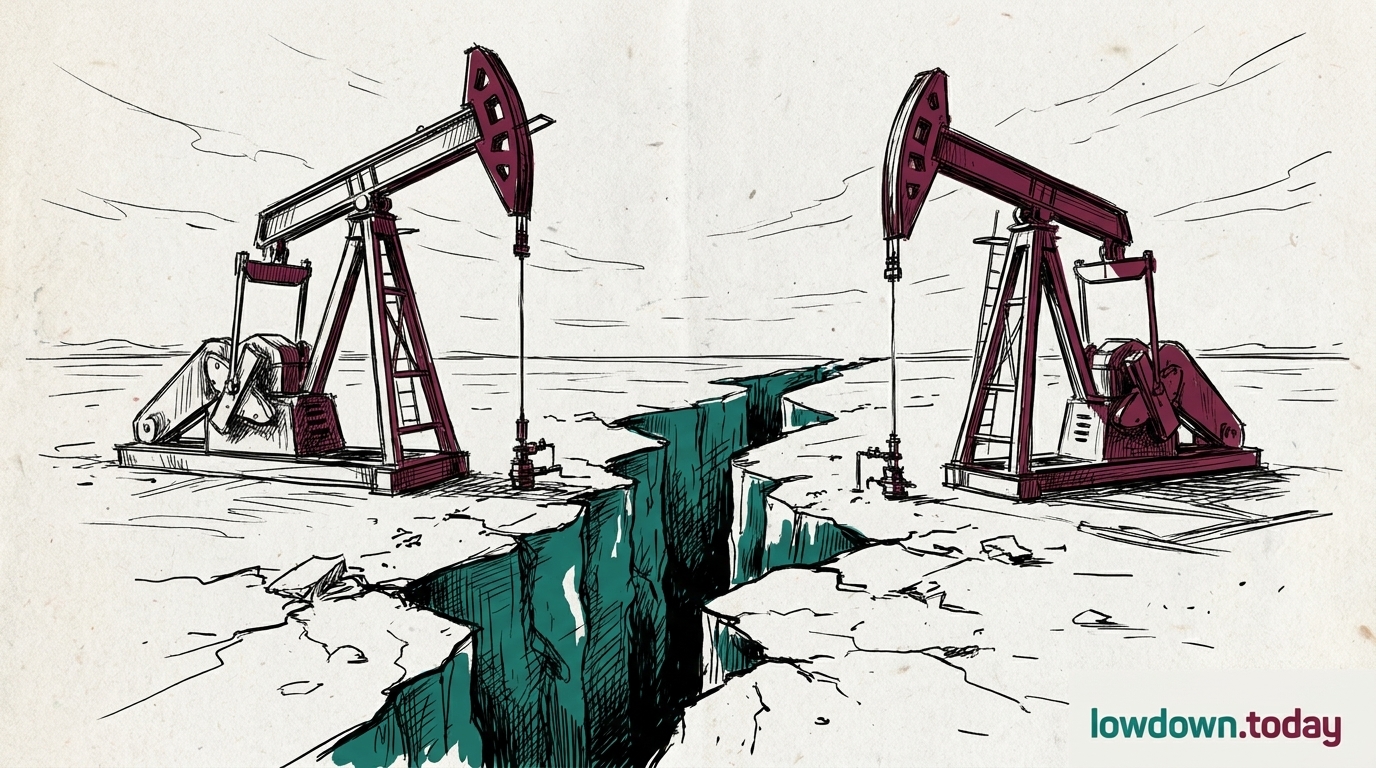
Trump called the interim Iran agreement over and a waste of time, while Tehran said US and Israeli actions had gutted it; neither side has formally withdrawn.

EconomicDeveloping
Key takeaway

Trump calls the deal over and Iran calls it violated, yet neither has formally torn it up.

President Donald Trump said the interim agreement with Iran is "over" and "a waste of time dealing with them" after the 7 July strikes and Iran's retaliation, while adding that negotiations would continue.⁠1 The agreement in question is the 18 June Memorandum of Understanding (MoU), a 14-point ceasefire-track text the two sides were still negotiating in Doha last week. Trump's words have carried this message for 120 days; this time a signed licence revocation sits behind them.

Iran's foreign ministry said US and Israeli actions had "rendered key and fundamental elements of the agreement to end the war ineffective".⁠2 Chief negotiator Mohammad Ghalibaf called both the strikes and the oil-waiver revocation "major violations" of the MOU, putting the financial instrument alongside the kinetic one in Tehran's own complaint.⁠3 Spokesman Esmaeil Baghaei neither claimed nor denied the Al Rekayyat strike, instead invoking Clause 5 of the memorandum to assert an Iranian right to administer Hormuz routing.⁠4

Neither side has formally withdrawn from the memorandum both were negotiating in Doha, where Trump, Baqaei and Qatar's spokesman gave three contradicting accounts of the same talks and Doha itself billed the round as positive progress. Each capital is now retiring verbal tools for signed ones: Washington swaps Truth Social posts for a licence revocation, Tehran swaps anonymous IRIB framing for a named-spokesman treaty claim. The next Doha round stays paused with no firm late-July date fixed despite Pakistani expectations of one, so the memorandum is decaying rather than dying, and the 17 July licence cliff now arrives before any diplomacy resumes.

Deep Analysis

In plain English

The Memorandum of Understanding, or MoU, is a 14-point agreement reached on 18 June between the US and Iran that was meant to wind down the war, a written understanding rather than a ratified treaty. President Trump said the agreement was 'over' and 'a waste of time' after the day's strikes and oil-waiver revocation. Iran's foreign ministry said US and Israeli actions had made key parts of the deal ineffective, and Mohammad Bagher Ghalibaf, the speaker of Iran's parliament, called the day's events 'major violations' of the MOU. Neither side has formally withdrawn from the agreement in writing; both are simply saying, in different words, that it no longer functions.

Deep Analysis
Root Causes

the MOU has no enforcement mechanism written into its 14 points; unlike the JCPOA's IAEA verification architecture, it relies entirely on both governments' continued political willingness to reference it, which is why either side can call it ineffective without triggering a formal breach process.

Ghalibaf's move to frame the oil-waiver revocation and strikes together as violations serves a parliamentary function: the Majlis voted 221-0 in April to suspend IAEA cooperation, and casting the MOU as US-violated first gives hardliners in that body grounds to block future civilian-negotiated re-engagement without appearing to reject diplomacy outright.

What could happen next?
  • Risk

    Neither side formally exiting the MoU while both call it dead risks a legal vacuum where future strikes or sanctions carry no agreed reference point for de-escalation.

  • Precedent

    Ghalibaf's parliamentary framing echoes the Majlis's earlier unilateral IAEA suspension, suggesting Iran's legislature, not its foreign ministry, now controls the diplomatic off-ramp.

First Reported In

Update #149 · The first thing Washington signed on Iran: a revocation

Al Jazeera· 8 Jul 2026
Read original →
Different Perspectives
S&P Global
S&P Global
S&P Global said on 12 November that thin refining buffers leave jet fuel exposed to price spikes in 2027. Its view cuts against the pump-lag case, because tight middle distillates would keep jet and diesel dear even as crude falls.
European Union
European Union
The Commission proposed a 22nd package on 23 November that would list more than 70 more tankers and ban Russia-insured ones, after listing Balance Insurance on 16 November. It needs every member state's vote, so Russian tanker insurance becomes the EU's next test of unanimity.
UK households and hauliers
UK drivers paid 193.29p a litre for diesel in the week of 23 November, DESNZ data show, 31.33p more than petrol, and BoilerJuice quoted heating oil at 96.51p a litre before VAT. They pay the gap that crude's fall has not closed, with motor fuels up 33.2% in October's inflation figures.
Saudi Arabia and the OPEC+ Seven
The OPEC+ Seven held December output at September's level on 1 November, and Saudi Aramco priced December Arab Light to Europe below Brent, Attaqa reported. The full group decides on Sunday 29 November whether about 2m b/d of cuts outlast 2026, with Saudi diesel loadings already up 30% in early November.
Eni
Eni
Eni reported a third-quarter standard refining margin of $28.1 a barrel and raised its full-year assumption from $14 to $18. Its finance chief Francesco Gattei said on the 23 October call that the quarter to date was at $18, press coverage reported, so the refiner sees its windfall shrinking.
Gulf oil producer
Gulf oil producer
Secured OPEC's confirmed 188,000 b/d September increment with the next meeting set for 6 September, but the Secretariat's own 2 August release says nothing about the fourth quarter. Output guidance beyond September remains undisclosed even as delegate sourcing keeps filling that gap.

Written with AI from Lowdown's published reporting. Not individually reviewed by an editor. Editorial standards.
