Skip to content
You can now search across every topic, entity and event.What's new
European Oil Markets
3JUL

US Navy lacks ships to convoy the Gulf

3 min read
10:26UTC

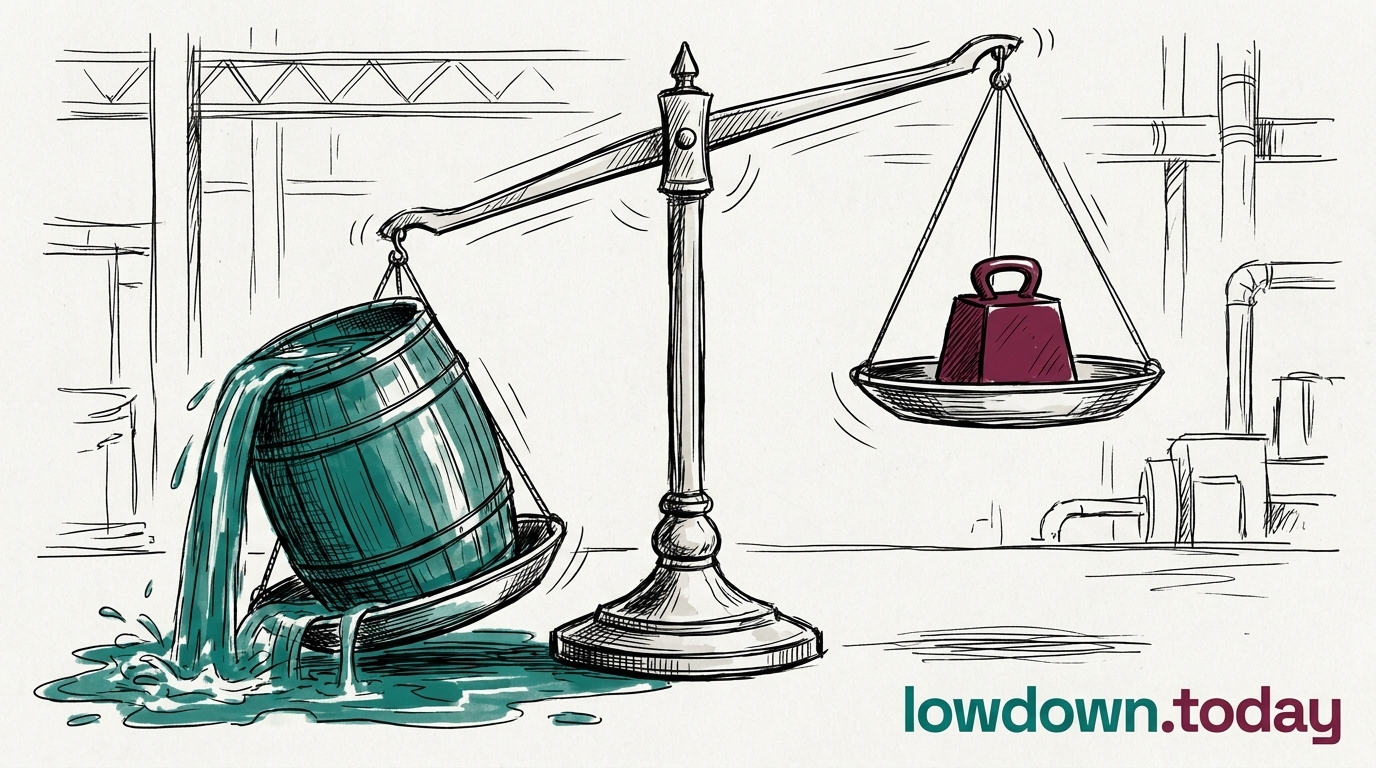
The US Navy privately told shipping industry leaders it cannot run regular convoys through the Strait of Hormuz — two days after the President promised exactly that.

EconomicDeveloping
Key takeaway

The US has publicly committed to escort operations it cannot currently execute, handing Iran confirmation that its maritime denial strategy is imposing costs without requiring a direct naval confrontation.

The US Navy told shipping industry leaders on Wednesday that it does not currently have sufficient assets to operate a regular convoy programme through the strait of Hormuz. The admission directly contradicts President Trump's announcement two days earlier that the Navy would provide escorts alongside government-backed insurance from the Development Finance Corporation .

Convoy escort requires a fundamentally different force structure from combat operations. A carrier strike group projects power; an escort programme requires vessels on a predictable schedule at fixed chokepoints, with enough hulls to rotate without gaps. During Operation Earnest Will from 1987 to 1988 — the last US convoy programme in The Gulf — the Navy escorted re-flagged Kuwaiti tankers using cruisers, destroyers, and frigates drawn from a Reagan-era fleet of more than 550 ships, nearly double today's 296. Even that smaller operation, covering a fraction of Gulf traffic, stretched resources thin. The frigate USS Samuel B. Roberts struck an Iranian mine while on escort duty in April 1988.

The Fifth Fleet, headquartered in Bahrain, maintains roughly 20 vessels in the region, including the Abraham Lincoln carrier strike group — which Iran targeted with anti-ship ballistic missiles on Sunday . Those vessels are engaged in combat operations and force protection across four bodies of water: The Gulf, the Red Sea, the Arabian Sea, and the Indian Ocean. Pulling them into escort rotations means pulling them from strike missions or defensive screens.

With the P&I deadline at midnight Thursday and no confirmed escort schedule, tanker captains and charterers cannot plan voyages. Insurance — whether government-backed or commercial — is meaningless if the insured party cannot confirm a military escort on a specific date at a specific location. Brent Crude held above $82 per barrel, its two-day gain of approximately 12% the largest since 2020. The oil market has registered the distance between the political commitment and the ships available to honour it.


Deep Analysis

In plain English

Trump announced the US Navy would escort oil tankers through the dangerous strait — similar to armed police escorts for armoured trucks carrying cash. The problem is the Navy itself has now admitted it does not have enough ships in the area to run this regularly. Tanker operators and insurers need confirmed, scheduled escort availability before they will send a ship; a vague promise of future escorts does not change their commercial calculation, particularly against a hard Thursday insurance deadline.

Deep Analysis
Synthesis

The gap between Trump's announced policy and the Navy's operational admission tells Tehran that its strategy of threatening maritime commerce is succeeding without requiring it to engage US warships directly. Iran can continue suppressing Hormuz transits through insurance markets and threat alone while the US expends political capital on a promise it cannot operationalise before the P&I deadline.

Root Causes

The US Navy's 5th Fleet (Bahrain) has been systematically thinned by the Indo-Pacific pivot begun in 2012, which concentrated surface combatant availability toward the Pacific. The Navy's current distributed maritime operations doctrine does not include convoy escort as a primary mission set, and the fleet has no modern dedicated escort vessel — the WWII-era destroyer escort was retired with no successor. Burke-class destroyers are multimission assets too scarce to dedicate to convoy duty without withdrawing them from other simultaneous taskings.

Escalation

The admission forces a binary US choice: surge naval assets to the region — itself an escalatory signal requiring weeks of redeployment — or accept that the escort announcement is hollow. Gulf partners who structured their port-reopening decisions around the escort promise may now recalculate their dependence on US security guarantees, widening the alliance management problem independently of the military one.

What could happen next?
  • Risk

    US credibility as security guarantor for Gulf partners degrades materially if the escort commitment cannot be operationalised before the P&I insurance deadline.

    Immediate · Assessed
  • Consequence

    Hormuz transit may cease entirely for commercially insured vessels if no operational escort schedule is confirmed by Thursday midnight, regardless of the DFC underwriting pledge.

    Immediate · Assessed
  • Risk

    A visible gap between US declared intent and naval capacity may embolden Iran to escalate further in the maritime domain, calculating that direct US naval response is constrained by the same asset shortage.

    Short term · Suggested
  • Opportunity

    NATO allies could offer surface combatants under a multilateral maritime protection framework, spreading the burden and reducing the perception of a bilateral US–Iran confrontation.

    Short term · Suggested
First Reported In

Update #18 · First Iranian warship sunk since 1988

CNBC· 4 Mar 2026
Read original
Causes and effects
This Event
US Navy lacks ships to convoy the Gulf
The gap between the political announcement and operational capacity means the government-backed insurance and escort programme cannot function before the P&I deadline at midnight Thursday. Without confirmed escort availability, no tanker captain will commit to a Hormuz transit, rendering the President's pledge inoperative on the timeline that matters.
Different Perspectives
Indian refiners
Indian refiners
Indian refiners kept lifting discounted Urals as the India/Baltic price split widened past $9-10 a barrel, a gap that only grows as GL X1's Iranian wind-down cuts an alternative discounted grade off the market by 17 July. Cheaper Russian feedstock is being locked in while it lasts.
Chinese refiners
Chinese refiners
Chinese refiners gain leverage as the Urals-Brent discount widens, since Beijing's state buyers already source discounted Russian barrels near the fiscal floor unaffected by Western insurance costs. A wider discount, if it holds past 23 July, lets them lock in cheaper term contracts regardless of the cap's outcome.
US money managers (CFTC-tracked)
Managed money trimmed WTI net length into the rally, positioning that reflects doubt the Hormuz premium survives without freight or war-risk confirmation. The Brent-WTI spread widening almost entirely on the Brent leg supports that scepticism about a broad-based repricing.
OPEC+ (Saudi-led subgroup)
Saudi Arabia is defending market share through a fourth straight 188kbd August hike even as OPEC's own July MOMR cut 2026 demand growth for the fourth consecutive month. At a $108-111 fiscal breakeven, every added barrel costs Riyadh revenue it cannot recoup, so the hike reads as a positioning signal, not a demand bet.
Greek shipping registries
Greece, backed by Cyprus and Malta, is pushing a three-month cap-freeze compromise against the Commission's freeze to January 2027 ahead of the 23 July vote. Athens' and Valletta's combined tanker registrations mean a shorter review gives their insurers more frequent chances to reprice risk on Russian cargoes.
Russia (Deputy PM Alexander Novak)
Novak extended the diesel export restriction to producers on 8 July, the first producer-binding curb of the war, protecting the domestic pump price ahead of any refinery repair timeline. Urals still trades below Russia's $59 budget floor even as Brent gained, so the ban trades export revenue for fiscal stability at home.