Skip to content
You can now search across every topic, entity and event.What's new
European Oil Markets
3JUL

Brent-WTI spread widens out to $3.55

3 min read
10:26UTC

Brent settled near $94.06 and WTI near $90.51 late on Friday 29 May, a spread of about $3.55, as NYMEX WTI managed-money length bled out faster than Brent sold off. The transatlantic TC2 gasoline arb tightens from the freight side at $3.50-plus.

EconomicDeveloping
Key takeaway

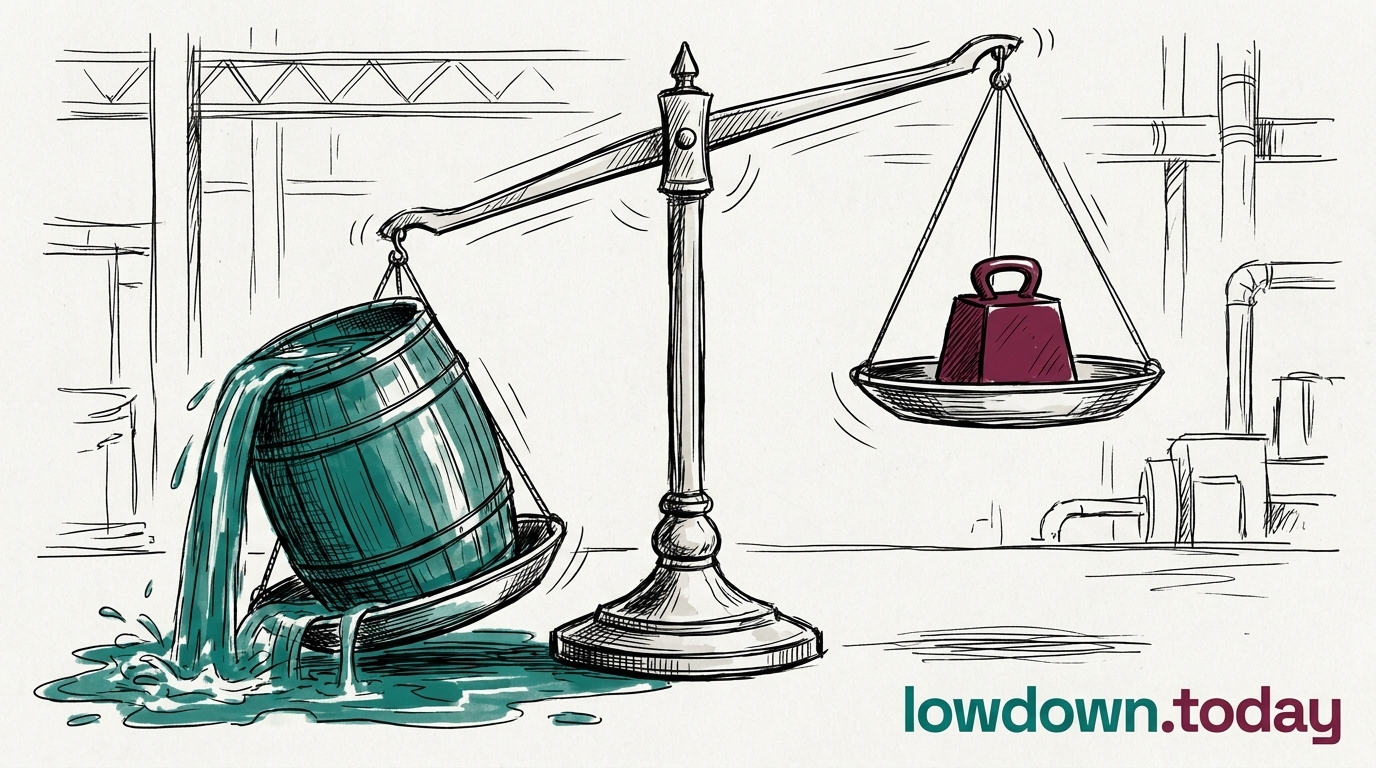
Brent-WTI widened on a positioning unwind, not a fundamental shift, and it shuts the TC2 arb from the freight side.

Brent settled around $94.06 and WTI (West Texas Intermediate) near $90.51 late on Friday 29 May, a spread of about $3.55 1, out from the $2-3 band the May Iran memorandum had compressed it into . NYMEX WTI managed money had run to a +172,580 net-long extreme by 19 May ; that length is now bleeding out, and WTI falls faster than Brent as the unwind progresses. The +172,580 contracts unwinding drove the spread, with no matching move in crude supply or demand.

The re-widening bites hardest on freight. At $3.50-plus the TC2 route (the transatlantic clean-products freight benchmark for gasoline and naphtha out of Northwest Europe) sees its arb tighten, because US barrels have less incentive to cross the Atlantic once the crude spread moves against them. With Chinese lifting absent and Atlantic-basin light-sweet grades staying West, European EBOB (the Northwest European gasoline barge benchmark) faces less competition from US exports.

The arb shuts from two directions at once: the crude spread pushes US barrels home, and the absent Eastern bid keeps Atlantic crude in the basin. European refiners gain on the product side what they lose on tighter feedstock economics. The detailed US gasoline-balance print underneath this spread is the demand evidence, and it sits in its own EIA reading.


Deep Analysis

In plain English

The price gap between Brent crude (the main European oil benchmark) and WTI (the American one) widened to about $3.55 last Thursday. This happened because a large group of investors who had bet heavily that US crude prices would rise started unwinding those bets, pushing American crude prices down faster than European ones. This spread matters for petrol prices in Europe because when it widens, it becomes less attractive for American refineries to export petrol to Europe. That reduces the supply available to European markets and tends to push up prices at the pump.

Deep Analysis
Root Causes

The WTI managed-money long of +172,580 contracts was built on two catalysts: the 7.9mb US crude draw and GL 134C supply-legitimacy relief.

The 23 May Iran MOU then forced an unwind: peace-resolution pricing collapsed the flat-price, but WTI fell harder than Brent because the long was concentrated in WTI rather than Brent. CFTC data showed ICE Brent managed money was already net short at -24,966 by 19 May, meaning Brent had no equivalent concentrated long to liquidate.

The EFS and Brent-WTI mechanics are connected: as China stays off the spot market, Dubai weakens relative to Brent. The Brent-WTI spread widens partly because Brent holds on structural European support while WTI loses the speculative premium built in during the supply-disruption peak.

What could happen next?
  • Consequence

    The TC2 gasoline and naphtha arb tightens at $3.50+ Brent-WTI, reducing incentive for US barrels to cross to Europe and supporting EBOB independently of the crude complex.

  • Risk

    If the WTI long unwind accelerates, Brent-WTI could temporarily overshoot $4-5, shutting the TC2 arb entirely and removing the transatlantic supply safety valve for European gasoline markets.

First Reported In

Update #4 · EFS compression is a China hole, not Hormuz

OilPrice.com· 1 Jun 2026
Read original
Different Perspectives
Greek shipping registries
Flag states dominating the tanker fleet await the EU's 15 July cap-freeze vote. A formula unlock toward $75 would loosen the ceiling squeezing insurance and crewing costs on their registered hulls.
US money managers
US money managers
NYMEX WTI managed-money net long fell 23% to +64,041 in the week to 7 July, trimming length into the rally on doubt the Hormuz premium survives without freight or war-risk confirmation.
European refiners (ARA)
ARA refiners are capturing an $80/bbl US diesel crack as Russian gasoil loadings collapsed to 234kbd before Novak's 31 July export ban even bites, widening the arbitrage straight into refining margins.
OPEC+
OPEC+
The seven-member group confirmed a fourth consecutive 188kbd August hike on 5 July, defending market share even though Saudi Arabia's $108-111/bbl breakeven means every added barrel costs Riyadh revenue it cannot recoup.
Indian refiners
Indian refiners
Refiners kept lifting discounted Urals as the India/Baltic split widened past $9-10 a barrel on 7 July. A wider Urals-Brent gap means cheaper feedstock locked in against Baltic buyers.
Russia
Russia
Urals traded $48.95-55.12 on 12-13 July, below Moscow's $59 budget floor even as Brent gained $6. Oil and gas fund roughly 30% of federal revenue, and Novak's diesel export ban is rationing a shrinking export base.