Skip to content
You can now search across every topic, entity and event.What's new
European Oil Markets
30JUN

Ukraine hits Siberia, 2,000 km deep

3 min read
17:30UTC

The 20 June strike on the Tyumen refinery in western Siberia became the deepest Ukrainian attack of the war, putting a plant 2,000 km from the border within reach.

EconomicDeveloping
Key takeaway

Hitting Tyumen 2,000 km away ends the sanctuary that protected Siberian refineries.

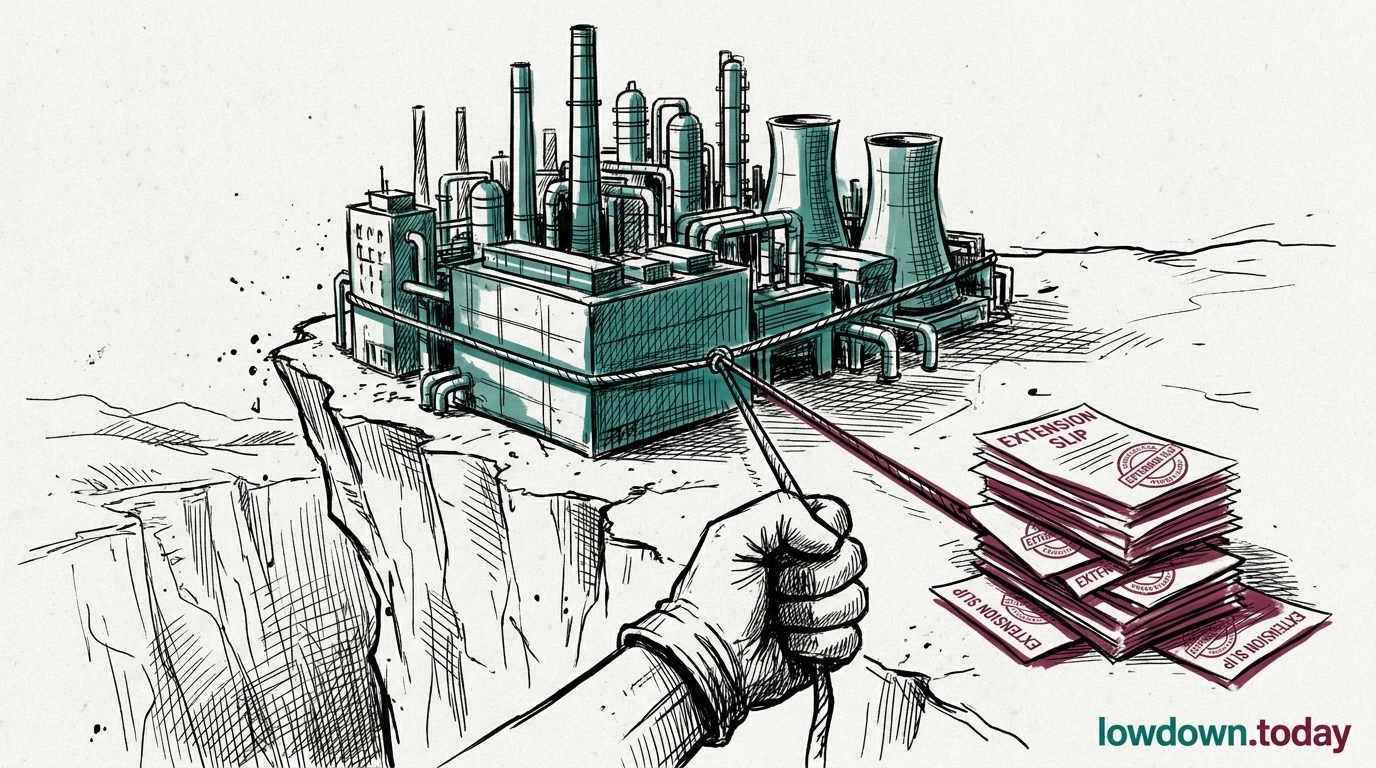
A Ukrainian drone raid hit the Tyumen refinery in western Siberia on 20 June, at roughly 2,000 km from the border the deepest attack of the war 1. The plant processes about 9 million tonnes of crude a year, and its location had until now placed it beyond the range Ukraine could credibly threaten. Tyumen's governor said the attack was repelled while residents reported explosions, so the damage is not independently verified.

For three years Russia ran its Siberian refining heartland on the assumption that 2,000 km of distance did the defending, dispersing sensitive capacity far from a front it expected to stay in the east. The Tyumen hit removes that assumption. A plant 2,000 km from Ukraine is no longer a safe plant, which forces air-defence planners to thin already-stretched coverage across a far larger map.

The strike fits a campaign that has steadily extended its reach since the Baltic-port phase and the Crimean fuel squeeze , and it ran alongside the same sanctions arc tracked by the oil-market desk . One refinery loss in Siberia does not collapse Russian output. It signals that no refinery is now off the targeting map, and that is the development Moscow's defenders have to absorb.


Deep Analysis

In plain English

Ukraine hit an oil refinery in western Siberia on 20 June. The distance is the striking thing: this plant sits roughly 2,000 km from Ukraine, about the same as London to Moscow. Before this strike, Russia's Siberian refineries were considered safe because Ukrainian drones could not reach them. The Tyumen plant converts roughly 9 million tonnes of crude oil into petrol, diesel, and other products every year. Repairing a refinery takes months, not days: the distillation towers and processing units that were damaged cannot be quickly replaced. If Tyumen is out of action for an extended period, that product has to come from somewhere else, at a time when many of Russia's other refineries have also been attacked.

Deep Analysis
Root Causes

Tyumen's vulnerability rests on a structural gap in Russia's air-defence architecture. Soviet-era doctrine positioned intercept belts around Moscow and St Petersburg, leaving the zone east of the Urals uncovered because no western threat was expected to reach there. The 3,000 km range Zelenskyy confirmed on 21 June directly addresses that coverage gap.

Russian refineries built in the Soviet period were designed around throughput optimisation: the fixed processing towers, distillation columns, and catalyst units that define a refinery's capacity cannot be relocated or buried when they become targets. No civil-defence dispersal of refining capacity followed the 2014 Crimea annexation or the 2022 invasion.

Escalation

Qualitative escalation: the 2,000 km strike extends the conflict's physical geography to Siberia, previously outside any realistic threat envelope. It validates the 3,000 km range claim Zelenskyy made the following day.

What could happen next?
  • Precedent

    Ukraine's first confirmed strike in Siberia establishes a new geographic envelope that places Russian energy infrastructure across the entire European and western Siberian territory within operational reach.

    Long term · Assessed
  • Risk

    Russia will face increased pressure on its refining capacity at the same time as domestic rationing from the Kapotnya shutdown, raising the risk of a compounded fuel supply crisis.

    Short term · Reported
  • Consequence

    Russian operators of major industrial installations east of the Urals will need to reassess their emergency planning assumptions, which were built on the premise of geographic sanctuary.

    Medium term · Reported
First Reported In

Update #21 · Ukraine's drones reach Russia's petrol pumps

bne IntelliNews· 24 Jun 2026
Read original
Different Perspectives
Indian refiners
Indian refiners
Indian refiners kept lifting discounted Urals as the India/Baltic price split widened past $9-10 a barrel, a gap that only grows as GL X1's Iranian wind-down cuts an alternative discounted grade off the market by 17 July. Cheaper Russian feedstock is being locked in while it lasts.
Chinese refiners
Chinese refiners
Chinese refiners gain leverage as the Urals-Brent discount widens, since Beijing's state buyers already source discounted Russian barrels near the fiscal floor unaffected by Western insurance costs. A wider discount, if it holds past 23 July, lets them lock in cheaper term contracts regardless of the cap's outcome.
US money managers (CFTC-tracked)
Managed money trimmed WTI net length into the rally, positioning that reflects doubt the Hormuz premium survives without freight or war-risk confirmation. The Brent-WTI spread widening almost entirely on the Brent leg supports that scepticism about a broad-based repricing.
OPEC+ (Saudi-led subgroup)
Saudi Arabia is defending market share through a fourth straight 188kbd August hike even as OPEC's own July MOMR cut 2026 demand growth for the fourth consecutive month. At a $108-111 fiscal breakeven, every added barrel costs Riyadh revenue it cannot recoup, so the hike reads as a positioning signal, not a demand bet.
Greek shipping registries
Greece, backed by Cyprus and Malta, is pushing a three-month cap-freeze compromise against the Commission's freeze to January 2027 ahead of the 23 July vote. Athens' and Valletta's combined tanker registrations mean a shorter review gives their insurers more frequent chances to reprice risk on Russian cargoes.
Russia (Deputy PM Alexander Novak)
Novak extended the diesel export restriction to producers on 8 July, the first producer-binding curb of the war, protecting the domestic pump price ahead of any refinery repair timeline. Urals still trades below Russia's $59 budget floor even as Brent gained, so the ban trades export revenue for fiscal stability at home.



