Skip to content
You can now search across every topic, entity and event.What's new
European Oil Markets
30JUN

Russia's oil price down, revenue up

2 min read
17:30UTC

CREA reported Urals crude averaged $63.18 a barrel in June, down 26%, yet Russian oil-product revenue rose 14% as tight global supply lifted prices.

EconomicDeveloping
Key takeaway

Urals crude fell 26% to $63.18 in June, yet Russian oil-product revenue rose 14% on tight supply.

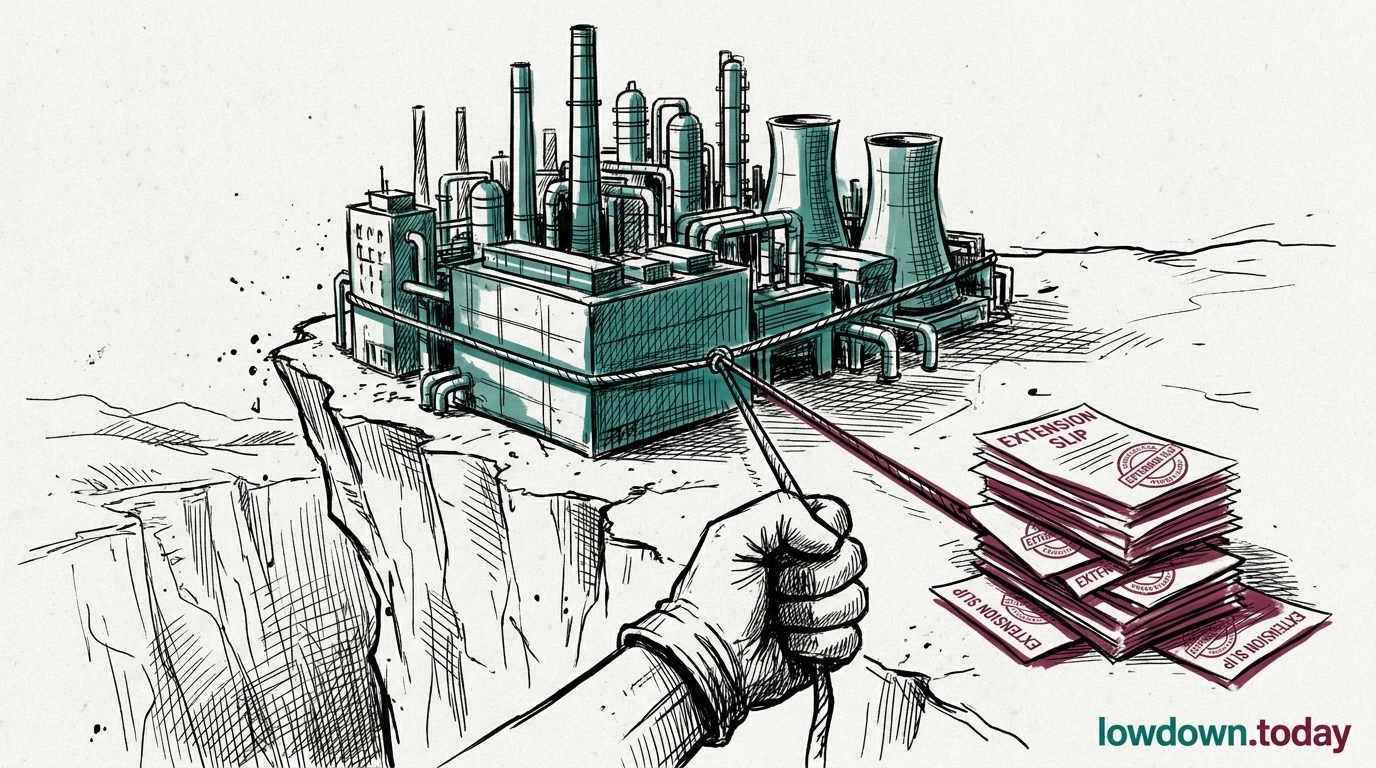
CREA, the Centre for Research on Energy and Clean Air, reported that Urals crude, the benchmark grade for Russian exports, averaged $63.18 a barrel in June, down 26% month-on-month 1. That compounds May's 12% fall from $82.02 , and seaborne oil-product loadings dropped 21% to a record low as the refinery strikes bit 2.

The ledger has another side. CREA found that oil-product revenue rose 14% month-on-month in June, its highest since June 2024, because tight global supply lifted prices even as Russian volumes fell 3. The rise means Moscow banked more per tonne on a smaller flow of exports.

Demand held up in Asia. China took 41% of the top-five buyers' Russian crude in June, and India, the second-largest buyer, lifted its imports 34% to a record 4. The pressure falls on volume and on the state's ability to guarantee supply at home, not yet on the headline cash.


Deep Analysis

In plain English

CREA, a research group that tracks Russian energy exports, reported that the price Russia gets for its main crude oil grade, Urals, fell 26% in June to $63.18 a barrel, on top of a 12% fall in May. At the same time, the amount of refined fuel Russia managed to ship by sea hit a record low, even though the money it earned from that fuel actually rose, because global fuel prices were higher. This matters because it shows two different pressures squeezing Russia's oil revenue at once: falling crude prices and a shrinking ability to physically move fuel. China took 41% of top-five buyer purchases in June, and India's imports rose 34% to a record, both buying without Western sanctions enforcement applying to them.

Deep Analysis
Root Causes

The price cap only constrains Russian crude sales when the market price would otherwise exceed $44.10 a barrel; at $63.18, Urals remains comfortably above that floor, so the cap is not the mechanism doing the work in June's fall. The real driver is physical: Ukrainian strikes on refining and export infrastructure cut seaborne oil-product loadings to a record low, a supply constraint that shows up as falling volumes and revenue pressure regardless of where the price sits relative to any cap.

China and India's expanding share, 41% and a record 34% month-on-month rise respectively, reflects a structural condition of the cap regime itself: it creates no penalty for buyers outside the G7/EU insurance and shipping ecosystem, so the two largest non-aligned economies can absorb discounted volumes with no exposure to Western enforcement.

What could happen next?
  • Meaning

    Urals trading above the price cap floor while still falling sharply shows physical disruption, not sanctions enforcement, is now the dominant pressure on Russian oil revenue.

First Reported In

Update #23 · Moscow rations diesel as US cover lapses

CREA (Centre for Research on Energy and Clean Air)· 13 Jul 2026
Read original
Causes and effects
This Event
Russia's oil price down, revenue up
Russia's oil revenue is holding even as prices and volumes fall, blunting the fiscal effect of Ukraine's strike campaign.
Different Perspectives
Greek shipping registries
Flag states dominating the tanker fleet await the EU's 15 July cap-freeze vote. A formula unlock toward $75 would loosen the ceiling squeezing insurance and crewing costs on their registered hulls.
US money managers
US money managers
NYMEX WTI managed-money net long fell 23% to +64,041 in the week to 7 July, trimming length into the rally on doubt the Hormuz premium survives without freight or war-risk confirmation.
European refiners (ARA)
ARA refiners are capturing an $80/bbl US diesel crack as Russian gasoil loadings collapsed to 234kbd before Novak's 31 July export ban even bites, widening the arbitrage straight into refining margins.
OPEC+
OPEC+
The seven-member group confirmed a fourth consecutive 188kbd August hike on 5 July, defending market share even though Saudi Arabia's $108-111/bbl breakeven means every added barrel costs Riyadh revenue it cannot recoup.
Indian refiners
Indian refiners
Refiners kept lifting discounted Urals as the India/Baltic split widened past $9-10 a barrel on 7 July. A wider Urals-Brent gap means cheaper feedstock locked in against Baltic buyers.
Russia
Russia
Urals traded $48.95-55.12 on 12-13 July, below Moscow's $59 budget floor even as Brent gained $6. Oil and gas fund roughly 30% of federal revenue, and Novak's diesel export ban is rationing a shrinking export base.



