Skip to content
You can now search across every topic, entity and event.What's new
European Oil Markets
22JUN

Riyadh holds fire at Baghdad's request

2 min read
09:55UTC

Saudi Arabia's Foreign Ministry said it would refrain from an immediate response to the pipeline attack at the request of Iraq's prime minister, while reserving the right to take all necessary measures.

EconomicDeveloping

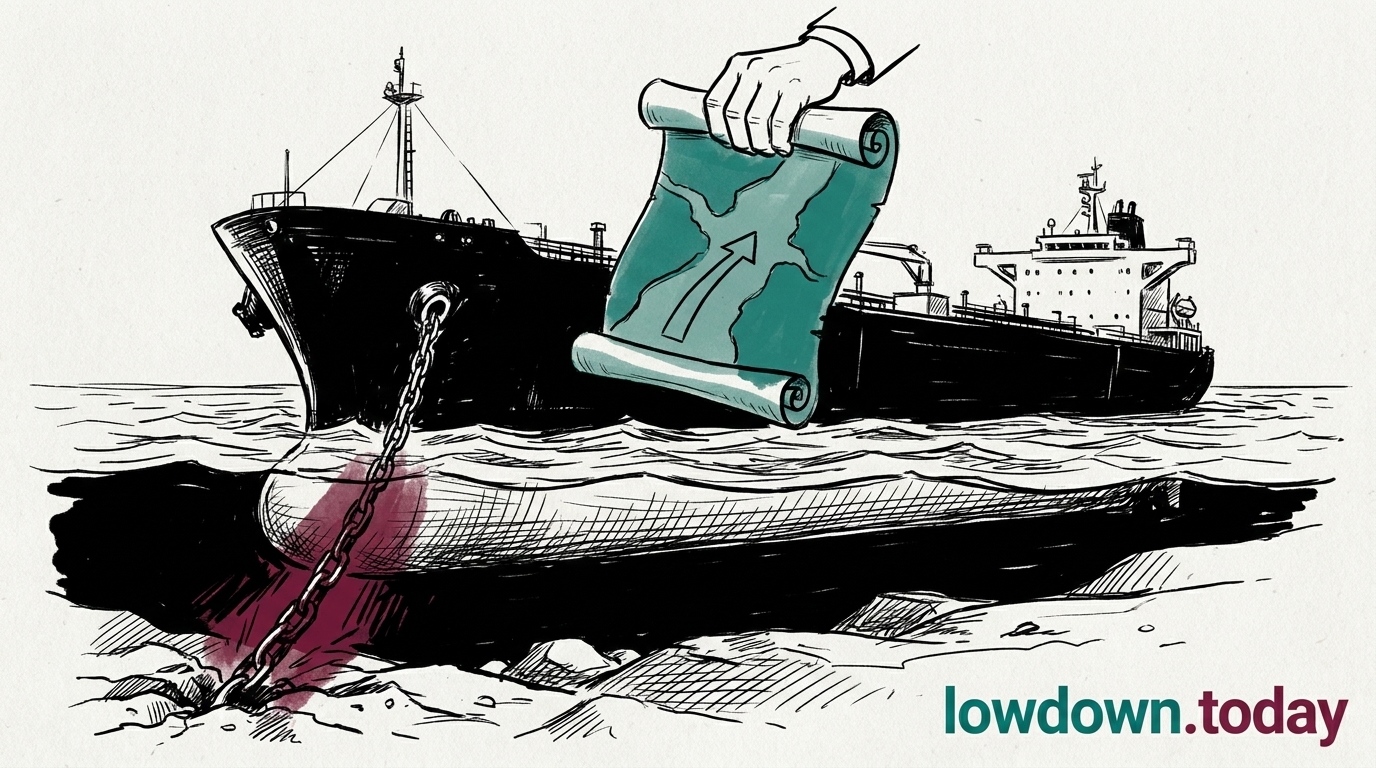
The Saudi Ministry of Foreign Affairs said The Kingdom would refrain from an immediate response to the attack on Petroline at the request of Iraq's prime minister, to give Baghdad room to stop further attacks, while reserving the right to take all necessary measures to protect Saudi sovereignty, security, facilities and residents 1. The ministry called Iraq a "brotherly" government in the same statement 2.

Riyadh answered a comparable attack differently in late July. Saudi jets struck militia targets inside Iraq at 05:00 GMT on Wednesday 29 July, in coordination with US Central Command and citing self-defence under Article 51 of the United Nations Charter . The instrument used this time is a statement, and the party being asked to act is the Iraqi government rather than the militias.

Condemnation was the other option on the table, and Saudi Arabia has already used it: The Kingdom joined the United Arab Emirates and Qatar in condemning Iranian attacks on their neighbours on 2 September . Reserving the right records in public that The Kingdom has not waived a response, and it puts a clock on Baghdad's investigation without naming a date on which the clock runs out.


Deep Analysis

In plain English

When a country's oil infrastructure is attacked, the usual expectation is that it strikes back at whoever it blames. Saudi Arabia has said it will not do that yet. Iraq's prime minister asked for time to stop further attacks from Iraqi soil, and the Saudi foreign ministry agreed to wait while saying it keeps the right to act later. That matters because the drones were launched from Iraq, not from Iran. Hitting back would mean hitting a neighbour Saudi Arabia is not at war with, over an attack that neighbour says it did not order.

Deep Analysis
Root Causes

Saudi Arabia is not a declared belligerent in this war, and its exposed surface is oil infrastructure rather than deployed forces. Every retaliation option it holds would make it one.

The attack came from the soil of a state Riyadh is not fighting, mounted by actors that state says it does not control. Striking Iraq punishes a government that is cooperating; striking Iran needs an attribution nobody has published. Riyadh's statement sits in the gap between those two options.

Baghdad's position rests on the same structure in reverse. A prime minister who cannot prevent launches from his own territory is a prime minister whose neighbours start treating that territory as the address of the problem.

Escalation

Pause rather than de-escalation. The trigger that would end it is a second launch from Iraqi territory, or an Iraqi investigative council that reports without naming anyone, and the Saudi statement sets no date for either.

What could happen next?
  • Meaning

    By naming Iraq's prime minister as the reason for waiting, Riyadh has made Baghdad answerable for the next launch rather than the people who mount it.

    Immediate · Assessed
  • Risk

    A second attack from Iraqi territory would leave the kingdom having publicly spent its one round of patience.

    Short term · Assessed
  • Opportunity

    The statement keeps a Saudi channel to Baghdad open at a point when most regional payment and trade channels with Iran have closed.

    Medium term · Suggested
First Reported In

Update #178 · Saudi bypass hit, and Riyadh holds fire

Gulf News· 13 Sept 2026
Read original
Different Perspectives
Gulf oil producer
Gulf oil producer
Secured OPEC's confirmed 188,000 b/d September increment with the next meeting set for 6 September, but the Secretariat's own 2 August release says nothing about the fourth quarter. Output guidance beyond September remains undisclosed even as delegate sourcing keeps filling that gap.
Money manager positioned in WTI
Added 21,402 lots to a 108,307 net long in NYMEX WTI in the week to 28 July, against just 1,485 added to Brent's 15,740, a roughly fourteen-to-one split. Conviction sits in the American benchmark even as the European diesel story sets the record.
Indian refiner buying Urals
Bought Russian crude at a discount that narrowed to $1-2 a barrel in the week to 29 July from over $10, as Hormuz risk pushed it toward Urals. If that risk eases with the strike now called off, the discount it is currently enjoying could re-widen just as fast.
Russian diesel exporter
Novak tied any lifting of the diesel export ban, due to lapse 31 July, to an unspecified market recovery with no date, and pushed the gasoline ban to end-2026. An open-ended constraint suits an exporter benefiting from the record European crack it feeds.
War-risk underwriter
Withdrew war-risk cover for Saudi-linked hulls on 24 July and has not reinstated it, holding Bab el-Mandeb tanker transits near 7.5 a day. A cancelled strike does not by itself trigger the committee review needed to re-accept the class.
Northwest European refiner
Sources only 17% of diesel imports from Saudi Red Sea ports against the Mediterranean's 24%, so the ARA crack at $85.86 trails the Med print by $5.81. Lower Red Sea exposure is cushioning it against the rerouting cost, not eliminating it.



