Skip to content
You can now search across every topic, entity and event.What's new
European Oil Markets
18MAY

Trump declares the Iran deal over

2 min read
17:30UTC

Trump called the interim Iran agreement over and a waste of time, while Tehran said US and Israeli actions had gutted it; neither side has formally withdrawn.

EconomicDeveloping
Key takeaway

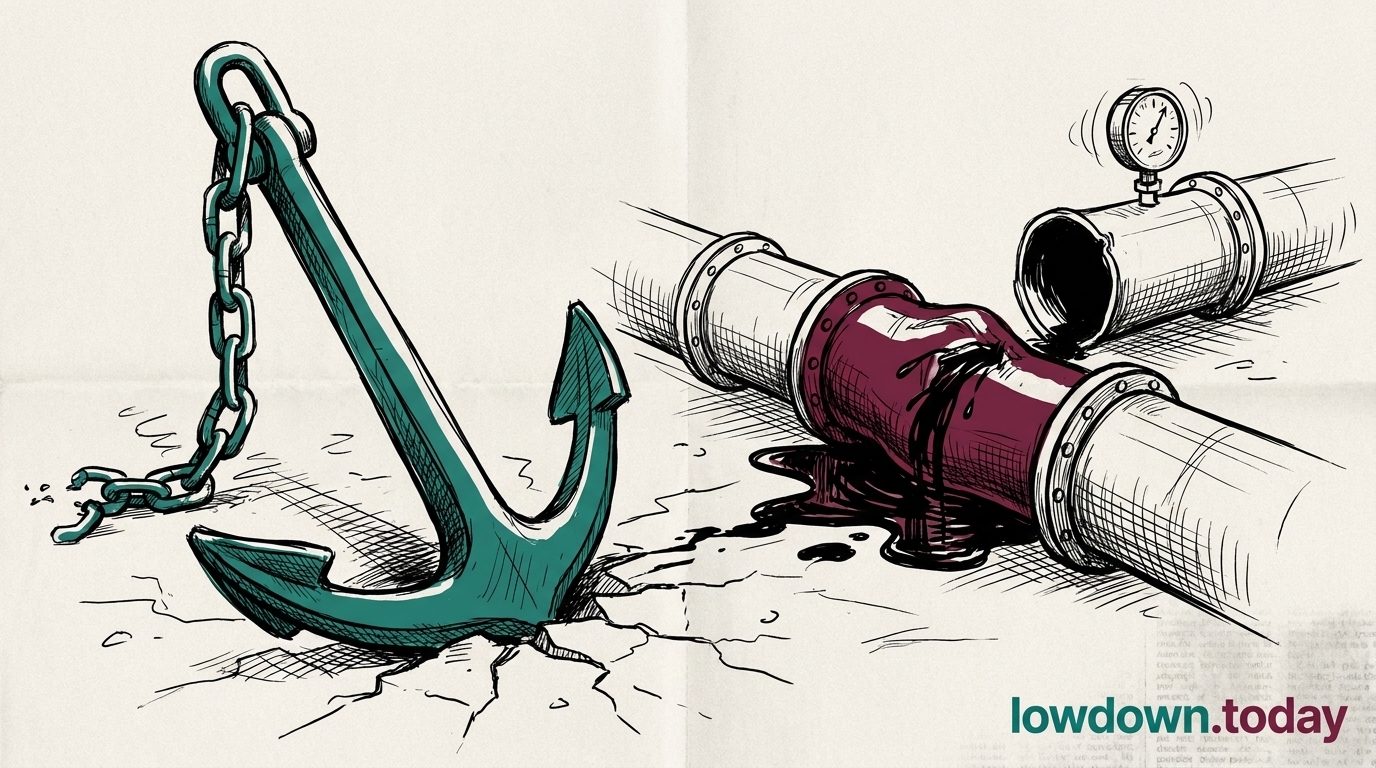
Trump calls the deal over and Iran calls it violated, yet neither has formally torn it up.

President Donald Trump said the interim agreement with Iran is "over" and "a waste of time dealing with them" after the 7 July strikes and Iran's retaliation, while adding that negotiations would continue. 1 The agreement in question is the 18 June Memorandum of Understanding (MoU), a 14-point ceasefire-track text the two sides were still negotiating in Doha last week. Trump's words have carried this message for 120 days; this time a signed licence revocation sits behind them.

Iran's foreign ministry said US and Israeli actions had "rendered key and fundamental elements of the agreement to end the war ineffective". 2 Chief negotiator Mohammad Ghalibaf called both the strikes and the oil-waiver revocation "major violations" of the MOU, putting the financial instrument alongside the kinetic one in Tehran's own complaint. 3 Spokesman Esmaeil Baghaei neither claimed nor denied the Al Rekayyat strike, instead invoking Clause 5 of the memorandum to assert an Iranian right to administer Hormuz routing . 4

Neither side has formally withdrawn from the memorandum both were negotiating in Doha, where Trump, Baqaei and Qatar's spokesman gave three contradicting accounts of the same talks and Doha itself billed the round as positive progress . Each capital is now retiring verbal tools for signed ones: Washington swaps Truth Social posts for a licence revocation, Tehran swaps anonymous IRIB framing for a named-spokesman treaty claim. The next Doha round stays paused with no firm late-July date fixed despite Pakistani expectations of one , so the memorandum is decaying rather than dying, and the 17 July licence cliff now arrives before any diplomacy resumes.


Deep Analysis

In plain English

The Memorandum of Understanding, or MoU, is a 14-point agreement reached on 18 June between the US and Iran that was meant to wind down the war, a written understanding rather than a ratified treaty. President Trump said the agreement was 'over' and 'a waste of time' after the day's strikes and oil-waiver revocation. Iran's foreign ministry said US and Israeli actions had made key parts of the deal ineffective, and Mohammad Bagher Ghalibaf, the speaker of Iran's parliament, called the day's events 'major violations' of the MoU. Neither side has formally withdrawn from the agreement in writing; both are simply saying, in different words, that it no longer functions.

Deep Analysis
Root Causes

The MoU has no enforcement mechanism written into its 14 points; unlike the JCPOA's IAEA verification architecture, it relies entirely on both governments' continued political willingness to reference it, which is why either side can call it ineffective without triggering a formal breach process.

Ghalibaf's move to frame the oil-waiver revocation and strikes together as violations serves a parliamentary function: the Majlis voted 221-0 in April to suspend IAEA cooperation, and casting the MoU as US-violated first gives hardliners in that body grounds to block future civilian-negotiated re-engagement without appearing to reject diplomacy outright.

What could happen next?
  • Risk

    Neither side formally exiting the MoU while both call it dead risks a legal vacuum where future strikes or sanctions carry no agreed reference point for de-escalation.

  • Precedent

    Ghalibaf's parliamentary framing echoes the Majlis's earlier unilateral IAEA suspension, suggesting Iran's legislature, not its foreign ministry, now controls the diplomatic off-ramp.

First Reported In

Update #149 · The first thing Washington signed on Iran: a revocation

ABC News· 8 Jul 2026
Read original
Different Perspectives
Greek shipping registries
Flag states dominating the tanker fleet await the EU's 15 July cap-freeze vote. A formula unlock toward $75 would loosen the ceiling squeezing insurance and crewing costs on their registered hulls.
US money managers
US money managers
NYMEX WTI managed-money net long fell 23% to +64,041 in the week to 7 July, trimming length into the rally on doubt the Hormuz premium survives without freight or war-risk confirmation.
European refiners (ARA)
ARA refiners are capturing an $80/bbl US diesel crack as Russian gasoil loadings collapsed to 234kbd before Novak's 31 July export ban even bites, widening the arbitrage straight into refining margins.
OPEC+
OPEC+
The seven-member group confirmed a fourth consecutive 188kbd August hike on 5 July, defending market share even though Saudi Arabia's $108-111/bbl breakeven means every added barrel costs Riyadh revenue it cannot recoup.
Indian refiners
Indian refiners
Refiners kept lifting discounted Urals as the India/Baltic split widened past $9-10 a barrel on 7 July. A wider Urals-Brent gap means cheaper feedstock locked in against Baltic buyers.
Russia
Russia
Urals traded $48.95-55.12 on 12-13 July, below Moscow's $59 budget floor even as Brent gained $6. Oil and gas fund roughly 30% of federal revenue, and Novak's diesel export ban is rationing a shrinking export base.