Skip to content
You can now search across every topic, entity and event.What's new
European Oil Markets
18MAY

China splits on Hengli before Trump-Xi

4 min read
17:30UTC

Bloomberg confirmed on 7 May that China's NFRA quietly ordered the four largest state banks to halt new yuan loans to Hengli Petrochemical and four other sanctioned refineries, while MOFCOM publicly told the same firms to defy OFAC.

EconomicDeveloping
Key takeaway

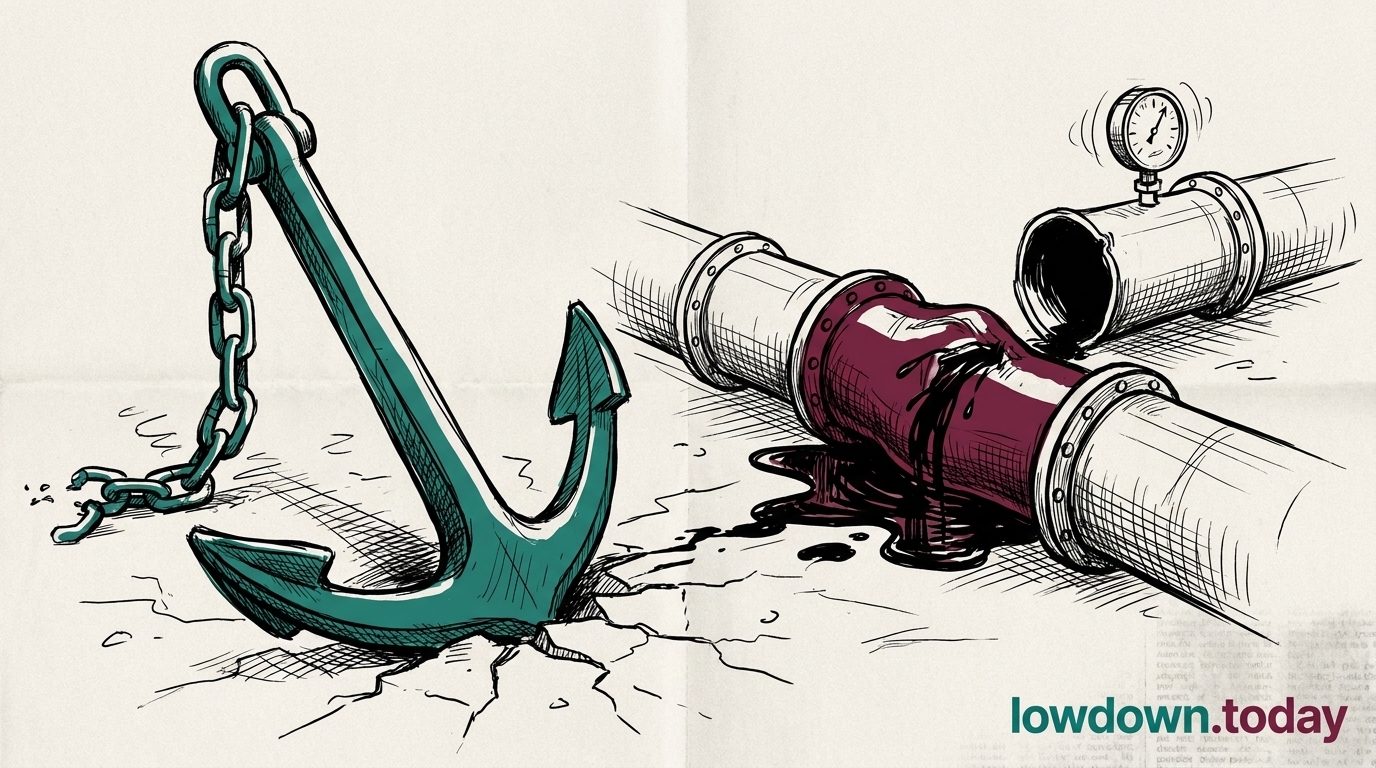
China is de-risking Hengli loans behind closed doors while publicly telling the same banks to defy Washington.

The National Financial Regulatory Administration (NFRA) privately instructed China's four largest state banks before 1 May to halt new yuan loans to Hengli Petrochemical and four other US-sanctioned refineries, Bloomberg confirmed on 7 May 1. The four banks are ICBC, Agricultural Bank of China, China Construction Bank and Bank of China. Existing credit was not called. On 2 May, the Ministry of Commerce (MOFCOM) publicly told the same five firms to defy OFAC under Announcement No. 21, activating Beijing's 2021 Blocking Rules .

Beijing wrote the contradiction on purpose. The four banks are observing the NFRA stop-loan order while ignoring MOFCOM's defiance instruction in practice: they treat their Hengli loan books as the binding constraint, not Beijing's public posture. China complies quietly where state-bank balance sheets would take the loss and defies publicly where the cost is rhetorical.

The calendar is what makes the dual signal load-bearing. The 24 May wind-down deadline for General Licence V (GL-V), OFAC's authorisation for orderly Hengli wind-down, falls 16 days out. The Trump-Xi summit in Beijing falls in 6 days, on 14-15 May. Treasury Secretary Scott Bessent confirmed Iran will be on the summit agenda, and CNBC reported the Iran focus may delay tariff and rare-earth progress 2. The summit is not expected to produce a written China-side sanctions instrument on Iran. Its function will be diplomatic pressure on Tehran to accept the MOU sequencing now sitting in Araghchi's ministry.

One reading casts NFRA's order as Beijing taking out balance-sheet insurance against an MOU collapse. If Iran's reply expires without a deal and Trump tightens enforcement, the four banks have already stopped extending credit they would have to write off. If the MOU is signed, GL-V is extended or moot, and the NFRA instruction was a low-cost piece of risk management that produced a domestic-defiance narrative as a side effect.

A second reading runs through audience design. NFRA's quiet bank instruction and MOFCOM's public order are addressed to the same five firms simultaneously. Beijing complies at the balance-sheet level (satisfying Western counterparty risk managers) while maintaining the rhetorical posture of sovereign defiance (satisfying domestic audience and Tehran). If MOFCOM Announcement No. 21 is later quietly withdrawn, the public posture becomes stranded without a formal mechanism. The summit outcome will determine which reading lands, with Donald Trump and Xi Jinping facing each other on 14 May.


Deep Analysis

In plain English

China sent two conflicting signals about Iran on 7 May. Quietly, China's banking regulator told the country's four biggest banks to stop making new loans to a large Chinese oil refinery that America has sanctioned. Publicly, China's trade ministry told the same refinery to ignore American sanctions entirely. Both instructions came from the Chinese government at the same time. The reason: the banking instruction protects Chinese banks from US financial penalties (the banks can be cut off from doing dollar business globally if they break US sanctions), while the public statement keeps China's political position aligned with Iran. Six days before the Trump-Xi summit, Beijing has already privately given ground while publicly holding firm.

Deep Analysis
Root Causes

China's four largest state banks hold US dollar correspondent relationships that generate fee income on billions of non-Iran transactions daily. OFAC can threaten to revoke those relationships under secondary-sanctions authority, making the banks' willingness to extend new Hengli credit a function of dollar-clearing exposure rather than domestic MOFCOM instructions.

The NFRA stop-loan order pre-empts that leverage by removing the new-credit exposure before Trump can threaten it at the summit. MOFCOM Announcement No. 21 preserves the public posture for domestic and Iran-facing audiences while the banks quietly de-risk the balance-sheet vulnerability that would otherwise become Washington's negotiating chip.

What could happen next?
  • Consequence

    Beijing arrives at the 14-15 May Trump-Xi summit already partially compliant at the balance-sheet level, giving Xi a concession to surface without making it publicly, while retaining the MOFCOM defiance posture as a withdrawable bargaining chip.

  • Risk

    If the summit produces no bilateral Iran framework, GL-V's 24 May deadline becomes the next chokepoint: OFAC must either extend the wind-down window or begin enforcement against Hengli, forcing a visible Chinese state-bank compliance decision.

First Reported In

Update #91 · MOU in Tehran, missiles in the strait

Bloomberg (via The Trending People)· 8 May 2026
Read original
Different Perspectives
Indian refiners
Indian refiners
Indian refiners kept lifting discounted Urals as the India/Baltic price split widened past $9-10 a barrel, a gap that only grows as GL X1's Iranian wind-down cuts an alternative discounted grade off the market by 17 July. Cheaper Russian feedstock is being locked in while it lasts.
Chinese refiners
Chinese refiners
Chinese refiners gain leverage as the Urals-Brent discount widens, since Beijing's state buyers already source discounted Russian barrels near the fiscal floor unaffected by Western insurance costs. A wider discount, if it holds past 23 July, lets them lock in cheaper term contracts regardless of the cap's outcome.
US money managers (CFTC-tracked)
Managed money trimmed WTI net length into the rally, positioning that reflects doubt the Hormuz premium survives without freight or war-risk confirmation. The Brent-WTI spread widening almost entirely on the Brent leg supports that scepticism about a broad-based repricing.
OPEC+ (Saudi-led subgroup)
Saudi Arabia is defending market share through a fourth straight 188kbd August hike even as OPEC's own July MOMR cut 2026 demand growth for the fourth consecutive month. At a $108-111 fiscal breakeven, every added barrel costs Riyadh revenue it cannot recoup, so the hike reads as a positioning signal, not a demand bet.
Greek shipping registries
Greece, backed by Cyprus and Malta, is pushing a three-month cap-freeze compromise against the Commission's freeze to January 2027 ahead of the 23 July vote. Athens' and Valletta's combined tanker registrations mean a shorter review gives their insurers more frequent chances to reprice risk on Russian cargoes.
Russia (Deputy PM Alexander Novak)
Novak extended the diesel export restriction to producers on 8 July, the first producer-binding curb of the war, protecting the domestic pump price ahead of any refinery repair timeline. Urals still trades below Russia's $59 budget floor even as Brent gained, so the ban trades export revenue for fiscal stability at home.