Skip to content
You can now search across every topic, entity and event.What's new
European Oil Markets
18MAY

Araghchi meets Wang Yi in Beijing

3 min read
17:30UTC

Iranian Foreign Minister Abbas Araghchi met Chinese counterpart Wang Yi in Beijing on 6 May, the first such visit since the war began on 28 February, eight days before the scheduled Trump-Xi summit on 14-15 May.

EconomicDeveloping
Key takeaway

Beijing now hosts the only Iran channel running in parallel to Washington's, eight days before Trump-Xi.

Iran's Foreign Minister Abbas Araghchi met Chinese counterpart Wang Yi in Beijing on Wednesday 6 May, the first such visit since the war began on 28 February 1. Wang Yi told Araghchi that China is 'deeply distressed' by the conflict and offered Beijing 'a greater role in restoring peace and tranquility'. Araghchi replied that China is 'a close friend' and that bilateral cooperation 'will become stronger under current circumstances'. The Trump-Xi summit is scheduled for Thursday 14 and Friday 15 May, also in Beijing.

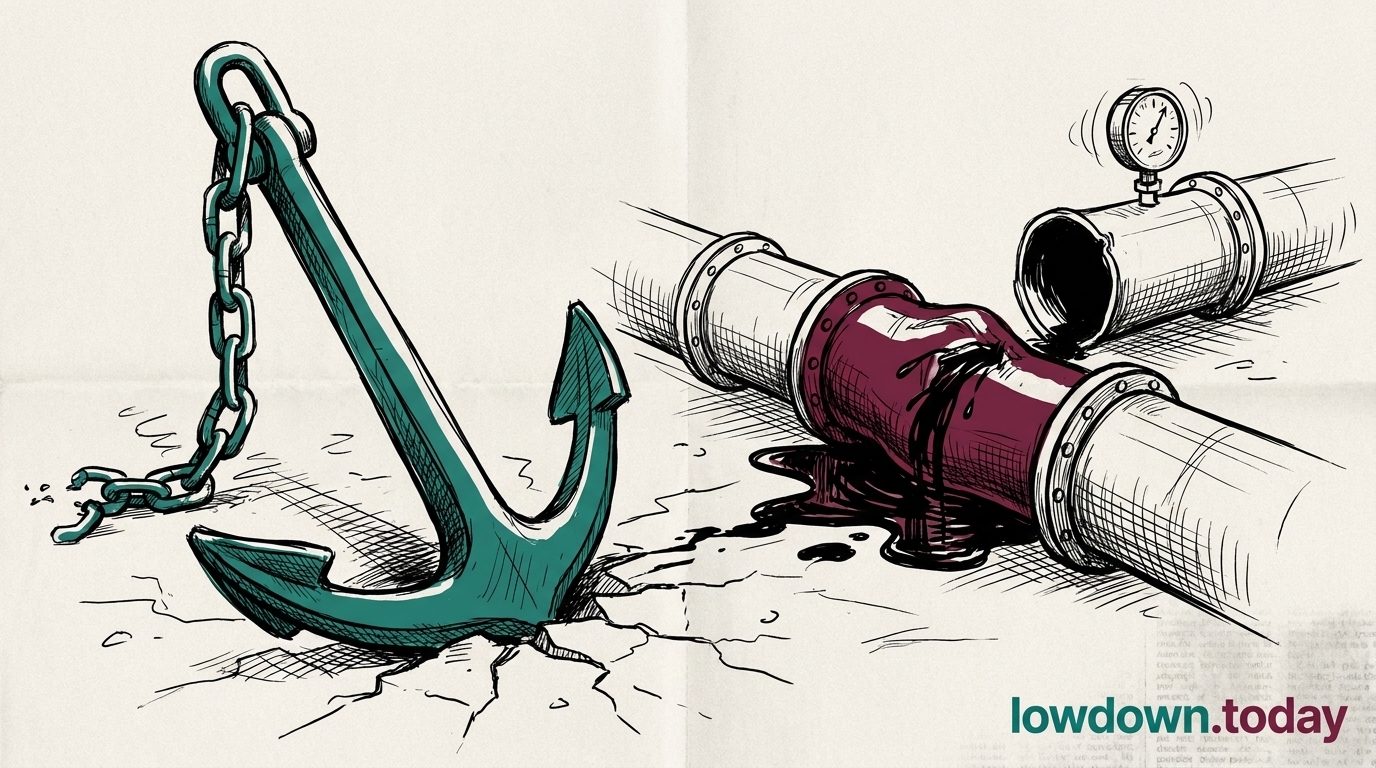
The pause sits inside that schedule. Trump paused Project Freedom on Tuesday 5 May; Araghchi met Wang Yi on Wednesday 6 May; Trump-Xi convenes eight days later. Two days before Araghchi's visit, MOFCOM (China's Ministry of Commerce) activated China's 2021 Blocking Rules and named five refineries protected from OFAC Iran compliance, including Hengli Petrochemical and four Shandong and Hebei independents . The same week the United States was deploying destroyers to enforce its blockade against Iranian oil flows, China was writing the legal counter-instrument that protects roughly 400,000 barrels per day of refining capacity from compliance.

Wang Yi's call for a 'comprehensive ceasefire' goes further than the US framing of a 'pause'. Trump's stated reason for pausing was Pakistan; the schedule said Beijing. A US-China confrontation over Iran-sanctions enforcement on the eve of a 14-15 May summit was the overhang the pause removed. Beijing's diplomatic position now combines a public ceasefire call, a domestic legal shield for its refiners and a face-to-face meeting with Tehran's chief diplomat, all sequenced into the eight-day window before Trump arrives.


Deep Analysis

In plain English

Iran's top diplomat flew to Beijing on 6 May and met China's foreign minister Wang Yi, who offered China a 'greater role in restoring peace'. This was the first such visit since the war started in late February. China matters here because it buys most of Iran's oil. Despite US sanctions, China has kept buying Iranian crude through workarounds. If the Strait of Hormuz stays blocked, even those workarounds get harder. China also has a summit with Trump scheduled for 14-15 May, so it wants to show it can help end the conflict, which gives it more leverage with the US. The meeting happened the day after Trump paused the US naval operation, suggesting both sides are testing whether diplomacy can produce a deal before the pause ends.

Deep Analysis
Root Causes

China's stake in a Hormuz resolution runs through its MOFCOM-shielded crude flows: of the 153.7 million barrels of Iranian crude on water in mid-April (per Windward data cited in prior updates), 84.9% was China-bound. China cannot sustain that flow if P&I war-risk exclusions prevent Iranian tankers from obtaining any insurance, even Chinese state reinsurance, for transits through waters now explicitly designated as combat zones by UKMTO.

The timing of the meeting, eight days before the Trump-Xi summit, is the second structural driver. China needs to demonstrate to the US that it can deliver Iranian de-escalation as a tradeable diplomatic asset. If Araghchi leaves Beijing and Iran resumes attacks, Wang Yi loses face before the summit opens.

What could happen next?
  • Consequence

    China's public ceasefire call eight days before the Trump-Xi summit creates a diplomatic timeline: if no progress is made by 14 May, Wang Yi's offer of mediation becomes a personal credibility liability.

  • Opportunity

    Beijing's interest in a Hormuz resolution aligns with Washington's pause, creating a narrow window in which Chinese diplomatic pressure on Tehran could unlock IRGC concessions the Pakistan channel alone cannot achieve.

First Reported In

Update #89 · Truxtun gets through; Trump pulls back

Al Jazeera· 6 May 2026
Read original
Different Perspectives
Indian refiners
Indian refiners
Indian refiners kept lifting discounted Urals as the India/Baltic price split widened past $9-10 a barrel, a gap that only grows as GL X1's Iranian wind-down cuts an alternative discounted grade off the market by 17 July. Cheaper Russian feedstock is being locked in while it lasts.
Chinese refiners
Chinese refiners
Chinese refiners gain leverage as the Urals-Brent discount widens, since Beijing's state buyers already source discounted Russian barrels near the fiscal floor unaffected by Western insurance costs. A wider discount, if it holds past 23 July, lets them lock in cheaper term contracts regardless of the cap's outcome.
US money managers (CFTC-tracked)
Managed money trimmed WTI net length into the rally, positioning that reflects doubt the Hormuz premium survives without freight or war-risk confirmation. The Brent-WTI spread widening almost entirely on the Brent leg supports that scepticism about a broad-based repricing.
OPEC+ (Saudi-led subgroup)
Saudi Arabia is defending market share through a fourth straight 188kbd August hike even as OPEC's own July MOMR cut 2026 demand growth for the fourth consecutive month. At a $108-111 fiscal breakeven, every added barrel costs Riyadh revenue it cannot recoup, so the hike reads as a positioning signal, not a demand bet.
Greek shipping registries
Greece, backed by Cyprus and Malta, is pushing a three-month cap-freeze compromise against the Commission's freeze to January 2027 ahead of the 23 July vote. Athens' and Valletta's combined tanker registrations mean a shorter review gives their insurers more frequent chances to reprice risk on Russian cargoes.
Russia (Deputy PM Alexander Novak)
Novak extended the diesel export restriction to producers on 8 July, the first producer-binding curb of the war, protecting the domestic pump price ahead of any refinery repair timeline. Urals still trades below Russia's $59 budget floor even as Brent gained, so the ban trades export revenue for fiscal stability at home.