Skip to content
Welcome, thoughtbot's Giant Robots listeners!Start here
European Energy Markets
4MAY

TurkStream April flows down 25%: single source

4 min read
13:52UTC

EADaily reported, citing Gazprom data, that TurkStream deliveries to Europe fell to 40.3 mcm/day in April, the lowest since June 2025 and a 25% drop on March, with no Reuters, Bloomberg or Interfax corroboration as of 29 April.

EconomicDeveloping
Key takeaway

Single-source on a tier-3 outlet against an Interfax March print pointing the other way; treat the 25% decline as provisional.

EADaily, an online Russian outlet that covers former-Soviet energy reporting, reported on 27 April that Gazprom's TurkStream deliveries to Europe fell to 40.3 mcm/day in April, citing Gazprom data⁠1. The figure represents a 25% drop on March and the lowest delivery rate since June 2025. EADaily attributed 6.4 mcm/day of the decline to Hungary and Slovakia combined, with a further 3.6 mcm/day decline across Romania and Ukraine. EADaily put the implied monthly revenue loss at roughly €220 million at April TTF prices.

EADaily ranks as a tier-3 outlet under Lowdown's source taxonomy, and the figure is single-sourced. Reuters, Bloomberg and Interfax have not corroborated the April decline as of 29 April. Interfax's March data showed TurkStream up 21% year-on-year at 1.704 bcm. The directional signal, if it holds, sits against an established March print pointing the other way. Treat the figure as provisional pending wire confirmation.

If the EADaily print holds on corroboration, the operational risk picture for central European gas buyers compounds the regional context that earlier events established. The Velebit explosives intercept on 5 April and the Serbia-Hungary attribution dispute put the security context for southern gas infrastructure on the table. A sustained 25% volume drop on top of that risk picture would be a contractual or political reduction, not an operational disruption, since EADaily attributes the volume to lower take from the named buyers rather than a pipeline outage. EADaily separately reports Russian contract gas pricing above April spot due to lagged March indexing, which is the commercial channel through which a take-side reduction would land. The same single-source caveat applies to that figure.

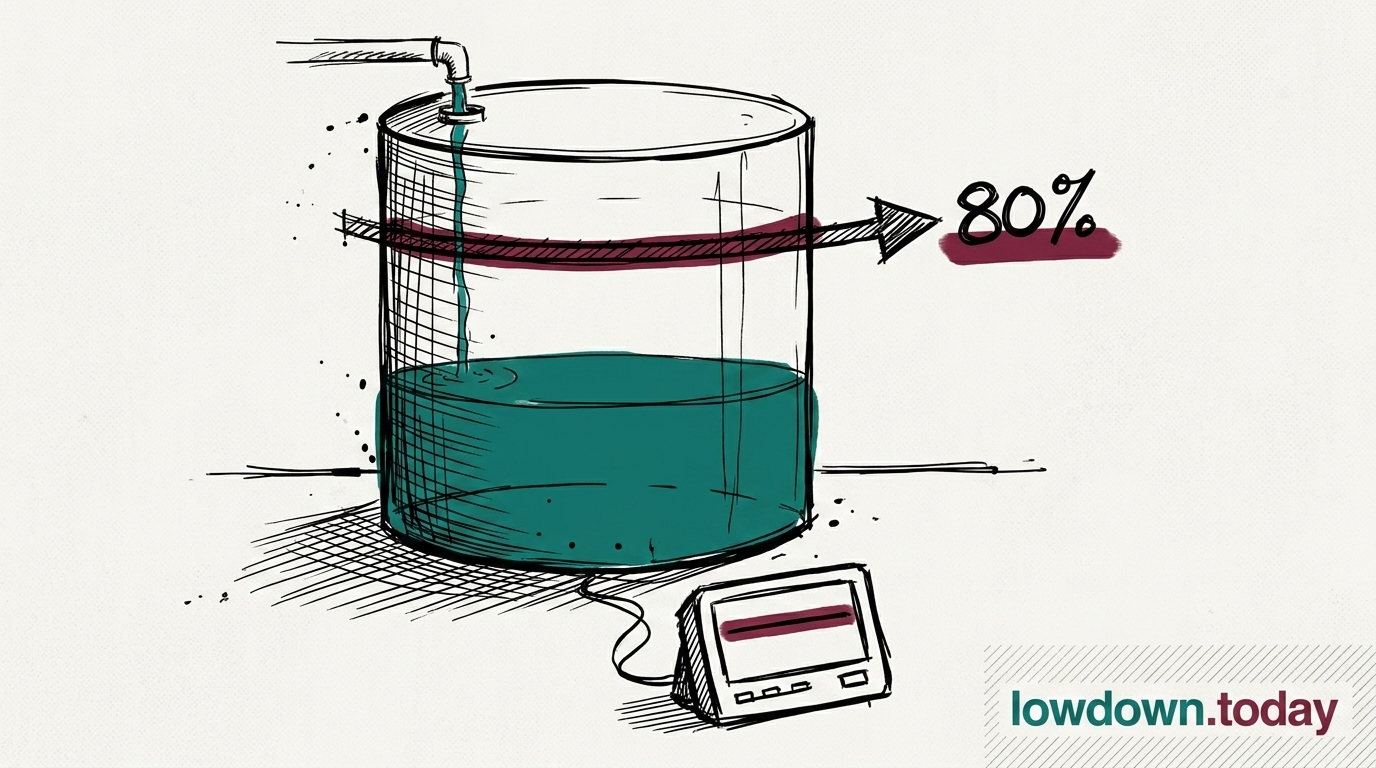
For the wholesale curve, TurkStream is the residual southern Russian gas channel into central Europe after the Ukrainian transit ended on 1 January 2025. The pipeline serves Hungary, Slovakia and a smaller volume into Romania and Ukraine itself. A 25% volume drop, if confirmed, would tighten central European supply at the same moment storage injection pace is tracking under the rate Bruegel says the bloc needs to hit 80% by 1 November. Whether TurkStream May volumes corroborate or refute the April figure against Reuters or Interfax is the testable signal for next month's briefing.

Deep Analysis

In plain English

TurkStream is a gas pipeline that runs from Russia under the Black Sea to Turkey, then north through the Balkans to countries including Hungary, Slovakia and Romania. A Russian news outlet called EADaily reported that deliveries through this pipeline fell sharply in April; down 25% from March; reaching the lowest level since last summer. However, this figure comes from a single source that is known to be sympathetic to the Russian government, and it has not been confirmed by major wire services like Reuters or Bloomberg. Interfax, a more reliable Russian news agency, showed the pipeline running at its highest levels in years just one month earlier. Treat this as an early warning signal that should be watched, not an established fact.

Deep Analysis
Root Causes

EADaily separately reports that Russian contract gas pricing ran above April spot due to lagged March indexing. Gazprom's European long-term contracts index to gas hub prices with a one-to-three month lag; a month in which spot falls below the lagged contract price creates take-or-pay tension, where buyers may seek volume reductions to avoid paying above-market prices.

If buyers in Hungary and Slovakia exercised downward volume flexibility, the 6.4 mcm/day combined drop becomes explicable as contract mechanics rather than supply constraint.

The Velebit explosives intercept and Serbia-Hungary attribution dispute created a political overhang on the Balkan corridor that may have prompted importers to accelerate diversification sourcing for April, reducing TurkStream nominations.

What could happen next?
  • Risk

    If wire services confirm the April 25% volume decline in May data, central European buyers face a supply shortfall during the early injection season at the moment storage is running below the 0.25 pp/day required pace.

  • Consequence

    Russian contract gas priced above April spot via lagged March indexing creates take-or-pay economics that incentivise volume reductions in April; if this is the mechanism, May deliveries may normalise when June index applies.

First Reported In

Update #6 · REMIT II live; storage instrument absent

EADaily· 29 Apr 2026
Read original →
Different Perspectives
US Energy Information Administration
The EIA's Short-Term Energy Outlook of 10 November forecasts US LNG exports at 17.6 billion cubic feet a day in 2026, rising to 19.0 in 2027. The forecast lands as Bloomberg reports record US exports from projects at a new production peak, so the supply Europe leans on this winter is still growing.
QatarEnergy
QatarEnergy
QatarEnergy has extended force majeure month by month through the end of November, Euronews and The National reported, and did not comment on Bloomberg's tanker counts. Ras Laffan loadings rose to 13 to 15 departures on a ten-day average, but laden Hormuz exits held at 11 in ten days.
European Commission
European Commission
The Commission sent letters of formal notice on 25 September to 26 states over Directive (EU) 2024/1788, the recast gas and hydrogen directive, leaving only Italy clear. Portugal and Slovakia, which filed before the deadline, still received letters, and replies fall due around 25 November.
International Energy Agency
The IEA's Global Gas Security Review says EU stocks could fall below 10% of working capacity by end-March 2027 if a cold winter meets continued Hormuz disruption. It warns that storage sites deliver gas more slowly below 30% full, so a late cold snap would test the daily draw rate as much as the volume left.
Gassco and Equinor
Gassco and Equinor
Gassco's notice keeps Equinor's Visund field fully offline, 13.2 of 13.2 million cubic metres a day, until 06:00 on 1 January 2027, citing process problems after the 4 November switchgear fire. A restart the market had pencilled in for 16 November now misses the whole of December.
Italy's energy minister
Italy's energy minister told ANSA the €58.9/MWh cap on gas for power will cut power prices by about €15/MWh on average from January. Rome pays gas plants the gap above the cap from higher system charges, and ARERA trims the payment when those plants do not set the price.

Written with AI from Lowdown's published reporting. Not individually reviewed by an editor. Editorial standards.
