Skip to content
You can now search across every topic, entity and event.What's new
European Energy Markets
31JUL

IRGC sets Kuwait's Shuaiba complex alight

2 min read
09:44UTC

The IRGC struck Kuwait's Shuaiba power and desalination complex on 17 July, burning several generating units before the Kuwait Fire Force contained the blaze. It was the second Kuwaiti desalination site hit in two days.

EconomicDeveloping
Key takeaway

The IRGC burned generating units at Shuaiba, Kuwait's second desalination site struck in two days.

The Islamic Revolutionary Guard Corps (IRGC) struck the Shuaiba power and desalination complex in Kuwait's Al Ahmadi Governorate on Friday 17 July, setting several generating units alight before the Kuwait Fire Force contained the blaze 1. Shuaiba is one of the plants that keeps a desert state supplied with drinking water, and it was the second Kuwaiti desalination site hit inside two days.

Gulf desalination of this generation runs off the same steam turbines that produce electricity, an arrangement called co-generation, chosen because waste heat from power production is what boils the seawater. A missile into a co-generation hall therefore takes the grid and the water together, and a fire in the generating units does damage that no amount of intact desalination membranes can undo.

This rung has been climbed before. Iranian drones hit two Kuwaiti desalination plants on 4 and 5 April , and Iran struck at Kuwait, Bahrain and Jordan together in Gulf-wide retaliation on 14 July . What gives the return its weight is the pace: both sides have now hit each other's water production inside 48 hours, in a region where the alternative to desalination is not a reservoir but a tanker convoy.


Deep Analysis

In plain English

Iran's Revolutionary Guard fired on Kuwait's Shuaiba complex, which makes both electricity and drinking water for the country, on 17 July, setting several generating units on fire before firefighters put it out. This was the second time in two days that a Kuwaiti desalination plant was hit. Kuwait gets almost all its drinking water from the sea because it has no rivers, and its desalination plants run on the same power stations that light people's homes, so damaging one damages both at once.

Deep Analysis
Root Causes

Kuwait has no permanent rivers or fresh groundwater sources sufficient for a population of 4.3 million, which is why it adopted co-generation desalination at scale from the early oil-boom decades onward: the same turbines that make electricity also boil the seawater, because building separate plants for power and water would have cost more than a desert state without fresh water could justify skipping.

That decades-old efficiency choice is what makes a single missile into a generating hall a strike on both systems at once.

What could happen next?
  • Precedent

    A second Kuwaiti desalination facility struck within 48 hours establishes a pattern rather than an isolated incident, raising the odds that Iran is treating Gulf co-generation plants as a deliberate target class rather than hitting them incidentally.

First Reported In

Update #156 · First American deaths in Jordan

Associated Press· 19 Jul 2026
Read original
Different Perspectives
Spain's LNG terminal operators
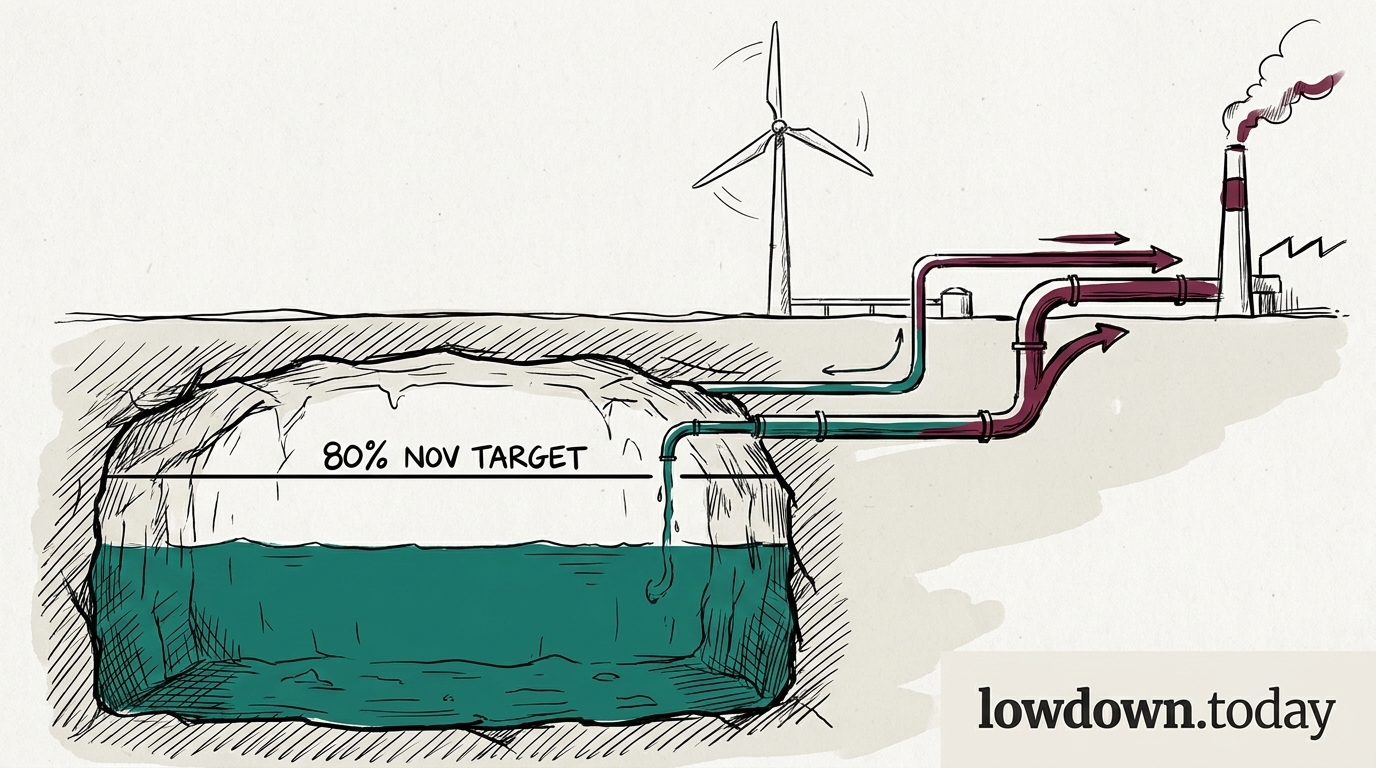
Spain's 9,145 GWh terminal inventory is the largest single stock in the EU LNG network, an option value that can reroute cargoes wherever the winter strip pays best rather than a cavern gas obligation tied to a fixed date. That flexibility matters more as Germany's cavern shortfall pushes more of the winter security question onto import infrastructure.
European Commission
European Commission
Brussels holds the bloc to 90% on a flexible window while Germany, holding roughly a quarter of EU storage capacity, tracks toward missing its own lower 80% figure by 21 points. A national shortfall this size in the anchor market matters more to bloc security than the flexible timetable alone can absorb.
French power exporters and CRE
French day-ahead rose in step with Germany but by less, reopening a EUR 7-17 premium that makes northward export flows commercially attractive again after the EUR 43.09 discount evaporated in days. CRE separately authorised RTE and Enedis to buy flexibility locally, betting the coming winter's binding constraint is grid congestion rather than a shortage of firm capacity.
TTF trading desk
TTF trading desk
A visible national shortfall like Germany's 21-point gap is a directional signal, not noise, for a desk holding the summer-winter spread. TTF's flat EUR 58-60 range through this week's German price swings says the market has not yet chosen to reprice refill risk into the front of the curve.
German cavern and CCGT operators
German caverns kept buying prompt gas at TTF near EUR 58-60 through the inversion; the wind collapse to 2.4 GW then flipped the spark spread to plus EUR 29 and put turbines back in the same queue. Every day turbines win that bid, injection at a third of the 877 GWh/day pace needed falls further behind.
Slovakia
Slovakia
Slovakia says it dropped its hold-out on the 21st sanctions package only after Ursula von der Leyen personally signed written gas-price and supply guarantees. The Council of the European Union's own 17,238-character release on the package names neither Slovakia nor any guarantee, leaving Bratislava's account unconfirmed by the institutional record.



