Skip to content
You can now search across every topic, entity and event.What's new
European Energy Markets
31JUL

Gulf jets struck Iran, WSJ reports

2 min read
09:44UTC

The Wall Street Journal says Bahraini and Kuwaiti fighter jets bombed weapons depots inside Iran earlier this month, with Emirati intelligence and air cover behind them. Manama and Kuwait City will not comment.

EconomicDeveloping
Key takeaway

Two Gulf states that had only been targets are now reported to have bombed Iran themselves.

The Wall Street Journal reported on 24 July that Bahrain and Kuwait sent fighter jets against drone and missile storage depots inside Iran earlier this month, citing officials familiar with the operation 1. The United Arab Emirates (UAE) supplied intelligence and defensive air cover but flew no strikes of its own, the same report said 2. Neither Bahraini nor Kuwaiti spokespeople would comment when asked. The sorties themselves are undated beyond that window; only the Journal's account carries the 24 July stamp.

Bahrain is a Gulf island kingdom hosting the US Fifth Fleet; Kuwait sits at the head of the Gulf and holds American air assets at Ali Al Salem. Both have appeared in this war so far on the receiving end. Bahrain said it thwarted Iranian missiles and drones on 19 July , and Kuwait counted a fourth day of attacks on its power and desalination stations by 21 July . Flying into Iranian airspace is a different act from intercepting what comes the other way.

The Journal characterises the depot raids as the first direct retaliation either state has flown against Tehran. That wording belongs to the Journal, and nobody in Manama or Kuwait City has confirmed any part of it 3. Abu Dhabi's contribution, intelligence and defensive cover without ordnance, leaves the UAE able to deny participation while still shaping the operation.

If the account holds, Tehran acquires two new addresses for retaliation, both of them hosting American basing and both within a few minutes' missile flight of the Iranian coast. If it does not hold, three governments have chosen silence over denial, and a denial would cost them nothing.


Deep Analysis

In plain English

Bahrain and Kuwait are small Gulf Arab countries that host US military bases and have spent this war on the receiving end of Iranian missile and drone attacks. The Wall Street Journal reported that, for the first time, their fighter jets struck weapons storage sites inside Iran itself earlier in July, with a third Gulf country, the United Arab Emirates, helping with intelligence and air cover but not flying any strikes itself. Neither Bahrain nor Kuwait has confirmed or denied the report. If accurate, it would mean two countries long seen as targets in this war have started fighting back directly, which could change how Iran responds to them.

Deep Analysis
Root Causes

Bahrain and Kuwait each field air forces built around single squadrons of F-16s, sized for point air defence rather than sustained offensive strike packages into hostile territory, so any deep sortie against Iranian depots would structurally require a third party to supply targeting data and top cover, a gap the UAE's larger, better-equipped air force is positioned to fill.

Both kingdoms also host forward US military infrastructure, Bahrain the Fifth Fleet and Kuwait CENTCOM's logistics hub, which gives Tehran an obvious retaliatory target set immediately offshore; that exposure is the more plausible explanation for continued official silence than any doubt about the WSJ account itself.

Escalation

Direction: upward, if confirmed. Two Gulf states previously limited to defensive interception would have crossed into offensive strikes on Iranian soil, a threshold the war has not seen from these countries before. The evidence for the shift rests entirely on WSJ sourcing that neither government will confirm, so the assessment carries the same uncertainty as the underlying report.

What could happen next?
  • Meaning

    If confirmed, Bahrain and Kuwait would be conducting offensive strikes against Iran for the first time in this war, moving beyond the interception role they have held since March.

    Immediate · Reported
  • Risk

    Confirmation of direct Gulf-state strikes could draw a retaliatory Iranian strike specifically targeting Bahraini or Kuwaiti territory rather than shared regional infrastructure.

    Short term · Suggested
  • Precedent

    A confirmed UAE intelligence and air-cover role without direct strikes would establish a template for Gulf states to support offensive action against Iran while retaining diplomatic deniability.

    Medium term · Suggested
First Reported In

Update #161 · Bahrain and Kuwait struck Iran, WSJ reports

Wall Street Journal· 25 Jul 2026
Read original
Causes and effects
This Event
Gulf jets struck Iran, WSJ reports
Two Gulf monarchies that have spent this war absorbing Iranian strikes are now reported to have flown offensive sorties into Iranian territory, which changes who Tehran can plausibly retaliate against.
Different Perspectives
Spain's LNG terminal operators
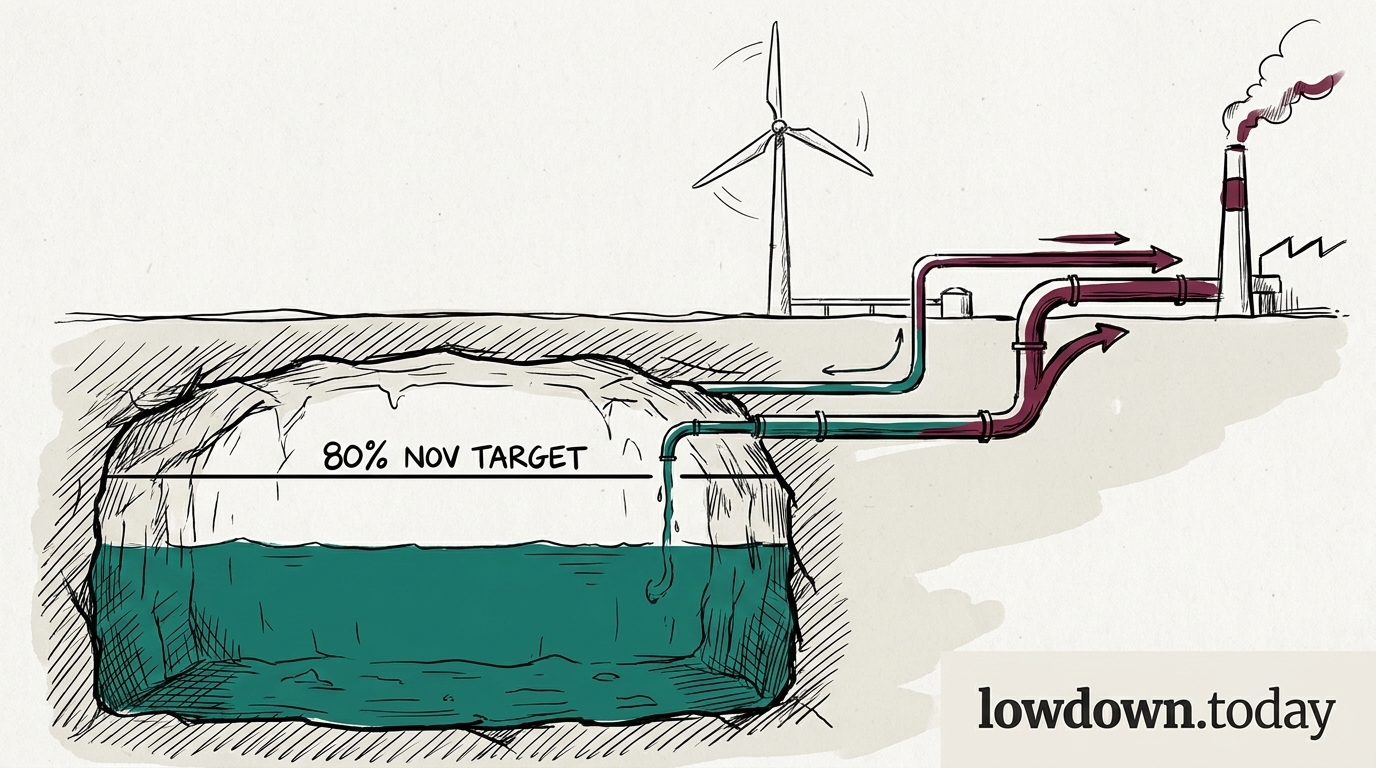
Spain's 9,145 GWh terminal inventory is the largest single stock in the EU LNG network, an option value that can reroute cargoes wherever the winter strip pays best rather than a cavern gas obligation tied to a fixed date. That flexibility matters more as Germany's cavern shortfall pushes more of the winter security question onto import infrastructure.
European Commission
European Commission
Brussels holds the bloc to 90% on a flexible window while Germany, holding roughly a quarter of EU storage capacity, tracks toward missing its own lower 80% figure by 21 points. A national shortfall this size in the anchor market matters more to bloc security than the flexible timetable alone can absorb.
French power exporters and CRE
French day-ahead rose in step with Germany but by less, reopening a EUR 7-17 premium that makes northward export flows commercially attractive again after the EUR 43.09 discount evaporated in days. CRE separately authorised RTE and Enedis to buy flexibility locally, betting the coming winter's binding constraint is grid congestion rather than a shortage of firm capacity.
TTF trading desk
TTF trading desk
A visible national shortfall like Germany's 21-point gap is a directional signal, not noise, for a desk holding the summer-winter spread. TTF's flat EUR 58-60 range through this week's German price swings says the market has not yet chosen to reprice refill risk into the front of the curve.
German cavern and CCGT operators
German caverns kept buying prompt gas at TTF near EUR 58-60 through the inversion; the wind collapse to 2.4 GW then flipped the spark spread to plus EUR 29 and put turbines back in the same queue. Every day turbines win that bid, injection at a third of the 877 GWh/day pace needed falls further behind.
Slovakia
Slovakia
Slovakia says it dropped its hold-out on the 21st sanctions package only after Ursula von der Leyen personally signed written gas-price and supply guarantees. The Council of the European Union's own 17,238-character release on the package names neither Slovakia nor any guarantee, leaving Bratislava's account unconfirmed by the institutional record.



